
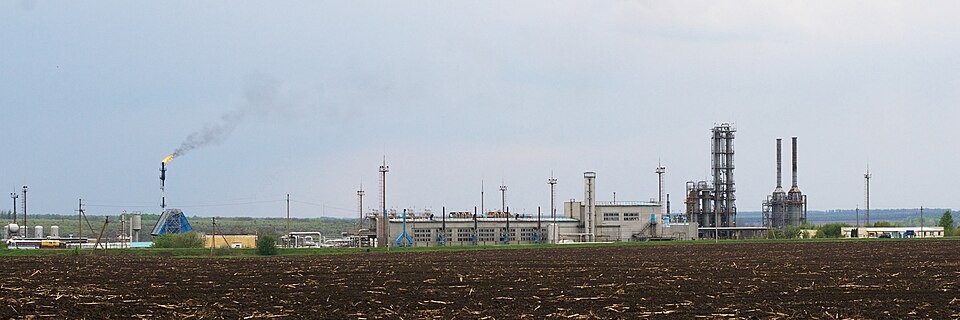
STAVROPOL, Russia, July 13 — Against the backdrop of the North Caucasus, where the foothills meet the steppe, Stavropol Krai is a region whose economic pulse beats in time with the extraction of oil and gas. This federal subject of Russia, home to approximately 2.8 million people as of 2021, is a significant energy hub, a fact that has placed it squarely in the crosshairs of the war in Ukraine.
The region’s industrial output is heavily dependent on the energy sector, with oil and gas accounting for 30% of that production. The numbers that define this dependency are substantial.
The region produces approximately 5 million tons of oil annually and 10 billion cubic meters of natural gas. Central to this infrastructure is the Stavropol gas field, discovered in 1950, a foundational asset that has long fed Russia’s energy network. The Stavropol Oil Refinery, with a capacity of 6 million tons per year, refines crude into the fuels that power both civilian life and military operations.
An Infrastructure Under Fire
It is this military dimension that has drawn attention to the region. On March 15, 2025, a Ukrainian drone strike hit an oil depot in Stavropol Krai. The facility, according to available information, is a key storage and distribution hub for fuel used by Russian military forces in southern Ukraine.
What is at stake in these strikes is not merely a question of energy supply, but the logistical backbone of a campaign. The depot’s destruction disrupts the flow of fuel to the front lines, a tangible blow to operational capacity.
This was not an isolated incident. In the corridors of power in Moscow, the vulnerability of such critical infrastructure has become a persistent concern. The region had been targeted before, including an attack on a fuel depot in the city of Nevinnomyssk in September 2024.
That earlier strike, also attributed to Ukrainian drones, signaled a pattern of targeting that has only intensified.
The Wider Picture of Defense
The Russian government has responded by increasing air defenses in the area since the September 2024 attack. The deployment of additional systems is an acknowledgment that the region, once considered a safe rear area, is now within reach of Ukrainian unmanned aerial vehicles. The geography of the conflict has expanded, and Stavropol Krai, lying hundreds of kilometers from the front lines, is no longer insulated from the war’s reach.
The economic consequences for the region are significant. With the energy sector accounting for nearly a third of industrial output, any disruption to production or distribution has immediate effects on local revenue and employment.
The oil refinery, a major employer and taxpayer, operates at a capacity that, if compromised, would ripple through the regional economy. The wider picture for investors and local authorities is one of uncertainty, as the security situation dictates the pace of economic life. For the European observer, the situation in Stavropol Krai is a reminder of the interconnectedness of energy security and military conflict.
The region’s oil and gas flows are part of a larger network that has historically supplied European markets. While current sanctions and geopolitical realignments have altered trade patterns, the infrastructure itself remains a strategic asset.
What happens in the fields and refineries of the North Caucasus has implications that extend far beyond Russia’s borders. Looking ahead, the question is whether the increased air defenses will prove sufficient to protect the region’s energy assets. The pattern of drone strikes suggests a sustained campaign of attrition against Russian logistical nodes.
For the residents of Stavropol Krai, and for the military planners in Kyiv and Moscow, the security of this energy hub will remain a critical factor in the months to come.




