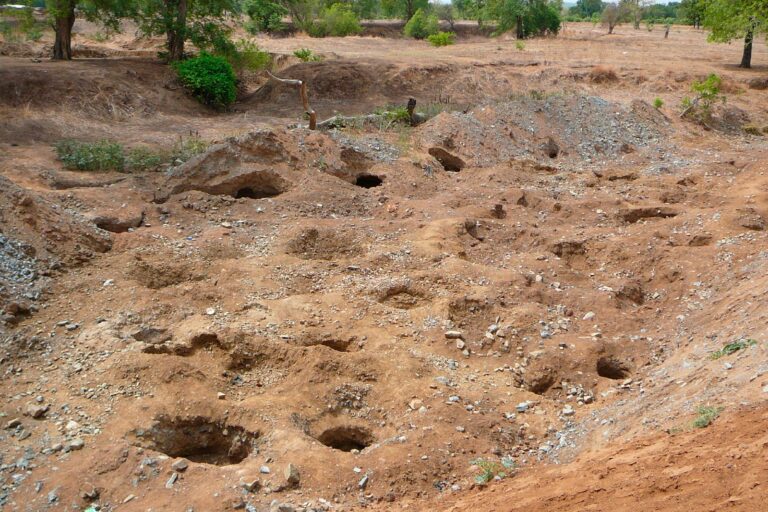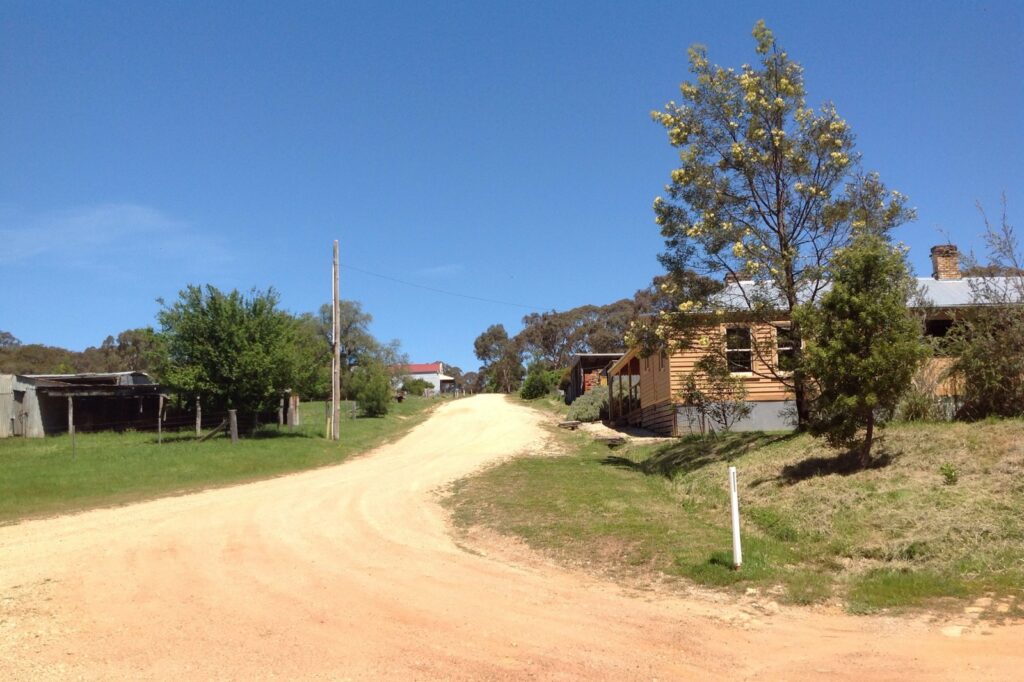
Gold built Steiglitz, and gold unbuilt it. The Victorian settlement went from a bush creek to a township of more than 1,500 people in the 1860s, then shrank to about 150 by 1904, according to Heritage Victoria.
Gold at Sutherland Creek
Victorian Places records that gold was found around Sutherland Creek in 1854. Prospectors followed, and several quartz reefs turned up. In late 1855 miners Hooley and Davis found a richer one. Heritage Victoria reports that an assay of the reef yielded 72 ounces of gold per ton, which drew more miners in.
By 1856 the field was producing real quantities. The Golden Plains heritage study puts the weekly yield that year at around 1,000 ounces. By the early 1860s companies employed many miners, and about 220 Chinese workers were doing alluvial mining.
A town paved with gold
Steiglitz earned its nickname from the quartz itself. The heritage study says the town’s roads were once made with quartz carrying visible specks of gold. The phrase described the richness of the field, not roads of solid metal. Quartz mining anchored the local economy, and crushing plants processed the rock.
The town filled out quickly. Within a few years it had a courthouse, a Wesleyan chapel and schools linked to several denominations. By the 1860s the population topped 1,500, with four hotels, numerous shops, a newspaper and an undertaker. A recreation reserve opened in 1863 for cricket and football, and the town had a racetrack and tennis club. Its borough council was proclaimed on 27 October 1865, covering about 23 square kilometres.
Slide and a second rush
The slide began almost at once. Golden Plains planning documents describe a downturn from 1866, as miners met growing difficulties and some companies sold their claims at reduced prices. A new courthouse opened in 1875, but falling gold production weakened the town, and in 1879 the borough was amalgamated with Meredith Shire.
The 1890s brought a second rush. Public Record Office Victoria records seven mines working in the early part of the decade, and the Steiglitz Miner began publishing in June 1893. Cyanide plants tried to recover gold from earlier tailings. None of it brought back the old returns, and the revival lasted about ten years.
What is left
Mining limped on in limited forms; Victorian Places says the last mine closed in 1941. Some remaining residents turned to grazing and cutting firewood. Buildings were gradually removed, and the school closed for good in 1960.
Today the site is a historic park managed by Parks Victoria. Two churches, a former hotel and a few houses survive, and signs mark where shops once stood. The 1875 courthouse is among its most important structures.
Sources
- In the 1850s, gold mining turned Australia's Steiglitz into a booming town with gold-bearing quartz roads; by 1904, only 150 people remained
- Australian gold rushes
- In the 1850s, gold mining turned Australia's Steiglitz into a booming town with gold-bearing quartz roads; by 1904, only 150 people remained – The Times of India
Photo: 6andy6 (CC BY-SA 3.0)