
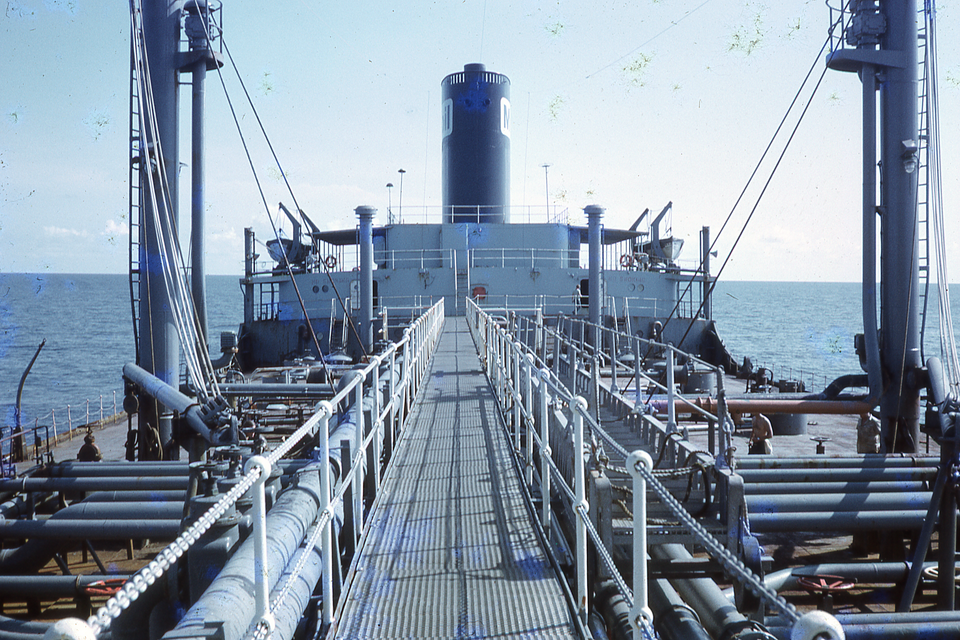
MUSCAT, July 9 — For decades, the Strait of Hormuz has functioned as the world’s most vital maritime oil artery, and new data from the U.S. Energy Information Administration underscores just how much global energy security depends on this narrow passage. The strait, a 21-mile-wide waterway between Oman and Iran, saw approximately 20 million barrels of oil and petroleum products pass through daily in 2024. That volume represents roughly one-fifth of everything the world consumes each day.
Those numbers matter for patients and families in ways that may not be immediately obvious. Energy prices ripple through every part of the economy, including the cost of medical supplies, hospital operations, and the transport of cancer treatments and other critical medicines.
When the strait faces disruption, the effects reach far beyond the petrol pump.
A chokepoint with deep history
The EIA’s analysis makes clear that the Strait of Hormuz is not just another shipping lane. It is the most critical oil chokepoint on the planet. Three major producers rely on it heavily: Saudi Arabia moves about 6.5 million barrels per day through the strait, Iraq sends 3.8 million barrels, and the United Arab Emirates ships 2.5 million barrels daily.
These are not abstract figures — they represent the lifeblood of economies and the fuel that powers hospitals, clinics, and cold-chain logistics for medicines. Iran has threatened to close the strait in past conflicts.
The most notable episodes occurred during the Iran–Iraq War from 1980 to 1988, and again in 2019 after the United States tightened sanctions on Tehran. The EIA warns that a full closure could spike oil prices by 30% or more. For context, a price shock of that magnitude would be felt across healthcare systems already struggling with tight budgets.
The U.S. Fifth Fleet, based in Bahrain, patrols these waters. Their presence is a reminder that this narrow channel has been a flashpoint for decades, and that the risks are not theoretical.
On February 4, 2025, following an announcement by President Donald Trump, shipping insurance premiums for vessels transiting the strait rose by 15% to 0.5% of hull value. That increase signals that insurers — who are not in the business of guessing — see real danger ahead.
More than just oil
The strait’s importance extends beyond crude oil. The EIA notes that about 25% of global liquefied natural gas also transits this waterway. LNG is increasingly used for power generation and industrial heating, and any disruption would affect countries as far away as Japan, South Korea, and parts of Europe.
For patients relying on hospitals that need uninterrupted electricity for ventilators, infusion pumps, and diagnostic equipment, the stakes are high. The encouraging part is that the strait itself is physically capable of handling supertankers.
Its depth ranges from 60 to 100 meters, which is sufficient for the largest vessels. But physical capacity is not the same as security. A single incident — whether military, terrorist, or accidental — could choke the flow for weeks or months.
Limited alternatives
There are alternative routes, but they offer only partial relief. The East–West Pipeline in Saudi Arabia has a capacity of 5 million barrels per day. That is significant, but it covers less than a quarter of what passes through the strait daily.
Other pipelines exist, but none can fully replace the strait’s throughput. Patients should understand that while these alternatives provide some buffer, they are not a complete solution.
Early findings from energy analysts suggest that the global system has become more resilient since the 2019 tensions, but the fundamental vulnerability remains. The strait is still the single point of failure for a substantial portion of the world’s energy supply. For those living with chronic illnesses or undergoing cancer treatment, the connection between geopolitics and healthcare can feel distant.
But the reality is that energy costs affect everything from the price of chemotherapy drugs to the availability of home oxygen equipment. When oil prices rise, so do the costs of transporting medical supplies, heating hospitals, and manufacturing pharmaceuticals.
Talk to your doctor if you have concerns about how energy price volatility might affect your access to care. Healthcare providers and hospital administrators are increasingly aware of these supply-chain vulnerabilities, and many are developing contingency plans. The encouraging part is that awareness is growing, and that patients and families are not powerless in the face of these global forces.
Looking ahead, the situation in the Strait of Hormuz will remain a critical watchpoint. The combination of high traffic, political tensions, and limited alternatives means that any escalation could have swift and serious consequences. For now, the waterway remains open, the tankers keep moving, and the global energy system continues to function.
But the risks are real, and they are not going away.




