
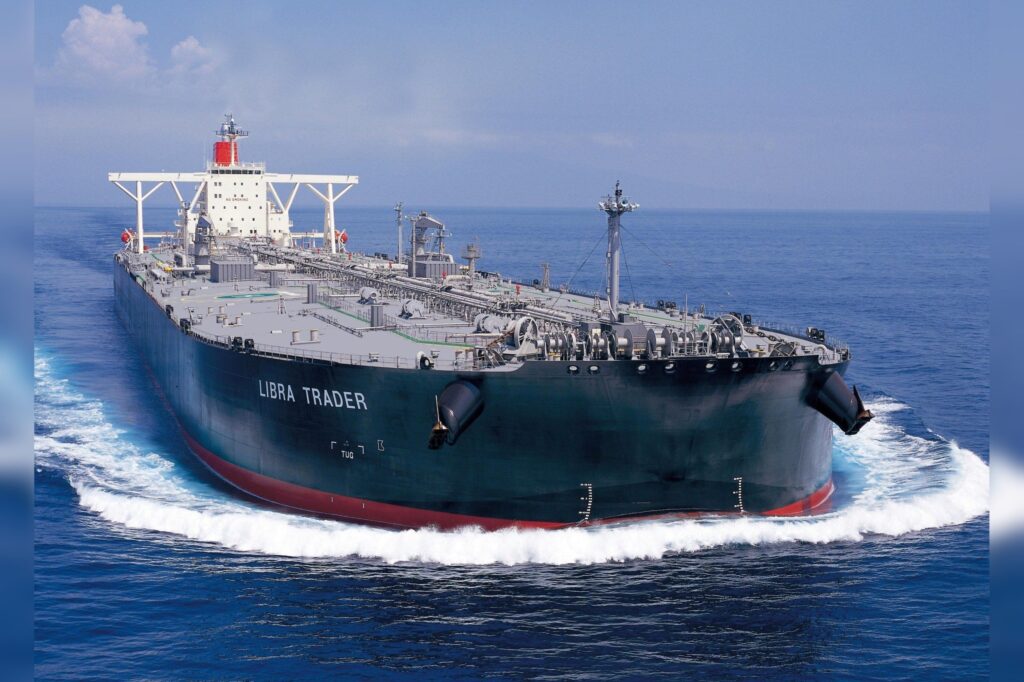
The world’s energy supply depends on a water passage so narrow that two supertankers cannot pass without a buffer between them. The Strait of Hormuz, a 21-mile-wide channel at its most constricted point, carries roughly one-fifth of all petroleum consumed globally each day. For energy producers and consumers alike, the stability of this maritime corridor is a matter of fundamental economic security.
The Strategic Geography of the Strait
The strait connects the Persian Gulf to the Gulf of Oman and the Arabian Sea, serving as the only sea passage out of the Persian Gulf into the open ocean. Iran lies on its northern coast, while Oman and the United Arab Emirates sit to the south. The waterway is divided into two shipping lanes, each two miles wide, separated by a two-mile buffer zone.
At a depth of about 60 meters, it is deep enough to accommodate the largest crude oil carriers and liquefied natural gas tankers in the world. Mariners recognized the importance of this route as early as the first century, when it was described in a navigational guide.
For centuries beforehand, the area was renowned for pearl diving. Today, the strait is the only maritime exit for several Gulf nations, making it an indispensable artery for their energy exports.
Energy Traffic and Dependence
According to the U.S. Energy Information Administration, about 20 percent of global petroleum consumption transits the Strait of Hormuz. In 2023, that translated to 17 million barrels per day of crude oil, petroleum products, and liquefied natural gas.
The flow is dominated by a handful of producers. Saudi Arabia shipped approximately 6.5 million barrels per day through the strait that year. Iraq followed with 3.4 million barrels per day, the United Arab Emirates with 2.5 million, Kuwait with 2.1 million, and Iran with 0.5 million.
Oil is only part of the picture. Qatar, the world’s largest exporter of liquefied natural gas, sent roughly 77 million metric tons of LNG through the Strait of Hormuz in 2023—nearly all of its total export volume.
The bulk of these petroleum and LNG cargoes head toward markets in Asia and Europe, meaning that any interruption in the strait can quickly ripple across the global economy. For communities across Asia that rely on steady energy flows to power daily life, the passage is a critical link in the supply chain.
Security and Historical Tensions
The strait’s narrow width and its location between Oman and Iran have made it a focus of international attention for decades. While the waterway remained open during most Middle East conflicts, Iran has periodically threatened to block the passage.
These threats have included preparations to mine the waters. A blockade became a central issue during the 2026 Iran war, underscoring the vulnerability of this chokepoint. Because the strait is a major global choke point, any disruption could cause severe supply shortages, making its stability a matter of global energy security. The United States maintains a naval presence in the region to ensure freedom of navigation.
The U.S. Navy’s Fifth Fleet, based in Bahrain since its establishment in 1995, patrols these waters. Looking ahead, the continued safe passage through the Strait of Hormuz remains a shared interest among energy producers, consumer nations, and the naval forces that monitor its narrow shipping lanes.




