
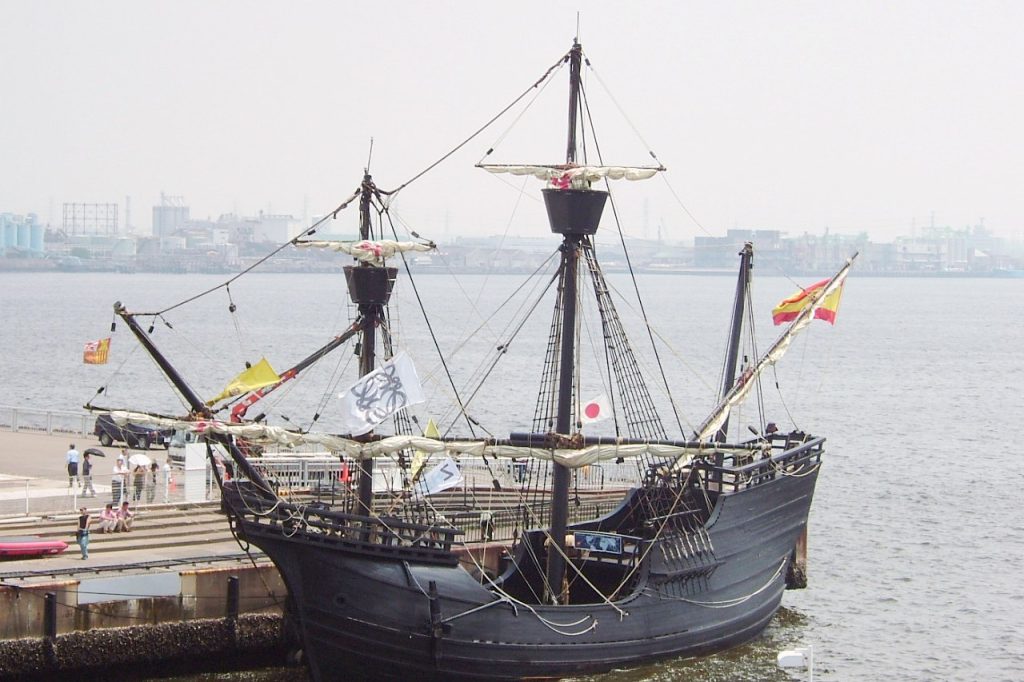
LISBON, July 13 — The shift is subtle but unmistakable. Five centuries after Ferdinand Magellan’s fleet slipped out of Seville, the explorer’s legacy is being re-examined not as a romantic adventure, but as a brutal, data-rich case study in early globalisation, leadership failure, and the sheer physics of planetary navigation. The trend underneath the anniversary coverage is a harder look at the numbers that survived.
Magellan, a Portuguese explorer sailing for Spain under King Charles I, led a fleet of five ships — the Trinidad, San Antonio, Concepción, Victoria, and Santiago — with 270 men from Seville on September 20, 1519. The expedition covered about 42,000 miles, or 68,000 kilometres.
That figure alone tells a story of endurance that modern logistics can barely comprehend.
The Discovery That Rewrote the Map
Magellan discovered the Strait of Magellan at the southern tip of South America between October and November 1520. He became the first European to sail from the Atlantic to the Pacific Ocean, a body of water he named. The voyage proved the Earth was round and that the Americas were not part of Asia.
It also demonstrated the vast size of the Pacific Ocean — a reality check for European cartographers who had underestimated the planet’s scale. But the expedition’s human cost is stark.
Magellan reached the Philippines in March 1521. He was killed in the Battle of Mactan on April 27, 1521, by forces of Lapu-Lapu. Juan Sebastián Elcano took command and completed the voyage, arriving in Spain on September 6, 1522, aboard the Victoria with only 18 survivors.
That is a survival rate of under seven percent.
What the Numbers Tell Us
Watch this space: historians are now using expedition logs and ship manifests to model the decision-making that led to that catastrophic loss rate. The fleet of five ships was reduced to one. The 270 men who departed were reduced to 18.
Magellan’s own death in a local conflict in the Philippines — a tactical choice that cost the mission its commander — is being studied as a case study in how leadership failure cascades through a complex operation. The expedition’s achievement was monumental: it proved the Earth was round, demonstrated that the Americas were not part of Asia, and revealed the vast size of the Pacific Ocean.
But the cost was equally monumental. The voyage covered about 42,000 miles, or 68,000 kilometres — a distance that, in 2026, a commercial aircraft can cover in under two days. In the 16th century, it took three years and consumed nearly all of its participants.
What’s Changing in the Narrative
The trend underneath the anniversary coverage is a shift away from the heroic explorer myth and toward the operational reality. Magellan was a Portuguese explorer who organised the first circumnavigation of the Earth, though he died before its completion. He sailed for Spain under King Charles I.
The expedition’s completion fell to Elcano, who brought the Victoria home with 18 survivors. The story is no longer just about the man who named the Pacific — it is about the system that failed 252 of its 270 participants.
What to watch next: expect more granular analysis of the expedition’s logistics — food supplies, ship maintenance, crew health — as historians apply modern project-management frameworks to the voyage. The 42,000-mile journey is being mapped in real-time data visualisations that show where the fleet lost ships, where it lost men, and where it lost its commander. The shift is from legend to ledger.




