
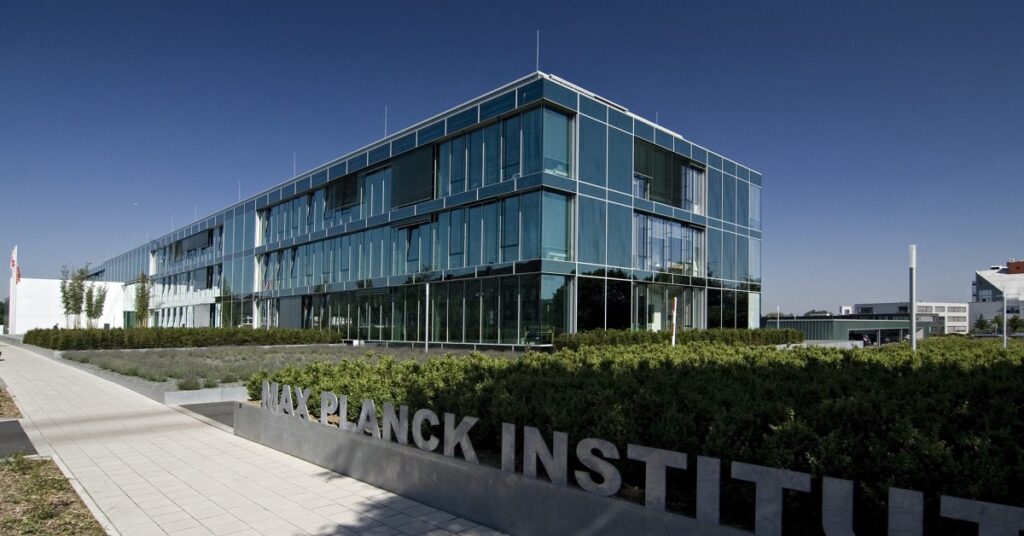
BONN, July 13 — The Max Planck Institute for Radio Astronomy is once again at the center of a discovery that stretches the boundaries of what we think is possible in space. The institute, based here in Bonn and founded in 1966, is one of 80 research bodies under the Max Planck Society, Germany’s premier basic research organization. It operates radio telescopes worldwide, including the Effelsberg 100-meter radio telescope in Germany.
For this particular finding, a team led by Dr. Arnaud Belloche of MPIfR analyzed data from ALMA to identify the molecule glycolaldehyde. The claim is that this is a significant step in understanding the chemical building blocks of life.
But on closer reading, the mechanics here are worth dissecting. Glycolaldehyde is a simple sugar, and its detection in interstellar space suggests that the raw ingredients for life as we know it could be more common than previously assumed. The team did not just include MPIfR researchers; it also pulled in scientists from the University of Cologne and the Harvard-Smithsonian Center for Astrophysics.
Their findings were published in the journal *Astronomy & Astrophysics* in August 2012.
Follow the history
MPIfR has a long history of discovering interstellar molecules. The institute was responsible for the first detection of interstellar methanol back in 1970. That earlier find was a landmark in astrochemistry, showing that complex organic molecules could form in the cold, dark voids between stars.
The current discovery of glycolaldehyde builds on that legacy, but the catch is that each new molecule found raises as many questions as it answers. How do these molecules survive the harsh radiation of space?
How do they assemble into more complex structures? The data came from ALMA, a powerful array of radio telescopes in Chile’s Atacama Desert. ALMA is not operated by MPIfR alone; it is a partnership involving Europe, North America, East Asia, and the Republic of Chile.
But the MPIfR team had access to the data and the expertise to interpret it. Dr. Belloche’s analysis pointed to the presence of glycolaldehyde in a region of star formation, which implies that the chemistry of life could be intertwined with the process of star birth itself.
The bottom line
What to watch next: if glycolaldehyde is present in star-forming regions, other, more complex sugars may be there too. The MPIfR team is likely to push for more observation time on ALMA to search for those molecules. The institute’s track record suggests they will find something.
The 1970 methanol detection was a first; the 2012 glycolaldehyde finding was another. The pattern is clear enough.
Follow the money, and the telescope time, and the next discovery will come.
Sources
{“@context”: “https://schema.org”, “@type”: “NewsArticle”, “headline”: “Max Planck Institute Scientists Lead Discovery of Interstellar Sugar”, “description”: “BONN, July 13 — The Max Planck Institute for Radio Astronomy is once again at the center of a discovery that stretches the boundaries of…”, “datePublished”: “2026-07-13T09:30:00+00:00”, “author”: {“@type”: “Person”, “name”: “Beatrice Ferrari”}, “publisher”: {“@type”: “Organization”, “name”: “InfoPulse Today”, “url”: “https://newsfeed.2bme.xyz/”}, “citation”: [{“@type”: “CreativeWork”, “url”: “https://en.wikipedia.org/wiki/Max_Planck_Institute_for_Radio_Astronomy”}]}




