
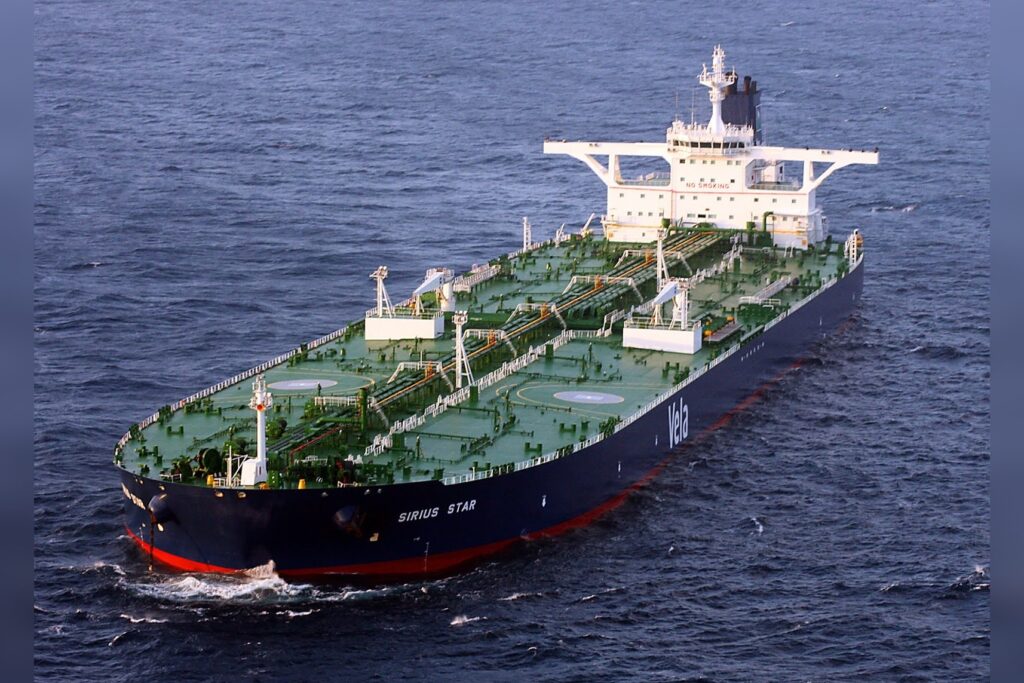
WASHINGTON, July 12 — The Strait of Hormuz, a 33-kilometer-wide maritime chokepoint at the narrowest point, carried approximately 17 million barrels per day of oil and petroleum products in 2023, according to the U.S. Energy Information Administration. That volume represents about 20% of global consumption. The numbers, drawn from the EIA’s most recent full-year data, underscore the strait’s continued centrality to world energy markets.
Geography and the flow of oil
The strait connects the Persian Gulf to the Gulf of Oman and the Arabian Sea. Its two shipping lanes are each about two miles wide. Major exporters that rely on this passage include Saudi Arabia, which shipped over 6 million barrels per day in 2023; Iraq, at 3.4 million barrels per day; the United Arab Emirates, at 2.8 million barrels per day; and Kuwait, at 2.5 million barrels per day. The record shows these four states alone account for the vast majority of the strait’s traffic.
The chokepoint has been a strategic asset since the early 20th century, when oil exports first rose from the Persian Gulf. Its depth and width, according to sources familiar with naval operations, make it vulnerable to both mining and anti-ship missile attacks.
A history of threats and confrontation
Iran has threatened to close the strait during past crises. The most sustained period of disruption came during the Iran-Iraq War from 1980 to 1988, when both sides attacked oil tankers in what became known as the Tanker War. In 1987, the United States reflagged Kuwaiti tankers to protect them under the U.S. flag, a operation that established a lasting American naval presence in the region.
The U.S. Navy’s Fifth Fleet, based in Bahrain and established in 1995, has historically patrolled the area to ensure freedom of navigation. More recently, between 2018 and 2019, the Islamic Revolutionary Guard Corps harassed commercial vessels and seized tankers amid the reimposition of U.S. sanctions on Iran.
The timeline of these incidents shows a pattern of escalation tied to broader geopolitical tensions. The IRGC’s actions during that period stopped short of a full blockade but demonstrated the strait’s vulnerability to asymmetric naval tactics.
What to watch
The EIA data from 2023 provides a baseline for understanding the stakes. Any sustained disruption to the 17 million barrels per day that transit the strait would affect global supply chains far beyond the Persian Gulf. The U.S. Fifth Fleet remains the primary guarantor of open passage, but the record shows that the strait’s narrow geometry and shallow depths offer multiple avenues for disruption, from mines to missile batteries positioned along the Iranian coast.
Sources familiar with the region’s military posture note that the strait’s width at its narrowest point, roughly 33 kilometers, leaves little room for error in the two-mile-wide shipping lanes. The balance between Iran’s stated ability to close the strait and the international commitment to keep it open has defined the security architecture of the Persian Gulf for decades. That balance, on the timeline of recent events, shows no sign of stabilizing.




