
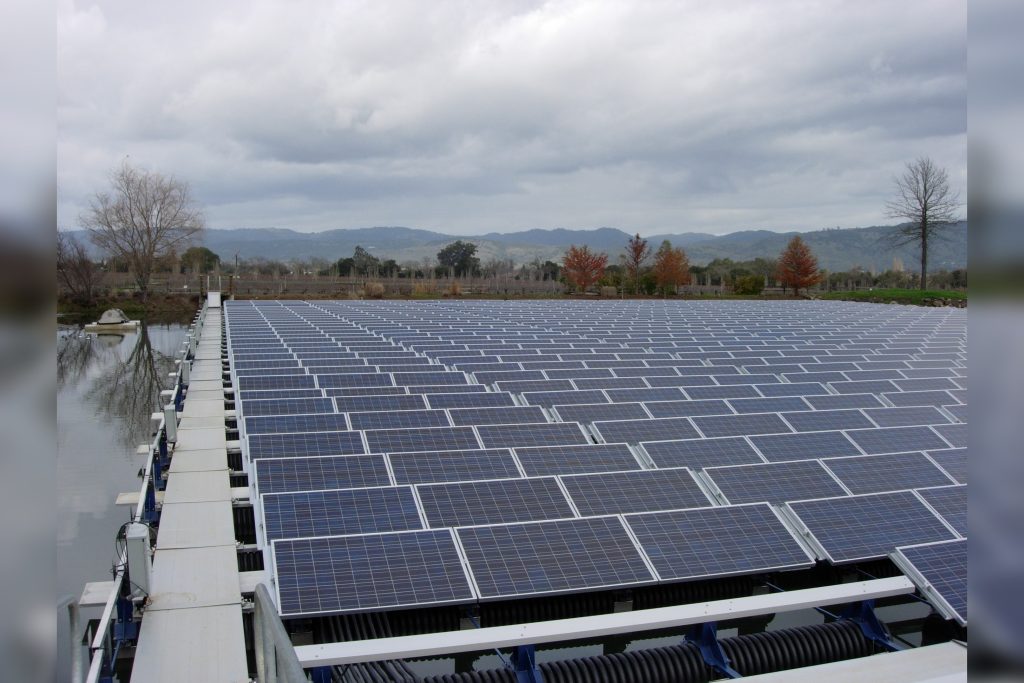
On 7 May 2025 the Electricity Generating Authority of Thailand (EGAT) commissioned the 45‑megawatt Sirindhorn floating solar array on the Sirindhorn reservoir in Ubon Ratchathani province. The installation, described as the biggest hybrid hydro‑solar plant in Southeast Asia, spreads 144,000 photovoltaic modules across 720,000 square metres of water directly above the dam’s tailrace.
Each panel is fastened to pontoons that are tethered by underwater cables, allowing the whole system to rise and fall with the reservoir’s 18‑metre seasonal swing. A 36‑metre observation deck and visitor centre sit on the western bank, forming part of a 570‑million‑baht package that also financed switch‑gear upgrades and a 1.5‑kilometre transmission spur. Because the dam’s turbines remain operational, the solar farm functions like a large battery: when sunlight peaks, solar output increases while water discharge is reduced, preserving stored water for evening peak demand.
EGAT estimates that the combined operation will avoid the use of 47,000 tonnes of LNG‑equivalent natural gas annually and prevent 41,000 tonnes of carbon‑dioxide emissions.
Regional Interest and Early Adoption
The commissioning ceremony attracted delegations from neighbouring countries. Nguyen Tuan Anh, deputy director of Vietnam’s Institute of Energy, told reporters that his ministry is examining the Thai model for 6,000 megawatts of proposed floating projects on the Dau Tieng and Tri An reservoirs, adding, “Thailand has proved you can add solar without evicting farmers or damming new rivers.” Indonesia’s state utility PLN announced it will float a 200‑megawatt tender on the Cirata reservoir in West Java, citing Sirindhorn’s performance data.
Malaysia’s Tenaga Nasional Berhad has already engaged the same engineering consortium—China’s Sinohydro and Bangkok‑based Symbior Solar—to design a 30‑megawatt pilot at the Chenderoh dam.
Economic and Environmental Assessment
EGAT governor Boonyanit Wongrukmit said the hybrid system delivers electricity at 2.44 baht per kilowatt‑hour, below the 2.50‑2.80 baht range for new gas‑fired plants. He noted that every baht saved is passed on to consumers through lower tariffs. Environmental organisations offered cautious approval.
Pianporn Deetes, Thailand campaigner for International Rivers, praised the avoidance of new land clearance but warned that persistent shading could modify water temperature layers. She called for year‑long monitoring of dissolved oxygen and fish‑spawning areas.
EGAT responded that twelve water‑quality sensors have been installed and that data will be released quarterly; initial readings show a surface‑temperature drop of 0.8 °C under the panels, which lies within the reservoir’s natural variability.
Expansion Plans and Financing
The Ministry of Energy used the launch to approve the second stage of the floating‑solar programme: 2,725 megawatts of installations at nine existing hydro sites by 2032. The largest planned array, 615 megawatts, will be situated at the Bhumibol dam in Tak province and is slated to begin procurement next year. Officials say that, combined with forthcoming onshore wind and rooftop solar projects, the expansion could raise the renewable share of Thailand’s generation to 40 % by 2037, up from the current 18 %.




