
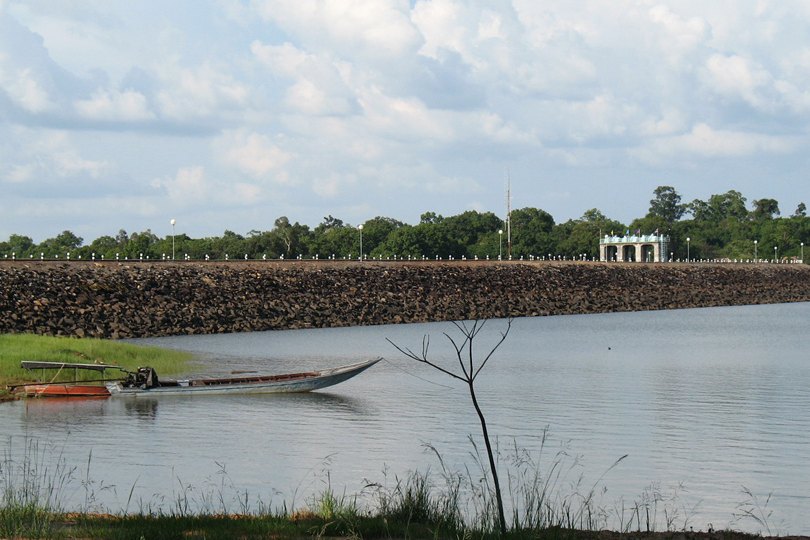
On the 7th of May, 2025, the Electricity Generating Authority of Thailand (EGAT) commissioned a groundbreaking project: a 45-megawatt hybrid hydro-solar plant floating on the Sirindhorn reservoir in northeastern Thailand. This plant, now the largest of its kind in Southeast Asia, is noteworthy not just for its solar panels, but for its innovative approach to water management.
During peak solar generation at midday, the plant’s operators adjust the water release from the dam. Rather than draining the reservoir, it begins to fill. As the sun sets and solar output diminishes, the dam releases the stored water, generating power in the evening.
This design essentially turns the floating solar array into a colossal water battery, storing energy in the form of water instead of electrons. This unique design addresses a fundamental challenge of solar power: generation occurs during the day when energy demand is typically lower, and peak demand often occurs in the evening.
By regulating water release during sunny hours and increasing it at night, the plant effectively shifts solar energy production to meet evening demand. EGAT estimates that this innovative operation reduces natural-gas usage by approximately 47,000 tonnes of liquefied natural gas equivalent per year and prevents around 41,000 tonnes of CO₂ emissions annually. Covering 720,000 square meters of the Sirindhorn reservoir, the array is situated directly above the dam’s tailrace.
Each panel is moored to pontoons anchored by underwater cables, allowing the entire structure to rise and fall with the reservoir’s 18-meter seasonal fluctuation. This is a significant shift — equivalent to nearly six stories of water level change — and the array is engineered to withstand it.
A 36-meter observation deck and visitor center stand on the western bank. These facilities were part of a 570-million-baht investment package that also included upgrades to switchgear and a 1.5-kilometer transmission spur. By integrating tourism infrastructure into the energy project, the government aims to draw attention to the plant’s technological achievements. Neighboring countries have taken notice.
Nguyen Tuan Anh, deputy director of Vietnam’s Institute of Energy, attended the commissioning ceremony and expressed interest in implementing similar projects on the Dau Tieng and Tri An reservoirs. He stated, “Thailand has shown that it’s possible to add solar power without displacing farmers or damming new rivers.”
This statement carries weight, as the acquisition of land for solar farms has become a contentious issue across Southeast Asia.
Farmers resist selling their rice paddies for solar fields, and the clearing of forests for utility-scale arrays has sparked controversy. Floating solar farms bypass both problems, as the Sirindhorn reservoir was already flooded for the dam, requiring no new land and no resettlement. Indonesia’s state utility, PLN, has announced plans to float a 200-megawatt tender on the Cirata reservoir in West Java, citing Sirindhorn’s performance data as justification.
Malaysia’s Tenaga Nasional Berhad has already hired consultants to assess similar projects on its own reservoirs. The Sirindhorn plant, operated by EGAT, demonstrates the feasibility and scalability of the hybrid hydro-solar model.
By pairing solar with existing hydro assets, EGAT can smooth the output curve, reducing the need for backup power and extending the dam’s effective generating capacity without burning more fossil fuels.
Related Stories
Thailand’s Floating Solar Farms Lead Regional Innovation #EGATLaunches #MWFloatingSolar #SirindhornDam #Climate #News




