
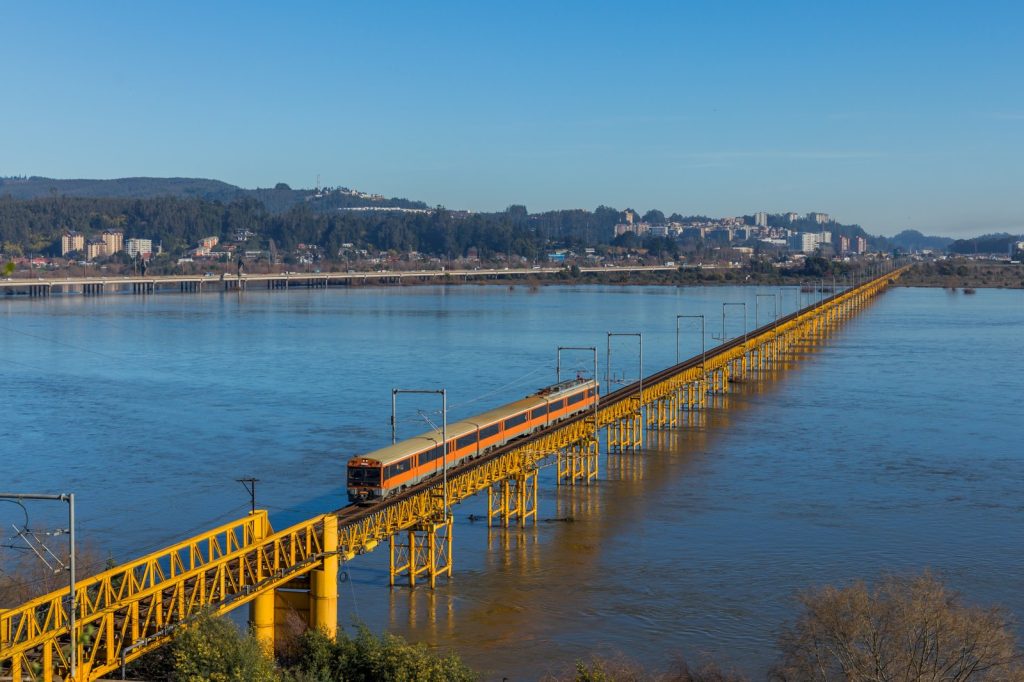
On September 1, 2023, a train struck a minibus at a railroad crossing in San Pedro de la Paz, a small community in Chile’s Bío‑Bio Region. The impact resulted in six fatalities, a figure now recorded in the public record.
Six families are mourning the loss of their loved ones, and the tragedy has sent shockwaves through the locality and beyond. The Bío‑Bio Region relies heavily on its rail network for the movement of goods and passengers. The crossing where the accident occurred forms part of this vital economic artery, yet it is now a site where warning signals apparently failed to prevent disaster.
Early reports indicate that the minibus driver may have attempted to cross the tracks while warnings were active. If confirmed, this would point to human error as a contributing factor.
However, the central question looming over the investigation is whether the crossing itself was adequately equipped. Official documents have not disclosed what safety measures — such as gates, lights, or bells — were present at the intersection. Investigators will need to examine every piece of safety equipment to determine if any malfunction or absence played a role. Local residents have already begun calling for improvements to the crossing.
Their demand reflects a predictable but necessary response to the loss. The pressure will fall on transportation officials, who must weigh the cost of upgrades against the risks of leaving crossings unchanged.
Each enhancement requires funding; each unmodified crossing retains potential danger. The collision has made this cost‑benefit calculation starkly visible. The Bío‑Bio Region is renowned for its rivers, forests, and wildlife reserves, attracting outdoor enthusiasts.
At the same time, freight and passenger trains traverse the same landscape, creating a longstanding intersection of natural beauty and industrial infrastructure. The accident forces a renewed examination of where these two realms meet — and where they collide.
The minibus was carrying a group of individuals whose identities have not been released. Their names and the specifics of their final moments will emerge as the investigation progresses. Authorities will ascertain whether the crossing signals were functioning correctly, whether the driver disregarded them, or whether other factors — such as mechanical failure or obscured sightlines due to vegetation — contributed to the crash.
The aftermath will involve a broader reckoning that extends beyond the driver’s estate or the railroad company. It will scrutinize the entire system of rail crossings within the region.
Chile’s railroad network is essential to the national economy, transporting timber, agricultural products, and passengers. Every crossing represents a potential point of failure, and this particular intersection failed catastrophically. San Pedro de la Paz is a modest town; a loss of this magnitude strikes deeply.
Neighbors knew the victims, and the personal impact is immediate. Shops have closed, flags have been lowered, and residents have gathered at the crossing site, uncertain of what to do yet unable to stay away.
The inquiry is expected to span weeks or possibly months. Its conclusions will shape decisions about possible criminal charges, regulatory revisions, and reallocation of funds for safety improvements. At its core, the investigation seeks to answer a simple yet profound question: what measures are required to render a railroad crossing sufficiently safe?
The answer, now clarified by the loss of six lives on September 1, 2023, is more evident than it was before the tragedy.




