
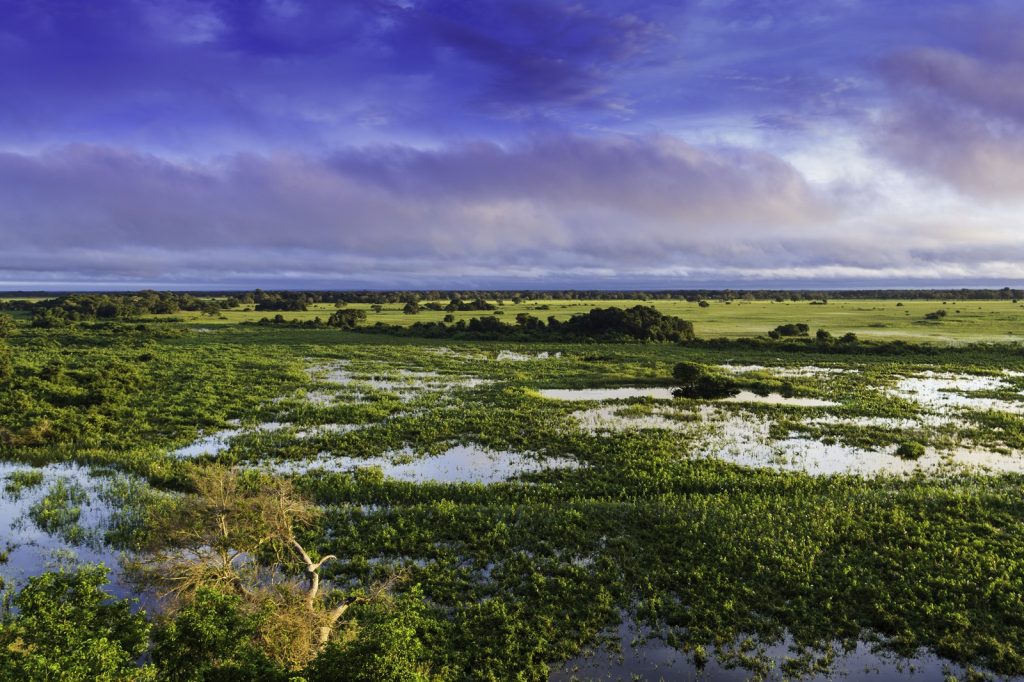
Pantanal, October 12, 2022 — infopulsetoday.com — For months, the cameras rolled in a place that had just burned. The Brazilian telenovela Pantanal, a remake of the 1990 original by Benedito Ruy Barbosa, aired its final episode on October 7, 2022. It premiered March 28 of the same year.
But the show’s production timeline is as much a part of its story as the plot itself. Crews shot on location in the Pantanal region — the world’s largest tropical wetland — shortly after the area suffered its worst forest fire on record.
That fact is not background noise. It is the frame through which the entire production must be understood. Writer Bruno Luperi adapted the original script for a new century.
Marcos Palmeira, Dira Paes, Jesuíta Barbosa, Irandhir Santos, and Alanis Guillen led the cast. The network, TV Globo, chose to film where the story is set, not on a soundstage in Rio.
That decision carried weight. The Pantanal is not a generic backdrop. It is a specific, fragile ecosystem, home to extraordinary biodiversity and to cattle ranching that has shaped the local economy for generations.
The show does not ignore that tension. It takes it on directly. The storyline pits the interests of different groups against one another — locals, natives, ranchers — in a fight over deforestation.
This is not a subplot. It is the engine of the drama.
The telenovela tackles the delicate balance between keeping an economic activity alive and protecting the land that makes that activity possible. Sustainable practices are not an afterthought in the script; they are the point. That makes Pantanal unusual.
Telenovelas are often dismissed as escapist fare. This one refused to look away from the crisis unfolding outside the frame.
The region had just burned. The show acknowledged that. It incorporated the devastation into its narrative, not as a lecture, but as a lived reality for the characters.
The producers aimed to raise awareness about the threats of climate change and deforestation in a place that cannot afford to ignore either. The original 1990 series was also set in the Pantanal, but the world around it has changed. Fires are worse.
The pressure on the land is more intense. The conflict between conservation and commerce is no longer a background issue; it is a daily confrontation.
The remake had to reflect that shift. It did. By filming on location, the production also made a practical statement.
It put money into a region that had suffered. It employed people who lived through the fires.
It showed the Pantanal not as a postcard but as a place where people work, struggle, and try to hold onto a way of life under threat. The show ran for just over six months. That is a short run by telenovela standards.
But the timing mattered. It aired as Brazil was emerging from a period of intense environmental debate, with the Pantanal serving as a symbol of both the country’s natural wealth and its vulnerability. The show did not resolve that debate.
It did not pretend to. What it did was put the faces of the people involved in that fight on screen, week after week, and let the audience see what is at stake.
The cattle-ranching industry, the biodiversity, the fires, the fight over land — none of it is simple. Pantanal did not simplify it. That is a rare thing for a prime-time soap opera. It is also why the show matters beyond its ratings.




