
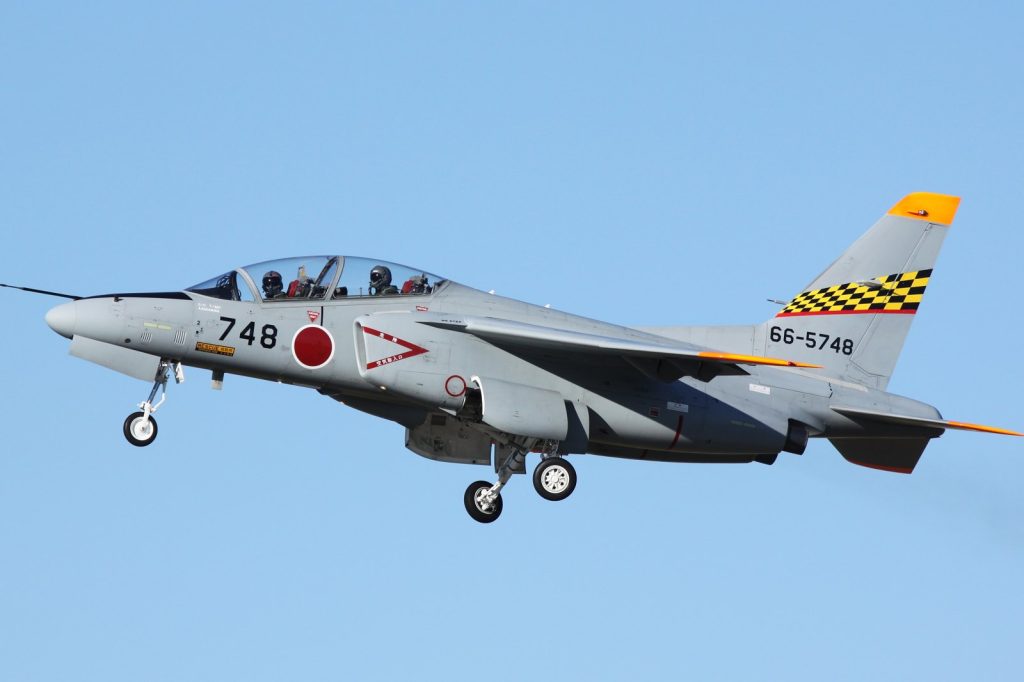
Two pilots from the Japan Air Self-Defense Force lost their lives Wednesday when their Kawasaki T-4 training aircraft crashed into a reservoir shortly after departing Komaki Air Base. The base is located in Aichi Prefecture, near Nagoya.
Emergency responders recovered the bodies of both airmen from the water. No other casualties were reported. The cause of the accident remains under investigation, and authorities have not yet released the names of the deceased, pending family notifications.
The Kawasaki T-4 is a twin-engine, subsonic jet trainer manufactured by Kawasaki Heavy Industries. It has been a mainstay of Japanese pilot training since the late 1980s, used for both basic and advanced instruction. Thousands of flight hours are logged on the platform annually with few serious incidents, making this crash a notable departure from its established safety record.
In response to the accident, the Japan Air Self-Defense Force has grounded all T-4 training flights. Investigators are examining wreckage and flight data to determine whether the crash resulted from mechanical failure, pilot error, or an external factor such as a bird strike. The duration of the grounding will depend on the findings. A mechanical issue could lead to an extended fleet-wide inspection, while other causes might allow flights to resume sooner.
Komaki Air Base shares its runways with a commercial airport and sits in a densely populated area of central Japan. The reservoir where the aircraft went down is visible from the base itself. Local emergency crews responded quickly, but the impact left no survivors. The proximity of the crash site to the runways suggests the pilots were in the critical early phase of flight, characterized by low altitude and high workload.
The base commander has expressed condolences to the families of the fallen pilots and pledged a thorough investigation. While the T-4 is a trainer rather than a frontline combat aircraft, the loss of two pilots represents a significant investment in training and experience. Japan has been modernizing its air defense forces and replacing older training platforms, but the T-4 was expected to remain in service for years.
This accident raises questions about readiness and safety procedures that will be addressed by the ongoing investigation. Military inquiries of this nature often remain confidential until all findings are finalized. For now, the T-4 fleet remains grounded, and the base near Nagoya has fallen unusually quiet as the search for answers continues.




