
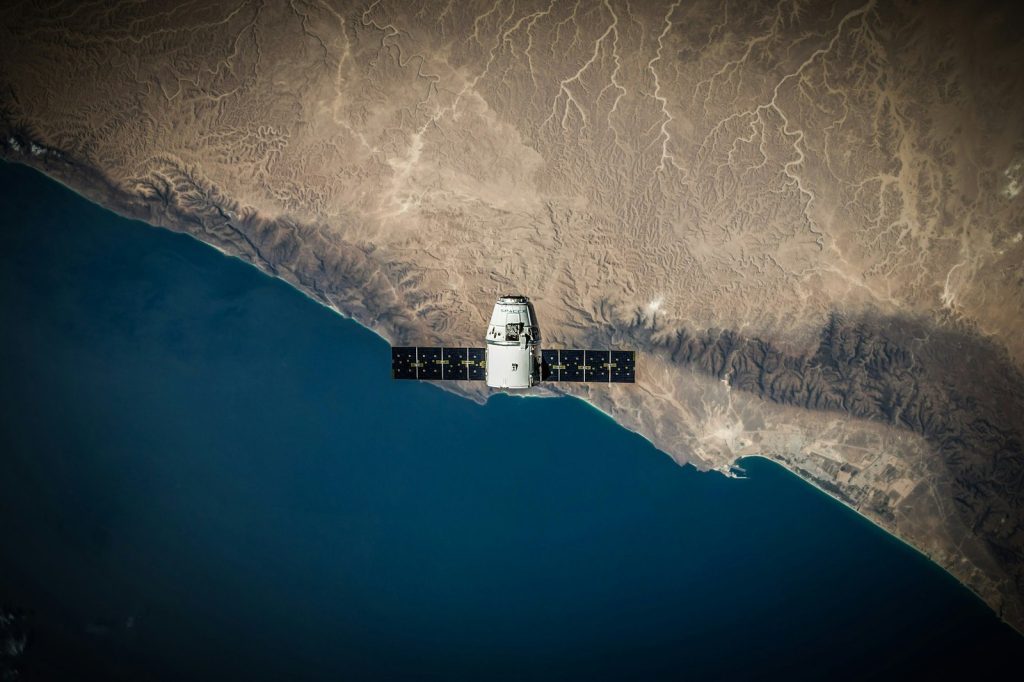
COLORADO SPRINGS, July 11 — The United States Space Force, the military service charged with protecting American interests in orbit, also holds the keys to a system that billions of people on the ground rely upon every day: the Global Positioning System. The GPS constellation is owned and operated by the United States government, with the Space Force responsible for its maintenance and operation. That technical reality places a Cold War-era navigation network at the heart of modern civilian life, from aviation to agriculture to the smartphone in your pocket.
The 2nd Space Operations Squadron (2 SOPS), based at Schriever Air Force Base in Colorado, manages the satellite constellation. This unit, part of the Space Force, handles the day-to-day task of keeping the network of spacecraft healthy, accurate, and in the correct orbits.
Under the hood, this means constant monitoring of signal timing, orbital mechanics, and the health of each satellite’s atomic clocks — the beating heart of the entire positioning system.
From military necessity to global utility
The system was developed by the U.S. Department of Defense, with key contributions from the U.S. Air Force. The original concept was developed by engineers at the Johns Hopkins University Applied Physics Laboratory and the U.S. Naval Research Laboratory. The detail that matters here is that GPS began as a purely military project, designed to give American forces an unjammable, all-weather navigation capability.
Dr. Ivan Getting conceived the concept of a satellite-based navigation system in the 1950s, laying the theoretical groundwork for what would become a multi-billion dollar infrastructure project. Dr. Bradford Parkinson later served as the first program director for GPS in the 1970s, shepherding the system from concept into operational reality.
The civilian dimension arrived by political decision, not technical inevitability. President Ronald Reagan championed civilian use of the system after the 1983 KAL 007 incident, in which a Korean airliner strayed into Soviet airspace and was shot down after its navigation systems failed. Reagan’s directive opened the system to the world, though for years the civilian signal was deliberately degraded under a policy known as Selective Availability.
That policy was ended by President Bill Clinton in 2000, and the U.S. government maintains a policy of providing GPS signals free of charge to users worldwide, as stated in the 1996 Presidential Decision Directive.
The hardware in the sky
The current generation of satellites, the GPS III series, are built by Lockheed Martin. The first satellite in this series, GPS III SV01, was launched in 2018. These spacecraft represent a significant upgrade over previous generations, offering three times better accuracy and up to eight times improved anti-jamming capabilities for military users.
For civilian users, the new satellites broadcast a new civil signal, L1C, designed to be interoperable with other global navigation satellite systems such as Europe’s Galileo. The Space Force’s role as the operator of this constellation places it in a unique position.
It is not merely a consumer of technology but the custodian of a critical national security asset that has become a global public utility. The 2 SOPS at Schriever monitors the health and status of the satellites around the clock, commanding them to perform station-keeping maneuvers, updating their navigation messages, and managing the complex choreography of a constellation that must maintain precise timing and positioning to within nanoseconds and centimeters. The technical reality of GPS is that it is a one-way broadcast system.
The satellites do not track users; they simply transmit timing signals and orbital data. A receiver on the ground calculates its position by measuring the time delay of signals from at least four satellites.
This architecture, elegant in its simplicity, means that an unlimited number of users can access the system simultaneously without overloading it. It also means that the system is inherently passive from the user’s perspective — there is no signal sent back to the satellite, preserving user privacy. As ever, the detail that matters is that the Space Force’s responsibility extends beyond simply keeping the satellites running.
It must also protect the system from interference, whether from accidental radio frequency interference, intentional jamming, or the growing threat of anti-satellite weapons. The GPS signal is weak by the time it reaches the Earth’s surface — roughly equivalent to the light from a 25-watt bulb at 20,000 kilometers — making it vulnerable to disruption. The Space Force’s electronic warfare units train to detect and locate jammers, and the service is developing more resilient signal structures for future satellites.
The relationship between the Space Force and the broader defense establishment is worth noting. The system was developed by the Department of Defense, and the Air Force played a key role in its early deployment.
The transfer of GPS operations to the Space Force in 2019 was part of a broader reorganization of military space assets under the new service. The 2 SOPS, previously an Air Force unit, became a Space Force squadron, reflecting the service’s growing portfolio of space-based capabilities.
For informed readers, the distinction between the Space Force’s operational role and the broader policy framework is important. The U.S. government owns the system, and the Space Force operates it, but the policy of
{“@context”: “https://schema.org”, “@type”: “NewsArticle”, “headline”: “U.S. Space Force, Lockheed Martin, and GPS Scientists Key”, “description”: “COLORADO SPRINGS, July 11 — The United States Space Force, the military service charged with protecting American interests in orbit, also holds the keys to…”, “datePublished”: “2026-07-11T09:30:00+00:00”, “author”: {“@type”: “Person”, “name”: “Sebastian Smith”}, “publisher”: {“@type”: “Organization”, “name”: “InfoPulse Today”, “url”: “https://newsfeed.infopulsetoday.com/”}}




