
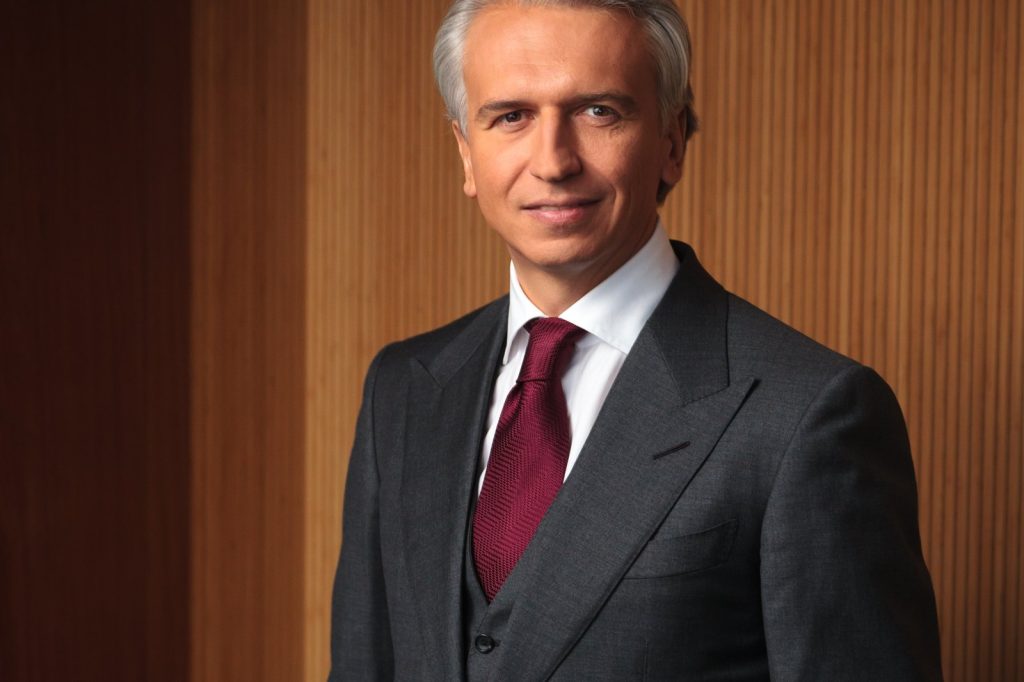
LONDON, July 7 — Alexander Dyukov, the chief executive of Gazprom Neft, has spent more than a decade and billions of dollars trying to make a Soviet-era refinery look like a modern industrial asset. The mechanics here are worth following closely, because they reveal how Russia’s energy machine keeps running despite sanctions designed to stop it. Dyukov, born in 1967 in Leningrad, now Saint Petersburg, took the helm of Gazprom Neft in 2008.
The company is the oil subsidiary of Gazprom, the state-controlled gas giant, and it owns the Omsk Oil Refinery, one of Russia’s largest refining complexes. On paper, Dyukov has been a moderniser.
He has overseen investments of over $5 billion in refinery upgrades since 2010. The claim is that these upgrades were about efficiency and environmental performance. The catch is that they also increased Russia’s capacity to process crude into fuel for both domestic consumption and export, a strategic priority for the Kremlin.
But the story does not end with corporate strategy. Dyukov is a close ally of Russian President Vladimir Putin, and since 2022 he has been sanctioned by the United States, the European Union, and the United Kingdom.
The stated reason: his role in Russia’s energy sector supporting the war in Ukraine. On closer reading, the sanctions regime is meant to squeeze the revenue stream that funds the war. Dyukov sits at the choke point — the CEO of a major oil producer and refiner, also a member of the board of directors of Gazprom itself.
His career path tracks the rise of the Putin-era energy elite. Before Gazprom Neft, Dyukov worked at Sibur, the petrochemicals giant, and served as a deputy minister of energy. The pattern is familiar: a technocrat moves between government and state-owned industry, accumulating both authority and personal wealth.
Forbes estimated his net worth at $1.2 billion as of 2023. That figure places him among Russia’s richest executives, and it raises a question the sanctions architects have not fully answered: how much does a $1.2 billion net worth matter when the assets generating it are sanctioned?
The Omsk Refinery and the drone question
The Omsk Refinery is a case study in the limits of Western pressure. On January 25, 2024, a drone strike hit the facility, causing a fire. The company stated there was no major disruption.
That single sentence is revealing. It tells us that Ukraine’s campaign of long-range drone strikes against Russian energy infrastructure has reached Omsk, deep in Siberia.
It also tells us that Gazprom Neft, at least publicly, is treating the incident as a minor event. The truth is harder to verify. Refinery fires are dangerous and costly, but the company’s message was clear: production continues.
Dyukov has been the man in charge through this period of war, sanctions, and drone attacks. He has led Gazprom Neft since 2008, a tenure that spans the global financial crisis, the oil price crash of 2014, the COVID-19 pandemic, and now the full-scale war in Ukraine.
That kind of longevity in a senior Russian state-enterprise role is not accidental. It signals political trust at the highest level. It also means Dyukov has been the architect of the company’s response to sanctions, a response that has involved finding new buyers for oil, developing alternative payment mechanisms, and investing in domestic refining to reduce dependence on foreign technology.
The $5 billion investment figure since 2010 is worth examining. That sum was spent on upgrading refineries, including the Omsk facility. The stated goal was modernisation.
The unstated goal was self-sufficiency. A refinery that can process more types of crude and produce higher-quality fuels is a refinery that can keep the Russian economy running even when Western equipment and expertise are cut off.
Follow the money: that $5 billion was not just about better margins. It was about resilience in the face of exactly the kind of sanctions that now apply to Dyukov personally.
The sanctions puzzle
Dyukov is sanctioned by the US, the EU, and the UK. That means his assets in those jurisdictions are frozen, and Western companies are generally prohibited from doing business with him. But the practical effect is complicated.
Gazprom Neft is a Russian company operating primarily in Russia. Its revenue comes from selling oil and refined products, much of it to customers in Asia, Africa, and the Middle East.
The sanctions regime tries to block that trade by targeting the infrastructure of finance and insurance, but enforcement is uneven. The result is a cat-and-mouse game in which Dyukov’s company adapts, and the sanctions adapt in turn. His role on the board of Gazprom adds another layer.
Gazprom is the parent company, the gas giant that supplies Europe’s remaining pipeline gas and is itself heavily sanctioned. Dyukov sits at the intersection of Russia’s oil and gas strategies.
That makes him a key figure in understanding how the Kremlin manages its energy revenue. The question for Western policymakers is whether targeting individuals like Dyukov actually reduces Russia’s oil income, or merely shifts it to less transparent channels.




