
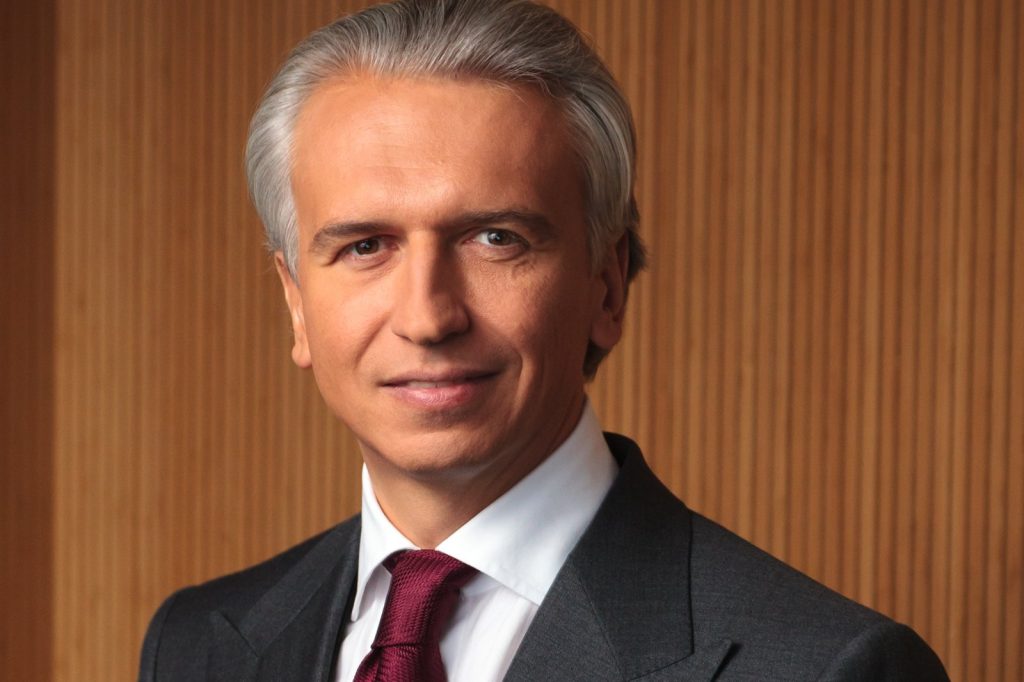
The Engineer Behind the Modernization
Alexander Dyukov was born on January 13, 1967, in Leningrad. He graduated from the Leningrad Shipbuilding Institute in 1991, a year that saw the Soviet Union unravel and the beginnings of a new Russian capitalism. He entered the Gazprom system in 2003 and ascended to chief executive of Gazprom Neft by 2008. Under his leadership, the company underwent a significant transformation. Oil production increased substantially, and a major program of refinery modernization was undertaken. Central to this effort was the Omsk Refinery, a sprawling complex in Siberia long used for Soviet fuel production. Dyukov’s team poured resources into upgrading its technology to boost efficiency and meet more stringent environmental and output standards. The refinery became a flagship project, a symbol of what state backing and corporate ambition could achieve.
In 2014, Dyukov was appointed to the board of directors of Gazprom itself, the parent company that remains a sinew of the Russian state’s fiscal strength. His close ties to the Russian government are well documented. In a system where energy and state security are inseparable, he is not just a businessman but an operator of a critical national asset.
The Attack on Omsk and Its Consequences
The drone strike on the Omsk Refinery was not a random act of sabotage. It was a calculated strike against a node in Russia’s energy infrastructure, a domain the Kremlin has long considered inviolable. The facility’s output is crucial for domestic fuel supply, particularly for the Russian military and for the vast Siberian region. A prolonged shutdown or reduction in capacity could ripple through the Russian economy, affecting everything from aviation fuel to heating oil.
Dyukov’s task is twofold. He must oversee the physical reconstruction of the damaged sections, a complex engineering challenge made more difficult by Western sanctions that restrict the import of specialized equipment and technology Russian refineries have historically relied upon. He must also manage the financial fallout — the cost of repairs, the loss of production, and potential increases in insurance premiums all represent significant liabilities. How he navigates these pressures will be closely watched by investors, the Russian government, and Ukraine’s military planners, who are assessing the effectiveness of their campaign against Russian energy assets.
A Company Shaped by Privatization and War
Gazprom Neft began as Sibneft, created in 1995 from the transfer of state-owned oil assets. That collection included production units, the Omsk Refinery, and distribution networks. During the turbulent privatizations of the 1990s, Sibneft was acquired by powerful oligarchs at a fraction of what it would soon be worth, a symbol of the era’s controversial transfer of state wealth. Ownership shifted through the years. Attempts to merge with another large Russian oil firm fell apart twice. In 2005, the state-controlled gas giant Gazprom purchased a controlling stake for billions of dollars. The following year, the company was renamed Gazprom Neft. It later moved its headquarters from Moscow to St. Petersburg, bringing it geographically closer to the political center of power. Gazprom now holds a vast majority of shares.
Gazprom Neft is Russia’s third-largest oil producer and ranks third in refining throughput. The Omsk Refinery remains one of its largest processing complexes. The wider picture is one of a Russian energy sector that is both a target and a weapon. For years, Europe depended on Russian gas and oil, a relationship that shaped the continent’s foreign policy and economic structure. That era has ended. The war in Ukraine shattered that interdependence, and the drone strike on Omsk is a stark reminder that the conflict is no longer confined to the front lines — it has reached the heart of Russia’s industrial base. Dyukov’s silence since the attack is telling. To speak of the damage would be to admit vulnerability; to detail the recovery would be to provide intelligence to an adversary. The man who spent sixteen years building Gazprom Neft into a more modern, productive enterprise now finds himself managing damage control in a war he did not start but which his company’s profits have helped to sustain.




