
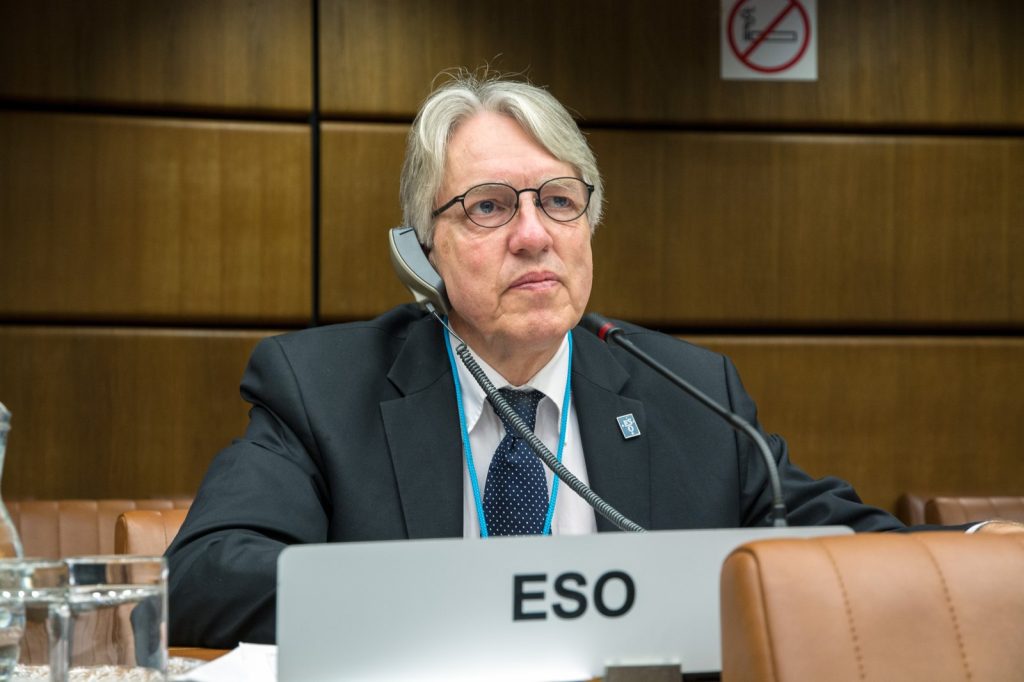
VIENNA, July 20 — The United Nations Committee on the Peaceful Uses of Outer Space concluded its annual session last month at the Vienna International Centre, officials confirmed, marking another year of deliberation on the legal and cooperative framework governing humanity’s expansion beyond Earth. The committee, which has grown to 104 member states, met in June as scheduled, continuing a pattern of work that dates back to the earliest days of the Space Age.
The record shows that the United Nations’ institutional interest in peaceful space use began in 1957, following the launch of Sputnik. That event triggered a geopolitical reaction that led the General Assembly to create an ad hoc committee of 18 members on 13 December 1958.
The following year, on 12 December 1959, the body became a permanent committee with 24 members. Yet Cold War tensions intervened: due to US-Soviet tensions during the Space Race, the committee did not meet again until March 1962.
A Cold War framework
The resumption came after General Assembly Resolution 1721 (XVI), a document that set the legal and operational foundation for what the committee does today. According to that resolution, international law and the UN Charter apply in outer space. The resolution also directed the committee to study legal problems arising from space exploration, required states to inform the committee of all launches for the UN’s public registry, and tasked the body with acting as an information exchange while reviewing reports from the World Meteorological Organization and the International Telecommunication Union.
That 1962 restart shaped the committee’s dual-track structure. The Scientific and Technical Subcommittee now meets each February, and the Legal Subcommittee meets each April.
The parent committee itself convenes annually in June. All sessions take place at the Vienna International Centre in Austria, where the United Nations Office for Outer Space Affairs has served as the committee’s secretariat since 1958, publishing all related documents.
Five treaties and the question of compliance
The committee’s work overseeing implementation of five UN treaties remains a central function. The record identifies two of those by name: the Outer Space Treaty — formally the Treaty on Principles Governing the Activities of States in the Exploration and Use of Outer Space, including the Moon and Other Celestial Bodies — and the Rescue Agreement, or the Agreement on the Rescue of Astronauts, the Return of Astronauts and the Return of Objects Launched into Outer Space. These instruments form the legal architecture on which all subsequent space activity rests.
As membership has swelled from 24 to 104 nations, the committee’s composition reflects the fragmentation of space ambitions. What began as a dialogue between two Cold War antagonists now includes emerging space powers, commercial operators, and states with no launch capability but a stake in orbital governance.
What to watch
The next sessions on the calendar are the Scientific and Technical Subcommittee in February and the Legal Subcommittee the following April. The committee’s annual report from the June session will be published by the United Nations Office for Outer Space Affairs in due course. As the number of objects in orbit rises and private actors push deeper into space, the committee’s capacity to maintain the framework established in the 1960s will face continued testing.




