
WASHINGTON, July 9 — The relationship between the United States and Iran remains defined by decades of mistrust, with the shadow of 1979 still stretching across every diplomatic exchange and military posture. For the families of American service members stationed across the Middle East, and for the analysts watching global oil markets, the question is not whether tensions will flare, but which scenario plays out.
Since the Iranian Revolution and the hostage crisis that ran from November 4, 1979 to January 20, 1981, the two nations have been locked in an adversarial stance. Today, the flashpoints are familiar but no less dangerous: Iran’s nuclear program, its support for proxy forces across the region, and the constant friction in the Strait of Hormuz, a waterway critical to global energy supplies.
The US Energy Information Administration projects global oil demand will reach 104 million barrels per day in 2025. That figure gives a sense of the stakes. Any disruption in the Strait of Hormuz does not just affect tanker schedules — it touches the price of petrol, the cost of heating a home, the stability of economies far from the Gulf.
Three paths forward
Analysts have mapped out several possible trajectories for US-Iran relations, each carrying very different consequences for markets and for the people who depend on stable energy prices. The first scenario is diplomatic. The US and Iran could resume nuclear talks, potentially leading to a new agreement.
In that case, oil prices would likely fall by 10 to 15 percent, and the Dow Jones Industrial Average could rally by 2 to 3 percent. For investors and for families watching fuel costs, that would be a welcome reprieve.
The second scenario is a limited military confrontation. A tit-for-tat exchange — perhaps US strikes on Iranian Revolutionary Guard Corps assets, or Iranian attacks on US bases — could trigger a 5 to 10 percent market correction. Oil prices could spike to $120 per barrel.
That kind of shock reverberates quickly. The International Monetary Fund estimates that a sustained 10 percent increase in oil prices reduces global GDP by 0.2 percent after one year.
That is not an abstract number. It translates into slower hiring, higher costs for goods, and tighter household budgets. The third scenario is the one that keeps defence planners awake at night.
A full-scale conflict involving a blockade of the Strait of Hormuz could cause a 20 to 30 percent market decline and push oil prices above $150 per barrel. The only parallel in modern memory is the 1973 oil crisis, which sent shockwaves through Western economies and reshaped energy policy for a generation.
Military assets and red lines
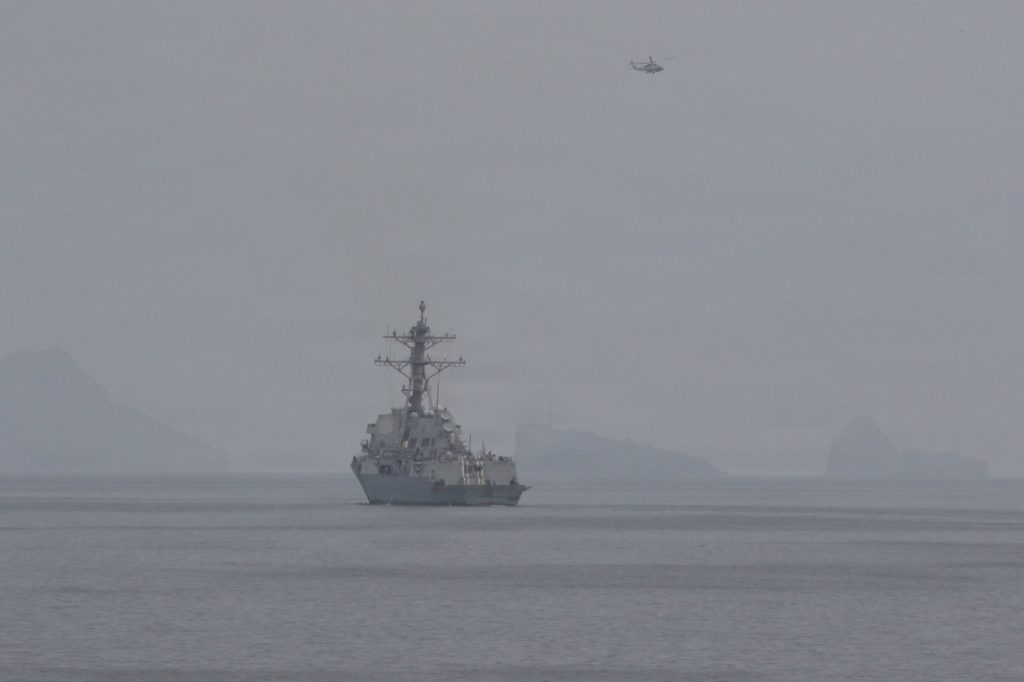
The United States maintains a significant military presence in the region. The USS Dwight D. Eisenhower carrier strike group is deployed, along with B-52 bombers stationed at Al Udeid Air Base.
Patriot missile batteries are positioned in Saudi Arabia and the United Arab Emirates. These are not symbolic deployments.
They represent a credible deterrent, but also a potential flashpoint if miscalculation occurs on either side. Iran, for its part, possesses over 3,000 ballistic missiles, according to US intelligence estimates. That arsenal is capable of reaching Israel and US bases throughout the region.
The range and scale of that capability is a central factor in any calculation of risk. The US presidential election in November 2024 could also shift policy.
The candidates have differing stances on Iran, and the outcome will shape the direction of diplomacy and deterrence for years to come. The current administration, led by President Donald Trump, with Vice President JD Vance and Secretary of State Marco Rubio, has taken a firm line, but the electoral calendar introduces its own uncertainties.
What to watch
For now, the situation remains fluid. The key indicators are diplomatic signals from Tehran and Washington, the movement of naval assets, and the price of crude oil. Each tells a different part of the story.
The Strait of Hormuz remains open. The missiles remain in their silos.
The talks remain stalled. But the history of this relationship suggests that calm can turn to crisis with little warning. The human side of this story is not just about geopolitics.
It is about the families of the 3,000 or more American service members stationed in the Gulf region. It is about the Iranian families who have lived through decades of sanctions and isolation.
And it is about the global economy, where a disruption in oil supply touches everything from the cost of a plane ticket to the price of bread. For now, the world watches. The scenarios are mapped.
The consequences are understood. The only question is which path events will take.
{“@context”: “https://schema.org”, “@type”: “NewsArticle”, “headline”: “Us Iran Tensions Impact Global Oil Markets Through 2025”, “description”: “WASHINGTON, July 9 — The relationship between the United States and Iran remains defined by decades of mistrust, with the shadow of 1979 still stretching…”, “datePublished”: “2026-07-09T09:30:00+00:00”, “author”: {“@type”: “Person”, “name”: “James Roberto”}, “publisher”: {“@type”: “Organization”, “name”: “InfoPulse Today”, “url”: “https://newsfeed.infopulsetoday.com/”}}




