
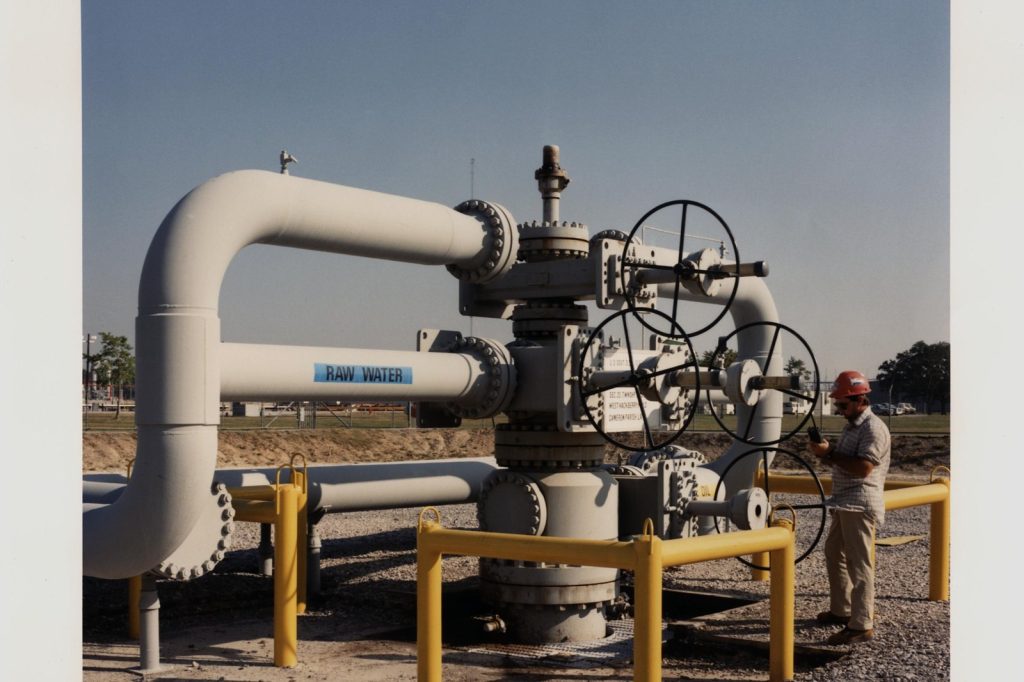
WASHINGTON, July 19 — The U.S. Strategic Petroleum Reserve has dropped by 3 million barrels to its lowest level since 1983, a milestone that underscores decades of withdrawals and limited replenishment. The reserve, authorized by the Energy Policy and Conservation Act of 1975 after the 1973 oil crisis, remains the world’s largest emergency crude stockpile, with a statutory capacity of 727 million barrels. First oil was stored in 1977.
The reserve is held in four massive salt dome caverns along the Gulf Coast: Bryan Mound (Texas), Big Hill (Texas), West Hackberry (Louisiana), and Bayou Choctaw (Louisiana). Current levels are now comparable to those seen shortly after the reserve was first established, in the early 1980s.
A History of Drawdowns
The SPR has only been drawn down for emergency purposes a handful of times: 17 million barrels sold during the 1991 Gulf War; 11 million barrels loaned after Hurricane Katrina in 2005; and 30 million barrels released in coordination with the International Energy Agency during the 2011 Libyan civil war. Then came a large release. In 2022, following Russia’s invasion of Ukraine, a 180-million-barrel release was ordered to combat high gasoline prices.
By early 2024, the SPR held roughly 375 million barrels. The 3-million-barrel drop reported today reflects both routine commercial exchanges and ongoing strategic releases — a slow bleed rather than a single gulp.
The cumulative effect, however, is undeniable. The Department of Energy, which manages the reserve, has attempted small-scale purchases to replenish stocks, but high prices and congressional constraints have kept those efforts modest. The 3-million-barrel loss reported here is small in absolute terms, but it compounds a longer trend.
The statutory capacity of 727 million barrels remains an engineering benchmark; the operational reality is closer to half that. The salt dome caverns themselves are intact and fully functional — the issue is what they contain, not their structural integrity.
What to watch next is whether the administration will shift its posture on replenishment. With global crude markets still volatile and the SPR sitting at levels unseen in four decades, the margin for strategic error is narrowing. Reserve managers have levers to pull — they can pause commercial exchanges, they can ask Congress for a larger budget for oil purchases — but those levers require political will.
The Department of Energy has not announced any new purchase schedule. For now, the SPR remains the world’s largest strategic stockpile, but its current inventory tells a story of a reserve that has been called upon repeatedly and repaid only in small, hesitant instalments. The 3-million-barrel drop is the latest chapter in that story.




