
Venezuela holds the planet’s largest proven oil reserves, an estimated 303 billion barrels, yet by 2024 the country was producing roughly 400,000 barrels per day — a jarring drop from the 3.2 million barrels per day it pumped in 2008. That collapse, fueled by years of mismanagement and compounded by international sanctions, has redrawn the energy map of the Western Hemisphere and set in motion one of the largest population movements in modern history. The crisis is not new, but the policy tools Washington is deploying continue to evolve.
From Oil Giant to a Fraction of Its Peak
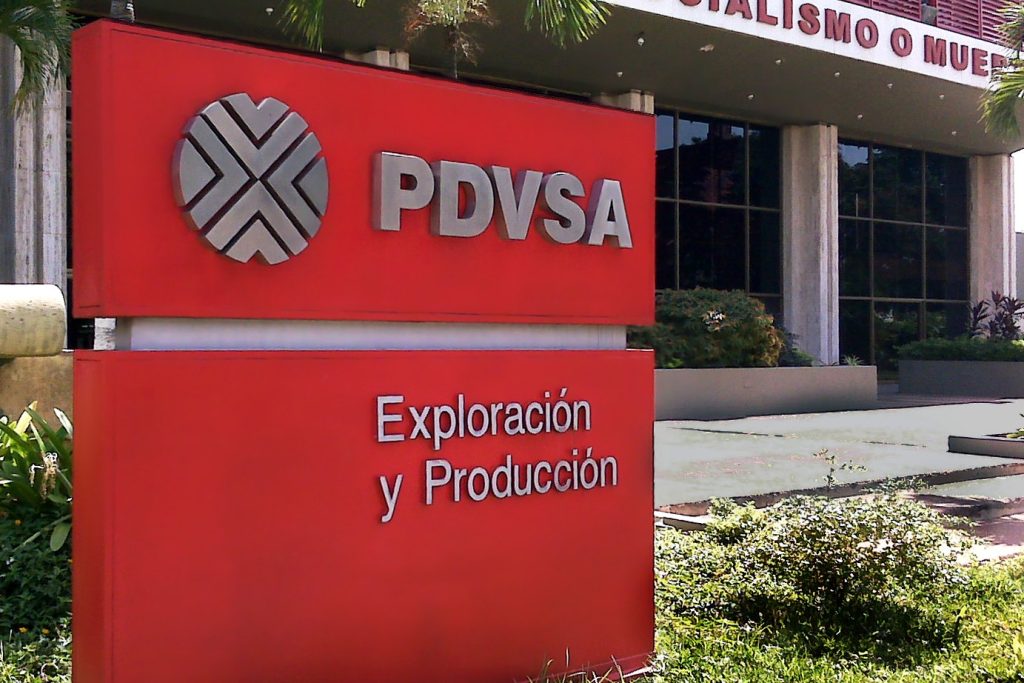
The state-owned oil company Petróleos de Venezuela, known as PDVSA, remains the primary target of U.S. sanctions. The Treasury Department’s sanctions list now covers more than 150 Venezuelan individuals and entities, a pressure campaign that has been layered on since the late 2010s as a central lever to push for democratic change in Caracas.
The sanctions regime has cut off PDVSA’s access to American refineries and financial markets, contributing directly to the production decline that has left the sector operating at a fraction of its 2008 peak. By starving the government of Nicolas Maduro of revenue, the measures have also deepened the economic hardship that fuels the exodus. The human toll is staggering: the United Nations estimates that 7.7 million Venezuelans have left the country since 2014, making it the largest migration crisis in the Western Hemisphere.
The United States has committed more than $3.8 billion in humanitarian aid to the region since 2017, with $1.2 billion of that specifically directed at Venezuelan refugees and migrants.
Fresh Aid and a Potential Path for Creditors
In March 2025, the White House issued a new executive order that expands the administration’s toolkit. The order authorizes the Secretary of State to allocate up to $500 million in U.S. foreign assistance to Venezuela, including humanitarian aid — a fresh tranche atop the billions already spent. It also grants the Secretary authority to negotiate debt restructuring with Venezuela’s creditors.
The country’s external debt is estimated at $150 billion, a figure that has hung over bond markets for years. For investors holding Venezuelan paper, the provision signals a potential path to recovery, though the road remains long and complex given a collapsed oil sector.
The administration’s willingness to commit another half-billion dollars in aid underscores that Washington views Venezuela as a long-term commitment. Whether the debt restructuring authority leads to actual negotiations will be a key development to watch. Any deal would be complex, entangled with $150 billion in external obligations and a production base that has not recovered from the 2024 levels of roughly 400,000 barrels per day.
Context of a Loaded Term
The coverage of these developments has sometimes used the label “New Order,” a phrase with a long and varied history in global politics. The term described Nazi Germany’s continental reordering goals in the 1940s and Japan’s wartime vision for East Asia in 1938.
Suharto’s Indonesian regime from the late 1960s was formally called the New Order, and a Venezuelan far-right political party also carried that name from the mid-1970s until the early 2000s. Outside politics, the phrase appears in music, film, and games as a title for bands, albums, and fictional empires. Venezuela’s own political history includes a party called New Order that operated for decades before dissolving.
The reuse of such a loaded term in coverage can blur distinct events and regimes for readers. Knowing the varied past uses helps the public separate a sanctions-and-aid story from older authoritarian projects.
Labels travel across borders and eras without warning, and clarity matters when reporting on a crisis whose consequences continue to reshape the hemisphere.




