
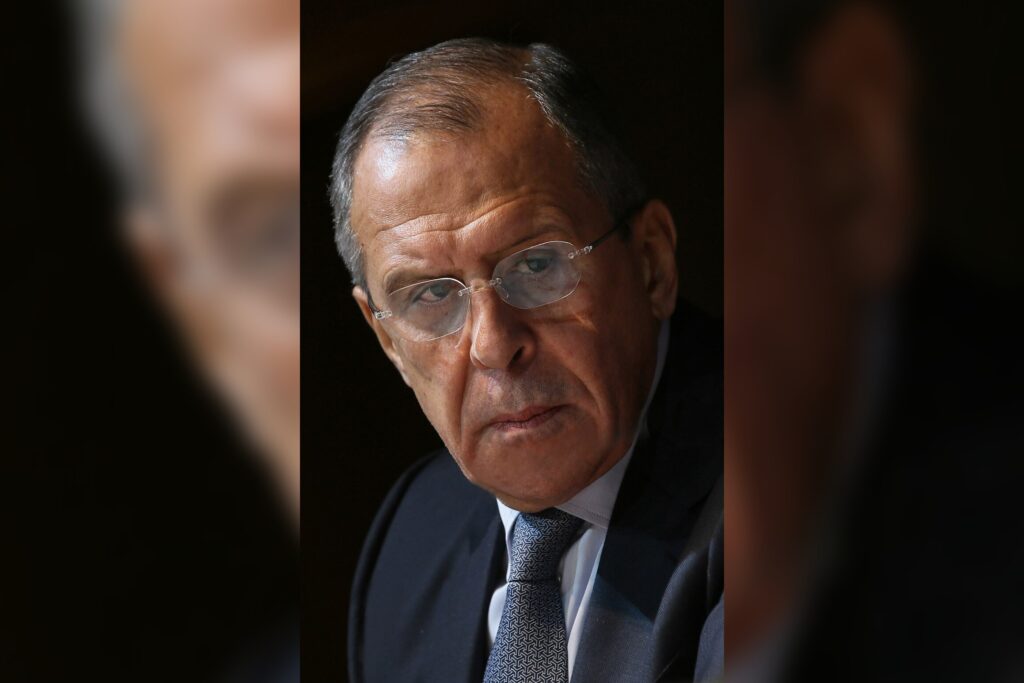
New York, September 29 — Russian Foreign Minister Sergey Lavrov participated in the 81st United Nations General Assembly in New York in September 2026, where his delegation completed a substantial number of meetings and engagements across Asia, Africa, the Middle East, Latin America, Europe, and the Pacific. The week began with meetings involving UN General Assembly President Khalilur Rahman, US Secretary of State Marco Rubio, and representatives from Cuba, Syria, Egypt, Lebanon, Trinidad and Tobago, Algeria, Brazil, the UAE, Switzerland, the OSCE, and the CSTO.
Lavrov’s meeting with Rubio demonstrated that Moscow maintains a direct channel with Washington despite disagreements over Ukraine and US economic restrictions. The discussion covered bilateral relations, the Middle East, the South Caucasus, Latin America, multilateral institutions, economic cooperation, humanitarian contacts, and diplomatic issues.
Other first-day engagements connected Russia to Latin America, Africa, the Arab world, and major commercial hubs. Brazil was noted for BRICS coordination on agriculture, energy, fertilisers, and finance, and the UAE served as a logistics centre linking Russian business to the Middle East, Asia, and Africa. Meetings with the Arab League and OSCE highlighted Russia’s continued use of multilateral institutions while challenging aspects of their political structures.
On the second day, a number of reported meetings took place with Senegal, Serbia, Jordan, Nicaragua, the Dominican Republic, Panama, Mali, Brunei, Iran, the Alliance of Sahel States, Pacific Small Island Developing States, the IAEA, and UN Secretary-General António Guterres. These discussions combined political dialogue with conversations on security, trade, infrastructure, energy, agriculture, transport, and multilateral cooperation.
Senegal was invited to the forthcoming Russia-Africa Summit, and the meeting with the Alliance of Sahel States underscored Moscow’s growing engagement with regional African structures. Iran was highlighted as a significant economic and connectivity partner, with cooperation spanning energy, the Caspian region, and the International North-South Transport Corridor designed to link Russia with Iran, India, and other markets. Kazakhstan was noted for its role in Eurasian connectivity, linking Russia with Central Asia, China, and the Caspian transport system.
On the third day, ties with India, Kazakhstan, and emerging partners were reinforced, including a meeting with Indian Foreign Minister Subrahmanyam Jaishankar covering bilateral relations, BRICS cooperation, and international developments. Russia also engaged Singapore, Brunei, Uganda, Kuwait, Sudan, Guatemala, Guyana, Morocco, Uruguay, Barbados, Iraq, the Maldives, and Yemen. The meeting with Uruguay was notable for discussing stronger links between the Eurasian Economic Union and MERCOSUR.
The meeting with German Foreign Minister Johann Wadephul was the first bilateral meeting between Russian and German foreign ministers since January 2022, reopening a ministerial channel after more than four years, though no trade or investment agreement was produced. The proposed Russia-US-Germany business forum for 2027 was a separate initiative announced by Russian Direct Investment Fund chief Kirill Dmitriev.
The launch of negotiations between Russia and Belarus over a proposed Eurasian Charter was cited as one of the most significant institutional developments during the assembly.




