
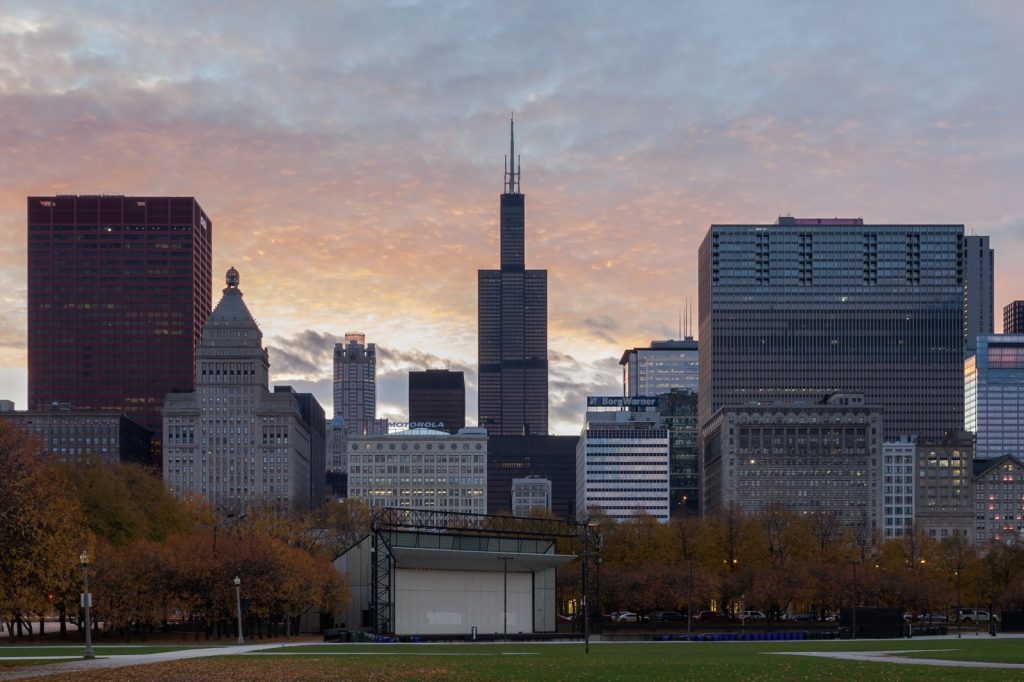
CHICAGO, July 17 — The calculus of air quality in the American Midwest has shifted dramatically this week. Wildfires raging across the Canadian province of Ontario have sent a dense plume of smoke southward, choking cities from Minnesota to Illinois and placing three major U.S. metropolitan areas atop the global pollution rankings. IQAir ranked Minneapolis, Detroit, and Chicago as the three most polluted cities in the world on Thursday.
The data signals an environmental event of unusual strategic significance, not merely for its immediate health impacts but for what it reveals about the region’s vulnerability to cross-border smoke events. The states most affected — Minnesota, Wisconsin, Michigan, and Illinois — all share proximity to the Canadian border.
This is not the first time these communities have been blanketed by smoke from Canada’s boreal fires. The broader stakes have been building for several years, as successive wildfire seasons have generated recurring haze events across the Upper Midwest and Northeast. What sets this episode apart, according to the available data, is its intensity.
The simultaneous degradation of air quality across such a wide geographic footprint — stretching from the Great Lakes to the interior of the continent — represents a concentration of particulate matter that has forced residents indoors and disrupted daily life. In Minneapolis, visibility dropped sharply as the smoke settled over the city.
Detroit and Chicago reported similar conditions. Strategically, the pattern raises questions about the frequency and scale of such events. The Ontario wildfires driving this week’s smoke are burning in a region that has seen above-average temperatures and dry conditions this summer.
Fire seasons in Canada have grown longer and more severe over the past decade, a trend that American cities along the border must now factor into their emergency planning. For public health officials in the affected states, the calculus is straightforward: prolonged exposure to fine particulate matter in wildfire smoke can aggravate respiratory and cardiovascular conditions. Hospitals in the impacted corridor have reported increased visits for asthma and other breathing-related complaints, though specific figures have not been released.
The political dimension is also worth watching. Cross-border air pollution from Canadian wildfires is not governed by the same bilateral agreements that regulate industrial emissions.
This leaves state and local authorities in the U.S. with limited recourse beyond issuing health advisories and distributing masks. The Trump administration has not announced any federal intervention specific to this event. What this signals for the broader region is a new normal.
The simultaneous impact on the Northeast, which has also experienced degraded air quality from the same smoke plume, suggests that no part of the northern tier of the United States is insulated from the consequences of large-scale Canadian wildfires. The geography of risk is expanding.
Looking ahead, the immediate question is whether wind patterns will shift to clear the smoke or push it further south and east. Forecast models remain uncertain. For the millions of residents in Minneapolis, Detroit, and Chicago — currently breathing the worst air on the planet — the answer cannot come soon enough.




