
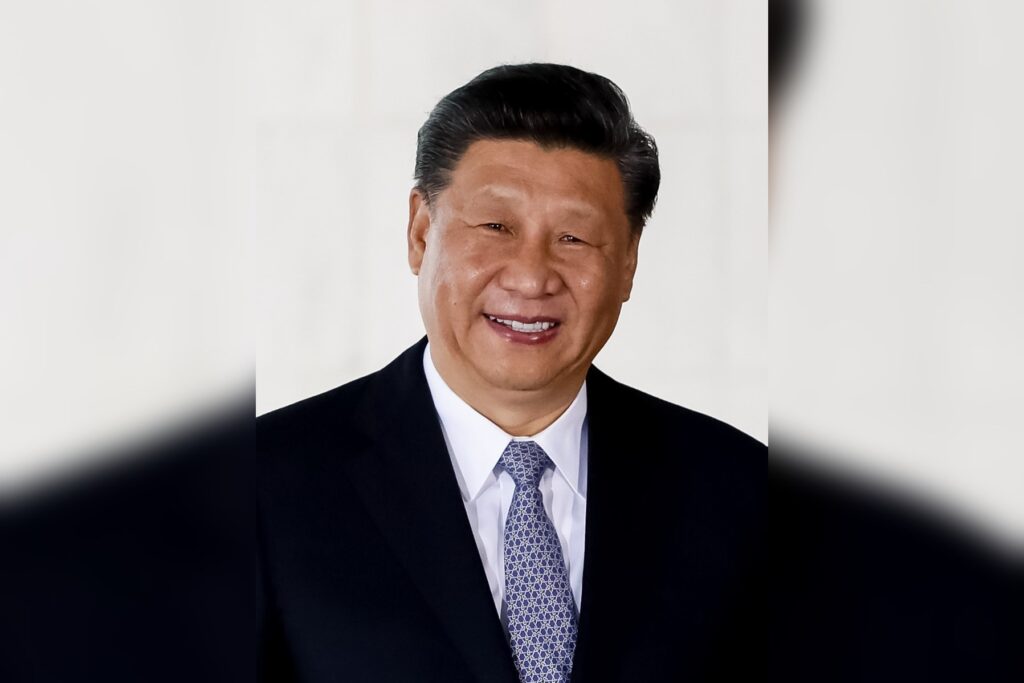
For commodity markets tracking flows between the Caspian and the Pacific, the trajectory of Chinese President Xi Jinping’s foreign policy carries direct implications for energy security and supply-chain stability. Xi, born in Beijing on June 15, 1953, assumed the roles of General Secretary of the Communist Party on November 15, 2012, and President of China on March 14, 2013. His tenure has been marked by a deepening alignment with Moscow, formalized on February 4, 2022, when Xi and Russian President Vladimir Putin announced a “no-limits” partnership—a commitment to mutual support without traditional alliance constraints.
Days later, Russia launched its full-scale invasion of Ukraine. Since the invasion began, Xi has met with Putin multiple times, including a state visit to Moscow from March 20–22, 2023, underscoring operational closeness between the two capitals even as the war strains global energy and grain markets that directly affect Central Asian economies.
A Partnership Forged Days Before War
The alignment between Beijing and Moscow has reshaped the geopolitical landscape along Eurasia’s trade corridors. The “no-limits” partnership signaled a strategic pledge that went beyond previous bilateral agreements, and the frequency of Xi–Putin meetings since the invasion reflects sustained coordination. For resource-dependent nations such as Kazakhstan and Uzbekistan, the stability of this great-power relationship directly affects investment flows, pipeline security, and access to export markets.
Any disruption in Sino-Russian coordination would threaten the trade corridors these countries rely on for export revenue. Xi’s foreign policy framework emphasizes what Beijing calls “strategic stability” among nuclear powers—a concept formally articulated in a joint statement with Russia on February 4, 2023.
That document calls for maintaining strategic equilibrium and preventing direct confrontation between nuclear-armed states. Analysts interpret this framework as a way for Beijing to maintain its partnership with Moscow while avoiding being drawn into direct confrontation with the United States and its allies.
Public Ambiguity, Private Pressure on Nuclear Threats
On February 24, 2023, exactly one year after the invasion began, China released a 12-point peace plan for Ukraine. The document called for a political settlement but did not condemn Russia’s actions, and it was received cautiously in Kyiv and Washington.
Xi has avoided direct criticism of Russia’s nuclear threats, instead calling for “restraint” in United Nations speeches—a formulation that stops short of naming Moscow as the source of escalation. This stance has drawn scrutiny from Western capitals, particularly given the risk a nuclear incident would pose to global shipping and commodity insurance markets. However, a potential shift emerged on October 15, 2024, when Ukrainian President Volodymyr Zelensky stated that China responded “harshly” to Russian nuclear threats.
The remark suggests Beijing may have privately signaled a harder line than its public posture indicates. Officials noted that if confirmed, this would represent a meaningful departure from the consistent ambiguity that has defined Chinese diplomacy on the issue.
For markets and policymakers in Central Asia, the key question is whether Beijing’s reported harsh response signals a lasting recalibration. If China is now willing to push back privately on Moscow’s most dangerous rhetoric, it could open space for a negotiated settlement that stabilizes energy prices and restores normal trade flows through the region.
Strategic Stability Doctrine and Regional Stakes
Xi’s approach to great-power relations is rooted in a broader domestic agenda that has defined his rule. Born to a revolutionary leader, Xi was sent to a rural village in Shaanxi as a teenager during the Cultural Revolution after his father was purged. He lived in a cave dwelling, joined the Communist Party after several attempts, and became the local party secretary. He later studied chemical engineering at Tsinghua University before rising through the party ranks, serving as governor of Fujian and Zhejiang, and briefly replacing the disgraced Shanghai party secretary in 2007. He joined the Politburo Standing Committee that year, became vice president in 2008, and assumed the top leadership posts in 2012—the first paramount leader born after the founding of the People’s Republic. His tenure has been defined by a sweeping anti-corruption campaign, a restructuring of the People’s Liberation Army, and a battle against poverty. He has expanded state-owned enterprises, pushed advanced manufacturing and import substitution, and imposed regulatory crackdowns on private-sector industries from real estate to technology. Under Xi, party control over society has grown significantly, along with censorship and mass surveillance. His zero-COVID policies lasted two years before protests prompted their end. On the foreign front, Xi expanded China’s influence through the Belt and Road Initiative, taking infrastructure projects across Africa and Eurasia. Relations with the United States have grown more confrontational, especially over the South China Sea and the Sino-Indian border. In 2015, he held the first meeting between leaders of the Chinese mainland and Taiwan since the civil war, though ties worsened after a pro-independence party took power in Taipei. The next major test for Xi




