
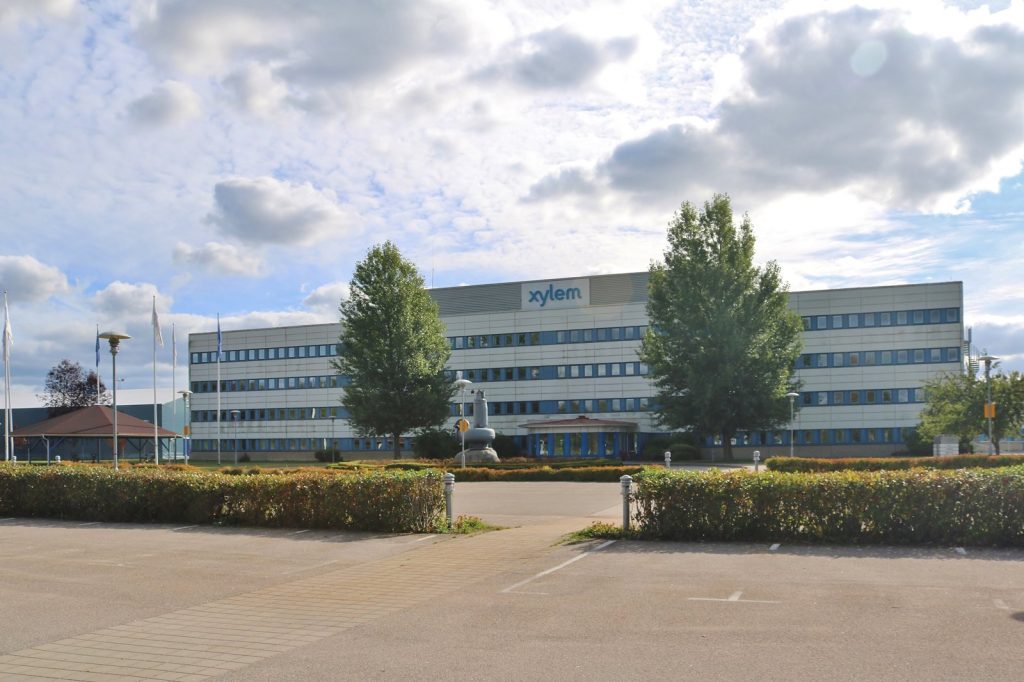
NEW YORK, July 9 — $5.2 billion. That single figure tells you where the money is flowing in the global water technology market. Xylem Inc., the Rye Brook, New York-based water analytics and technology specialist, reported that revenue number for 2020, and it underscores a critical reality: water is becoming a serious institutional investment play.
The bottom line: the market is enormous, fragmented, and hungry for innovation. By the numbers, the top 10 companies in the global water technology sector collectively hold less than 20% of the market.
That leaves a vast, open field for both established players and aggressive newcomers.
The Players and Their Pedigrees
IDE Technologies, an Israeli firm founded in 1965, is the heavyweight in desalination. It designed and built the Sorek plant in Israel, which produces 624,000 cubic meters of water per day and has been operational since 2013. On the U.S. West Coast, IDE delivered the Carlsbad desalination plant in California, a 189,000 cubic meters per day facility that came online in 2015.
Those are not small projects; they are infrastructure anchors. Evoqua Water Technologies, based in Pittsburgh, Pennsylvania, takes a different approach.
Founded in 2014 as a spin-off from Siemens, Evoqua focuses on water and wastewater treatment solutions. Its 2020 revenue hit $1.4 billion. Investors will note that Evoqua operates in the municipal and industrial treatment space, a segment that tends to be more recession-resistant than pure construction plays.
Xylem Inc., spun off from ITT Corporation in 2011, brings a technology-and-analytics edge. Its $5.2 billion in 2020 revenue reflects a company that has positioned itself at the intersection of hardware and data.
The company’s specialty is water technology and analytics — a combination that is increasingly attractive to utilities and industrial operators looking to squeeze efficiency out of aging systems. Then there are the European giants. Veolia, founded in 1853 and based in France, operates water services in over 40 countries.
Suez, founded in 1880 and also French, merged with Veolia in 2021. That consolidation created a combined entity with immense scale, though the merger itself was contentious and took years to complete.
Where the Innovation Is Heading
The figure that matters for the next decade is not a revenue number but an efficiency target. The entire sector is betting on three specific innovation vectors: reducing energy consumption in water treatment, improving the durability of membranes used in filtration, and integrating artificial intelligence for real-time monitoring and predictive maintenance. Energy consumption is the single largest operating cost for desalination plants.
Every percentage point of energy reduction translates directly into margin improvement for plant operators and lower water costs for end users. Membrane durability is the engineering bottleneck — longer-lasting membranes mean fewer replacements and less downtime.
And AI monitoring is where the data play gets real: sensors, analytics, and machine learning can detect leaks, predict equipment failure, and optimize chemical dosing in ways that manual operations simply cannot match. This is not speculative. These are the R&D priorities that companies like IDE, Xylem, and Evoqua are actively funding.
The technology is already in the field.
Market Structure and What It Means
The fragmentation statistic — top 10 companies holding less than 20% of the market — is the single most important structural fact for investors. It means there is no dominant player. It means M&A is not a possibility but a certainty.
It means smaller, innovative firms can grow rapidly before being acquired by the larger players looking to consolidate. Veolia’s absorption of Suez is the clearest example.
That deal created a water services behemoth with operations across dozens of countries. But even that combined entity does not dominate the global market. The field remains wide open.
For U.S. investors, the domestic players are Xylem and Evoqua. Both are publicly traded, both have clear strategies, and both operate in segments that are likely to see increased government and utility spending.
The desalination expertise of IDE, while based in Israel, is relevant to California and the American Southwest, where drought conditions have made alternative water sources a political and economic necessity.
What to Watch Next
The next phase of this story will be driven by two factors: technology adoption rates and regulatory pressure. If municipalities and industrial users accelerate their adoption of AI-driven monitoring and energy-efficient desalination, the companies that have already invested in those capabilities will win disproportionate market share. The other factor is consolidation.
With the top 10 holding less than 20% of the market, the math favors deals. Expect to see Xylem and Evoqua make acquisitions to fill technology gaps or expand geographic reach.
Expect to see European players look for U.S. footholds. And expect IDE to continue winning large-scale desalination contracts that serve as reference projects for future bids. The water technology market is not a niche.
It is a $5.2 billion-and-growing institutional sector with clear demand drivers, identifiable leaders, and a structural opportunity for consolidation. The numbers are there.
The technology is there. The question is which companies will execute.
{“@context”: “https://schema.org”, “@type”: “NewsArticle”, “headline”: “Xylem, Evoqua, IDE Technologies Lead Water Tech Innovation”, “description”: “NEW YORK, July 9 — $5.2 billion. That single figure tells you where the money is flowing in the global water technology market. Xylem Inc.,…”, “datePublished”: “2026-07-09T09:30:00+00:00”, “author”: {“@type”: “Person”, “name”: “Ava Anderson”}, “publisher”: {“@type”: “Organization”, “name”: “InfoPulse Today”, “url”: “https://newsfeed.infopulsetoday.com/”}}




