
LIVERMORE, Calif., July 9 — The figure that matters: $2.7 billion. That is the annual budget of Lawrence Livermore National Laboratory, the institution Dr. Kim Budil has led since March 2021. She is the first woman to run the lab in its 70-year history, a milestone that investors and policymakers alike will note as the lab pushes into an era where fusion energy is no longer a theoretical promise.
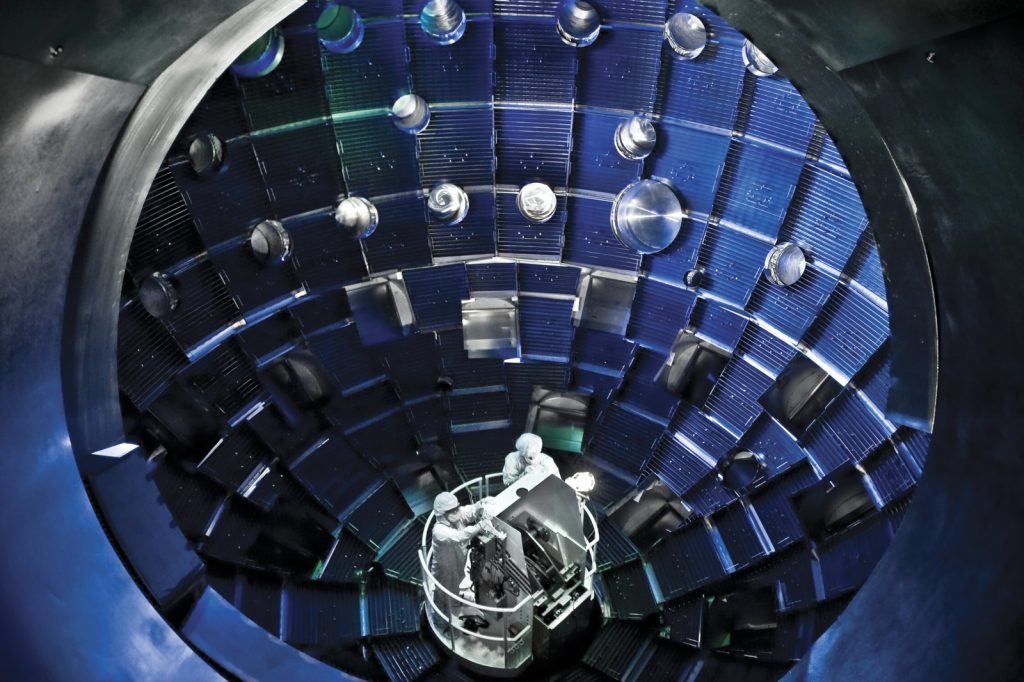
By the numbers, Budil’s track record is defined by a single breakthrough. On December 5, 2022, the National Ignition Facility under her leadership achieved fusion ignition, producing a net energy gain for the first time.
She announced the result at a U.S. Department of Energy press conference on December 13, 2022. That moment rewrote what was possible in energy science. The bottom line: a lab that employs about 8,000 people and runs on a $2.7 billion annual budget proved that fusion can yield more energy than it consumes.
Budil earned a Ph.D. in applied physics from the University of California, Davis, and has worked at LLNL since 1996. Before taking the director’s role, she served as the Principal Associate Director for Weapons and Complex Integration.
She holds several patents in laser and plasma physics. She is also a member of the National Academy of Engineering. These are credentials that speak to a career built on technical depth, not just administrative oversight.
What investors will note is the strategic direction. Budil has emphasized the importance of fusion for both clean energy and national security. The lab’s fusion ignition result was not a one-off experiment; it was the culmination of decades of work in laser and plasma physics.
The National Ignition Facility is the primary tool for that work, and Budil’s leadership has kept it at the center of the U.S. fusion research agenda. LLNL’s annual budget of approximately $2.7 billion supports a workforce of about 8,000 people.
Those numbers put the lab in the same league as major corporate R&D operations. The difference: LLNL’s mission spans nuclear stockpile stewardship, basic science, and now a credible path to commercial fusion energy. Budil’s role as the first woman to lead the lab in its 70-year history also signals a shift in institutional culture, one that the lab’s stakeholders will watch closely.
The December 2022 fusion ignition announcement was a global event. Budil stood at the podium at the Department of Energy and delivered the news that a lab experiment had produced a net energy gain.
That moment was the payoff for years of investment in laser technology and plasma physics. It also raised the stakes for what comes next. The lab now has to show that the result can be repeated, scaled, and eventually commercialized.
Budil’s background in applied physics and her patents in laser and plasma physics give her the technical credibility to drive that agenda. Her membership in the National Academy of Engineering places her among the top tier of American engineers. For a lab that operates at the intersection of national security and energy innovation, that combination of technical authority and institutional leadership is rare.
The lab’s fusion work is not just about clean energy. Budil has stressed the national security implications as well.
Fusion ignition has applications for nuclear stockpile stewardship, which remains LLNL’s core mission. The same laser systems that produced the fusion breakthrough are used to simulate nuclear weapons performance without testing. That dual-use capability is a key reason the lab commands a $2.7 billion budget.
Looking ahead, the question is whether Budil can sustain the momentum. The fusion ignition result was a proof of concept.
The next steps involve engineering challenges: building systems that can produce fusion energy repeatedly, reliably, and at lower cost. The lab’s 8,000 employees and its annual budget give it the resources to tackle those problems. But the timeline for commercial fusion remains uncertain.
Budil’s leadership will be tested by those questions. She has the technical background, the institutional support, and a historic breakthrough to point to. The figure that matters now is not the $2.7 billion budget or the 8,000 employees.
It is the net energy gain from December 5, 2022. That number changes the conversation.
Everything else is about what comes next.
{“@context”: “https://schema.org”, “@type”: “NewsArticle”, “headline”: “Dr. Kim Budil Led Fusion Ignition Breakthrough at Livermore Lab”, “description”: “LIVERMORE, Calif., July 9 — The figure that matters: $2.7 billion. That is the annual budget of Lawrence Livermore National Laboratory, the institution Dr. Kim…”, “datePublished”: “2026-07-09T09:30:00+00:00”, “author”: {“@type”: “Person”, “name”: “Ava Anderson”}, “publisher”: {“@type”: “Organization”, “name”: “InfoPulse Today”, “url”: “https://newsfeed.infopulsetoday.com/”}}




