
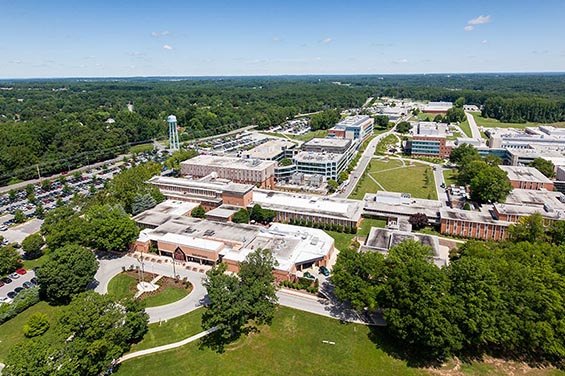
LAUREL, Maryland, July 9 — In the sprawling, low-slung buildings of the Johns Hopkins University Applied Physics Laboratory, a team of people is doing something remarkable: they are talking to a spacecraft billions of miles from Earth. That spacecraft is New Horizons, the NASA mission that gave humanity its first close-up look at Pluto. APL has managed the mission since it was selected by NASA in 2001.
The lab designed the spacecraft, built it, and now operates it, including all seven of its scientific instruments. For the people here, it is not abstract science.
It is the daily work of pointing a radio antenna at a distant speck of light and waiting for a signal. The lab is a not-for-profit research and development organization, affiliated with Johns Hopkins University in Baltimore. It was founded in 1942, born in the urgency of World War II.
Today, its Space Exploration Sector leads the development of instruments like the Ralph and Alice spectrometers and the LORRI camera, tools that have reshaped our understanding of the solar system. New Horizons is far from APL’s only deep-space child.
The lab also managed the MESSENGER mission to Mercury, which ran from 2004 to 2015, and the Parker Solar Probe, launched in 2018, which is currently flying closer to the sun than any human-made object ever has. Each mission has its own character, its own challenges. But they share a common home.
A Quiet Operations Center
At APL’s facility in Laurel, a mission operations center serves as the nerve center for New Horizons. From here, engineers navigate the spacecraft and handle the data it sends back. They communicate through NASA’s Deep Space Network, a system of giant radio antennas that is the only way to reach a probe so far from home.
The work is patient. Commands take hours to travel one way.
A single course correction can take days to assess. But the payoff, for the scientists and engineers here, is the data — the images and measurements that no other machine on Earth has ever captured. APL’s history with planetary science runs deep.
The lab has a long track record of managing these kinds of NASA missions, each one building on the last. The people who worked on MESSENGER, the people who designed the heat shield for Parker Solar Probe, are the same ones now guiding New Horizons through the Kuiper Belt.
What Comes Next
The lab employs about 7,000 people. They are not a giant aerospace contractor. They are a not-for-profit research center, a place where the mission comes first.
For the families of the people who work here, the work means late nights and long weekends during critical maneuvers. It means watching a launch and then waiting years for the first pictures to come home.
New Horizons is still going. It is still sending data. And APL is still there, in Laurel, listening.
{“@context”: “https://schema.org”, “@type”: “NewsArticle”, “headline”: “JHU Applied Physics Lab Manages New Horizons Since 2001”, “description”: “LAUREL, Maryland, July 9 — In the sprawling, low-slung buildings of the Johns Hopkins University Applied Physics Laboratory, a team of people is doing something…”, “datePublished”: “2026-07-09T09:30:00+00:00”, “author”: {“@type”: “Person”, “name”: “James Roberto”}, “publisher”: {“@type”: “Organization”, “name”: “InfoPulse Today”, “url”: “https://newsfeed.infopulsetoday.com/”}}




