How the Chinese Lunar Exploration Program Evolved Into a Global Moon Race
NASA has accelerated its Artemis timeline to 2028, citing China’s rapid progress as a primary driver. China plans to land humans on the moon by 2029 or 2030 using the Mengzhou orbiter and Lanyue lander, positioning itself at the lunar south pole ahead of the United States.
The Chinese Lunar Exploration Program follows a structured path of orbiting, landing, and returning samples. Chang’e 1 and Chang’e 2 spent years mapping the moon from above before Chang’e 3 achieved the nation’s first soft landing in 2013. Subsequent missions pushed the boundaries of what was possible: Chang’e 4 became the first spacecraft to touch down on the far side, while Chang’e 5 delivered lunar rocks back to Earth for the first time since the 1970s. The most recent mission, Chang’e 6, achieved a first in 2024 by retrieving samples from the moon’s far side. These robotic milestones laid the groundwork for a crewed presence. China plans a crewed lunar landing in 2029 or 2030, using the Mengzhou orbiter and Lanyue lander, each launched by a super heavy-lift Long March 10 rocket.
NASA’s Artemis program has compressed its schedule in response. Administrator Jared Isaacman has warned that the agency is in a new space race with China, noting that China could land its own people on the moon within about three years. The new plan for Artemis IV targets a 2028 moon landing, a significant acceleration from previous goals. However, the architecture relies on unproven in-space fuel transfer for SpaceX’s Starship lander. Nobody has moved rocket fuel between spaceships on the scale required for a lunar mission. SpaceX plans its first full attempt early next year, and that test should show how many tanker flights each moon trip takes. Blue Origin, by contrast, skips the refueling but requires three smaller spacecraft to haul the lander to orbit. Both providers are planning for lunar landing missions in 2028, but NASA has planted its own engineers inside suppliers’ factories to claw back time lost to late electronics parts.
The Long March rocket series underpins China’s heavy-lift lunar logistics. Larger payloads from Chang’e 5 onwards used the Long March 5 rocket, while the Chang’e 3 and 4 landers rode the Long March 3B. For crewed missions, China has developed the Long March 10, a super heavy-lift vehicle slated to launch the Mengzhou orbiter and Lanyue lander. On the tracking side, China’s program utilizes a 3,000-kilometer VLBI antenna network for telemetry and command, formed by 50-metre radio antennas in Beijing and 40-metre antennas in Kunming, Shanghai, and Ürümqi. This ground infrastructure supports the program’s ambitious south pole focus. Chang’e 7 and Chang’e 8, planned for 2026 and 2028, will explore the lunar south pole for ice, using multi-landing flying probes; Chang’e 8 will test in situ resource utilization. China aims to construct the International Lunar Research Station at the lunar south pole from 2031, collaborating with Roscosmos and 11 other countries. The Long March 9 super heavy-lifter is planned for this construction.
China’s methodical, long-term lunar strategy contrasts with NASA’s compressed timeline. Where Artemis IV depends on unproven fuel transfer and multiple commercial providers, China’s program advances through a series of tested robotic missions before a crewed attempt. Both nations are targeting the lunar south pole, a region rich in ice that could support future bases. As Isaacman told reporters, the race is as much about institutional focus and urgency as it is about technology. With Chang’e 6 having already returned far side samples and crewed hardware in development, China’s path appears designed for steady progress, while NASA’s depends on the success of complex orbital refueling tests in the coming months.
Long March 10 and the Crewed Launch Architecture
China’s crewed lunar architecture centers on the Long March 10, a super heavy-lift launch vehicle designed specifically for the Mengzhou orbiter and Lanyue lander. The Long March 10 is slated to launch both spacecraft components, enabling the 2029 or 2030 crewed landing target. This vehicle represents a significant evolution from the Long March 3B, which lofted the Chang’e 3 and 4 landers, and the Long March 5, used for heavier Chang’e 5 and 6 payloads. The development of the Long March 10 underscores China’s transition from robotic sample return to human exploration, providing the necessary thrust to propel astronauts toward the lunar south pole.
Supporting this launch system is a dedicated ground tracking network. The program utilizes a 3,000-kilometer VLBI antenna network for telemetry and command, formed by 50-metre radio antennas in Beijing and 40-metre antennas in Kunming, Shanghai, and Ürümqi. This infrastructure is essential for monitoring the Mengzhou and Lanyue spacecraft throughout their trajectory. As the program moves toward constructing the International Lunar Research Station at the lunar south pole from 2031, the Long March 9 super heavy-lifter is planned for this construction phase, completing a multi-decade roadmap that progresses from orbital surveying to permanent base deployment.
Sources
- NASA Artemis moon landing plan targets 2028 with faster approach
- Chinese Lunar Exploration Program
- The Orbiter China Flew Into the Moon on Purpose
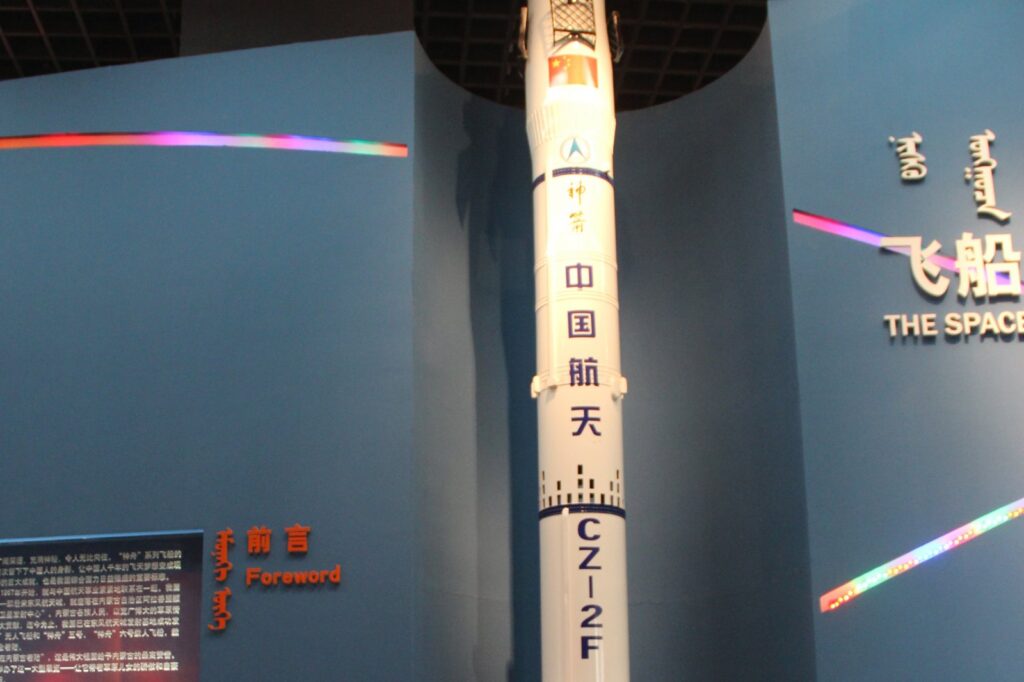
Photo: Gary Todd from Xinzheng, China (CC0)