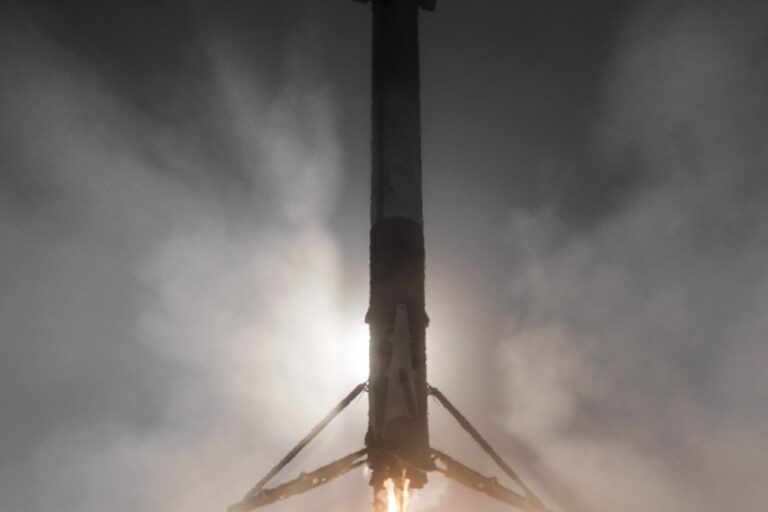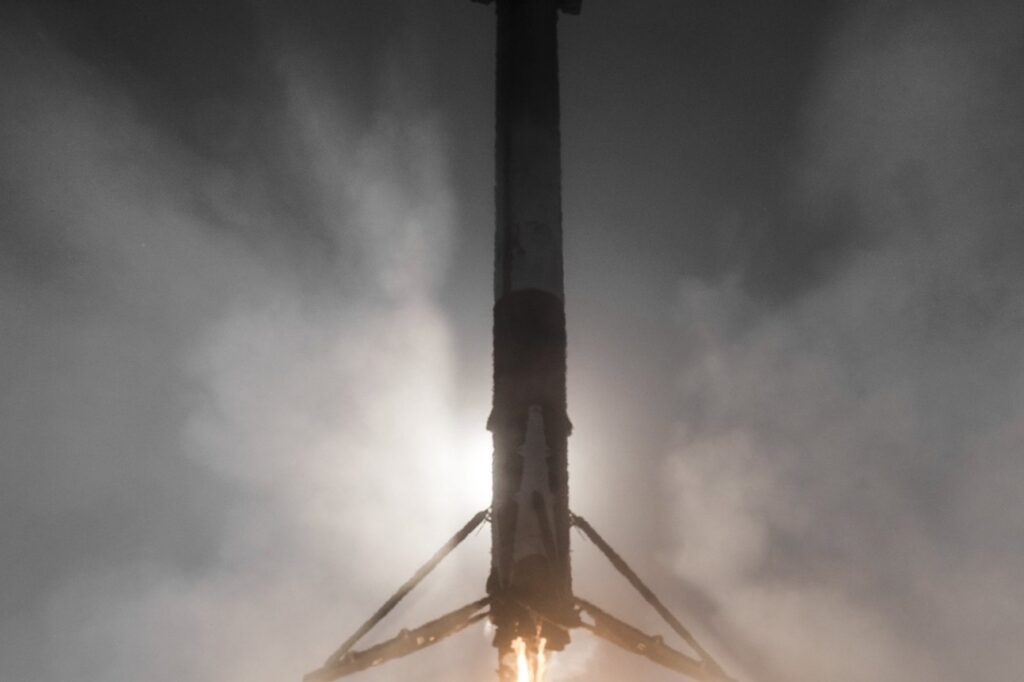
About two and a half minutes into the flight, the first stage of a Falcon 9 shut down its engines and let go of the upper stage. Eight minutes and 23 seconds after liftoff it was standing on a droneship in the Pacific. Nothing unusual there. On October 27, 2026, though, it was the 700th Falcon 9 launch.
The rocket left Pad 4E at Vandenberg Space Force Base in California at 3:25 a.m. EDT (0725 GMT) carrying 27 Starlink satellites, the Starlink Group 15-16 mission. Elon Musk posted a caption: “Congrats to the team on over 700 Falcon 9 flights.”
One booster, 26 flights
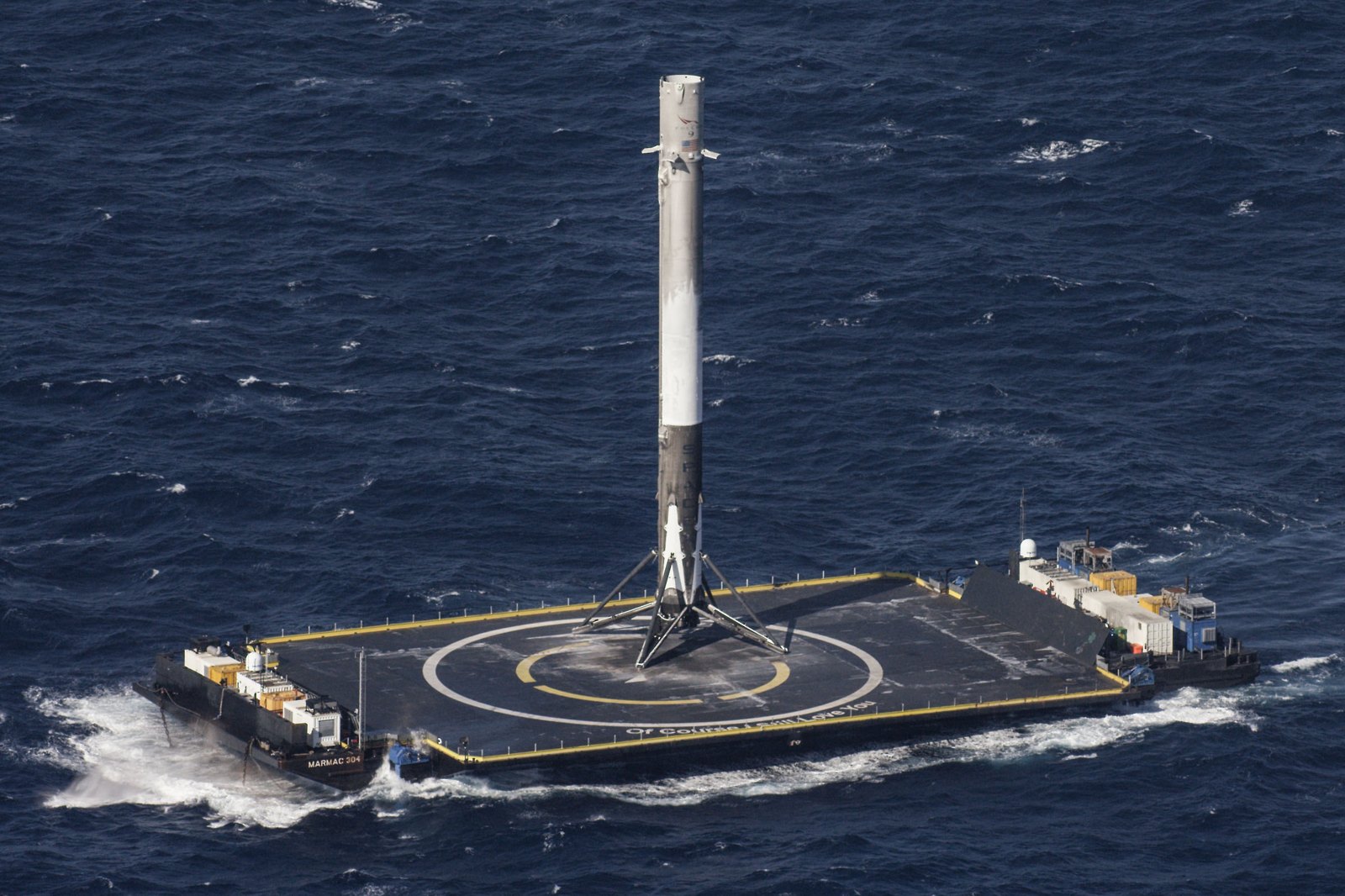
The booster was B1082, which entered service in January 2024. This was its 26th overall flight and its 21st Starlink mission. It has also flown USSF-62, OneWeb Launch 20, NROL-145 and Transporter-18. After separation it came down on the droneship Of Course I Still Love You, off the coast of Baja California, Mexico.
That is how the rocket works. The first stage carries the second stage and payload to a set speed and altitude. The second stage then pushes the payload on to orbit. Booster landings began on flight 20, in December 2015. The fairing halves are fished out of the water after a parachute landing and can be flown again. Both stages burn cryogenic liquid oxygen and rocket-grade kerosene (RP-1) in Merlin engines.
The count so far
As of October 27, 2026, SpaceX had landed Falcon 9 boosters 657 times, and individual boosters have flown as many as 37 times. The Block 5 version, in operation since May 2018, has completed 644 flights with just one minor setback. The first Falcon 9 launch was on June 4, 2010. In 2020 it became the first commercial rocket to launch humans to orbit. NASA lists it as a “Category 3” (Low Risk) vehicle, which lets it carry the agency’s most expensive and complex missions.
The 700th flight was the 117th Falcon 9 launch of 2026, and about three-quarters of those were for Starlink.
Starlink and a crowded orbit
Starlink now accounts for roughly 11,190 of the 16,850 active satellites in orbit, with nearly 11,176 working. Starlink’s own technology page puts the operating altitude at roughly 550 km and typical latency at about 25 ms.
The next batch followed within days. Starlink 15-18 lifted off from Vandenberg at 12:04 a.m. EDT on October 31, 2026, with another 27 satellites. The first stage landed on the same droneship about 8.5 minutes after liftoff, and the satellites separated about 62 minutes after launch. Earlier in the year SpaceX halted Florida launches for more than six weeks, and the West Coast pad kept the schedule moving.
Starship ahead
SpaceX is shifting focus to Starship, the larger rocket under development, and plans to retire Falcon 9 have already begun. Starlink launches from Florida ended earlier this year. Musk predicts orbital data centers will eclipse Earth-bound networks by late 2028, helped by Starship’s launch capacity, which could allow solar satellites designed for space to escape terrestrial limits on power, space and cooling.
Sources
- SpaceX Falcon 9 reaches 700th launch with starlink satellites in historic feat
- Falcon 9
- SpaceX Falcon 9 launches early morning Starlink mission from California (video)
- West Coast Falcon 9 rocket launches 27 Starlink satellites
- SpaceX Falcon 9 launch scheduled Friday from Vandenberg
- SpaceX Starlink 15-18: 27 Satellites Launched [2026]
Photo: SpaceX (CC0)