Here is an odd thing about satellite navigation: the whole system hangs on clocks. India’s NavIC lost one in March, and it has barely worked since.
The clock that stopped
A defunct atomic clock on IRNSS-1F paralysed NavIC. Only IRNSS-1B, IRNSS-1L and NVS-01 are working now, and the system needs at least four satellites with operational atomic clocks to function properly. The reason is how it works: each satellite broadcasts an exact time, and a receiver on the ground works out its position from how long that signal took to arrive. Without enough good clocks, the sums fail.
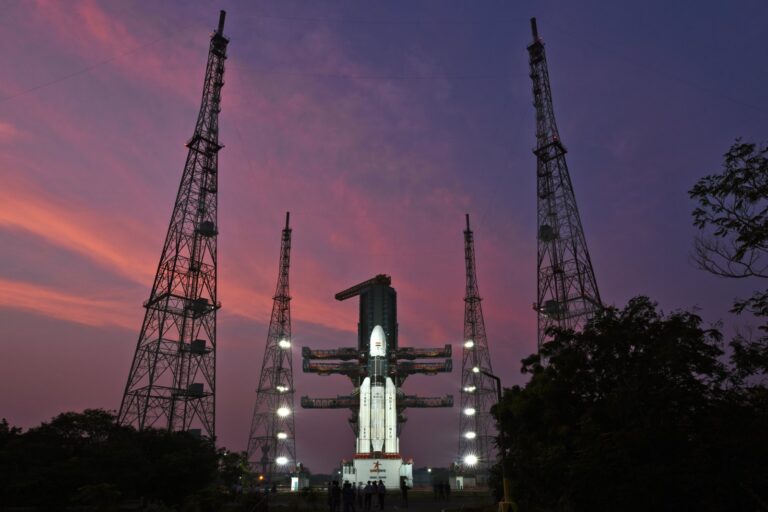
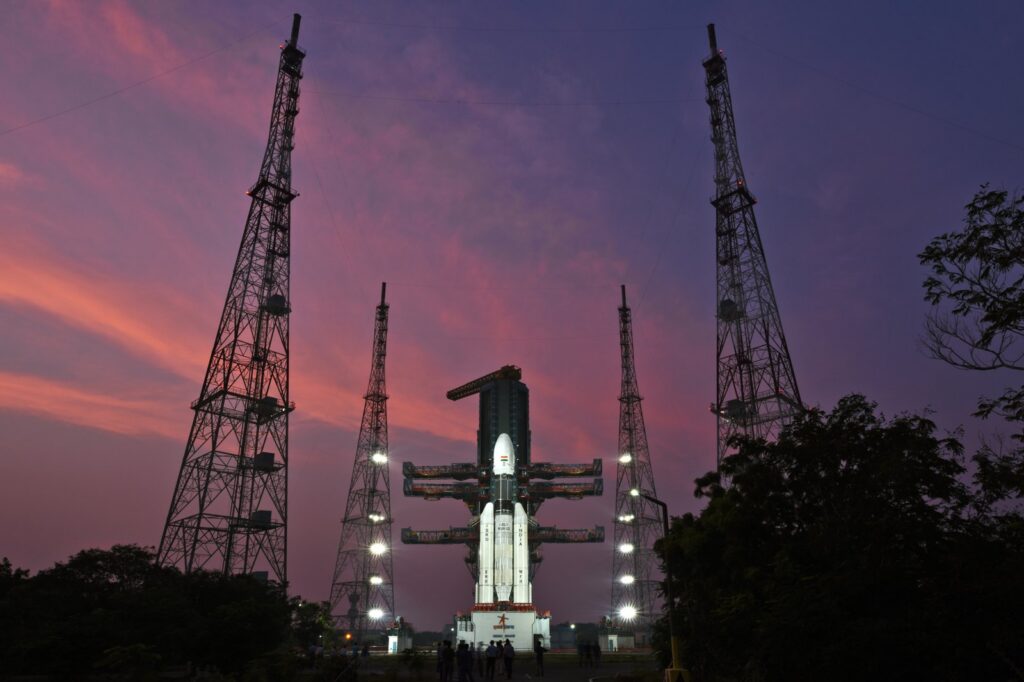
NavIC is India’s own standalone system for position, navigation and timing, covering the country and about 1,500 km beyond its landmass. On Friday night the Indian Space Research Organisation launched a 2,250 kg satellite, NVS-03, from the Satish Dhawan Space Centre at Sriharikota. It is the third in the next-generation series meant to keep the IRNSS service going. Intriguingly, it carries an indigenous atomic clock along with procured ones, and adds an L1 signal to the existing L5/S signals.
Who built it
After the launch, ISRO chief V Narayanan said about 80 per cent of the agency’s launch-related budget goes to domestic private and public sector companies, an ecosystem of around 400 to 500 firms, suppliers and startups. The mission also set a record: 56 days between successive GSLV launches.

Hyderabad-based Ananth Technologies had a hand in both halves. For the GSLV-F18 rocket it supplied 46 packages covering telemetry, data acquisition, navigation, guidance and control, power management and transponders. On the spacecraft it contributed 09 systems. “This success is a testament to India’s scientific excellence and the collective strength of its space industry,” said chairman Subba Rao Pavuluri.
How the model changed
India opened its space sector to private firms in June 2020. An IN-SPACe official put it simply: “Earlier, only ISRO could do end-to-end activities, while other companies were working as vendors to ISRO.” Since then the industry has grown to more than 440 startups and over 500 public limited and state-owned companies, up from more than 300 startups in mid 2025. In July, Skyroot Aerospace’s Vikram-1 reached orbit, making it the first private Indian company to do so on a first attempt.
The support is concrete. About 120 technologies have moved from ISRO to private firms. A Rs 1,000-crore venture capital fund and a Rs 500-crore Technology Adoption Fund back them, and around 640 startups and companies have been picked for grants. Private companies can test products and satellites at ISRO facilities before commercial deployment. Authorisation takes about 75 to 120 days depending on the process.
India’s space economy is valued at about $8.4 billion, roughly 2 per cent of the global total. The government wants $44 billion over the next decade. Lt. Gen. AK Bhatt (Retd.) of the Indian Space Association said the collaboration “must expand further” into satellite manufacturing, navigation technologies, components and downstream applications. He is waiting for NVS-03 to reach its final orbit “in the next few days.”
The number to watch is four: the working satellites with good atomic clocks NavIC needs. India has three.
Sources
- NavIC revival puts spotlight on growing role of India's private space firms
- Space industry of India
- India aims to expand space economy from USD 8.4 billion to USD 44 billion amid rising private participation: IN-SPACe official
- WISeSat.Space and Kaynes Space Technology Advance Partnership to Develop Post-Quantum Security for Indian Satellites
- Salon Art + Design Showcases Contemporary High Jewelry
- Honda Motorcycle and Scooter India to Invest ₹2,420 Crore to Boost Capacity
Photo: Indian Space Research Organisation (GODL-India)