
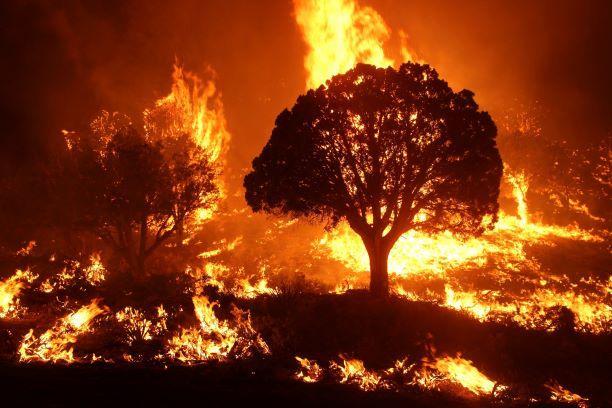
The Human Spark and the Lightning Wildfire
Two-thirds of Canada’s forest fires are caused by human activity, according to official data, while lightning causes the remaining third. Yet despite being fewer in number, lightning‑caused fires account for more than 85 percent of the total area burned. The reason lies in the remoteness of much of the boreal wilderness: many lightning fires ignite in inaccessible regions where suppression crews cannot reach quickly, or at all. In such areas, fires may be left to burn naturally. When suppression is attempted, the work is shaped by a handful of factors, including available fuels, atmospheric conditions, and the strategic priorities of firefighting agencies. About 90 percent of all forest fires are fought, though not every blaze receives the same level of attention. The numbers swing dramatically from one year to the next, reflecting variations in weather, drought, and lightning activity. By nightfall, crews are still at work across the country, battling blazes that threaten communities, infrastructure, and natural areas.
Geography, History, and Governance Shape the Response
Canada is the second‑largest country on Earth by total area, with a coastline longer than any other nation. Its territory stretches from the Atlantic to the Pacific and north into the Arctic Ocean, encompassing dense forests, open plains, mountain ranges, and frozen tundra. Indigenous peoples have lived in what is now Canada for thousands of years before European arrival. French and British expeditions began exploring and settling along the Atlantic coast in the 16th century. After a series of armed conflicts, France ceded nearly all of its North American colonies in 1763. Through Confederation in 1867, three British colonies united to form the federal dominion of Canada. Over time, more provinces and territories joined, and the country steadily gained autonomy from the United Kingdom, completing legal independence in 1982.
Canada operates as a parliamentary democracy and a constitutional monarchy. Its head of government is the prime minister, who must hold the confidence of the elected House of Commons. The ceremonial head of state is the monarch, represented by the governor general. The country is a Commonwealth realm and is officially bilingual in English and French at the federal level. Canada’s population is among the most ethnically diverse in the world, shaped by large‑scale immigration. This background matters now because Canada’s geography and governing structure directly affect how it manages shared challenges such as wildfires. The vast amount of forested land, most of it publicly owned, means provincial and territorial governments bear the primary burden of fire suppression. Coordination between jurisdictions is handled by a national agency, but the remoteness of much of Canada’s wilderness means lightning‑caused fires often burn in places where suppression is difficult or impossible. This reality shapes both the cost and the strategy of firefighting efforts that affect communities, infrastructure, and natural areas across the country. As crews continue to work through the night, the smoke over the boreal forest serves as a reminder of the enduring interplay between human stewardship and natural forces in one of the world’s most expansive and fire‑prone landscapes.




