
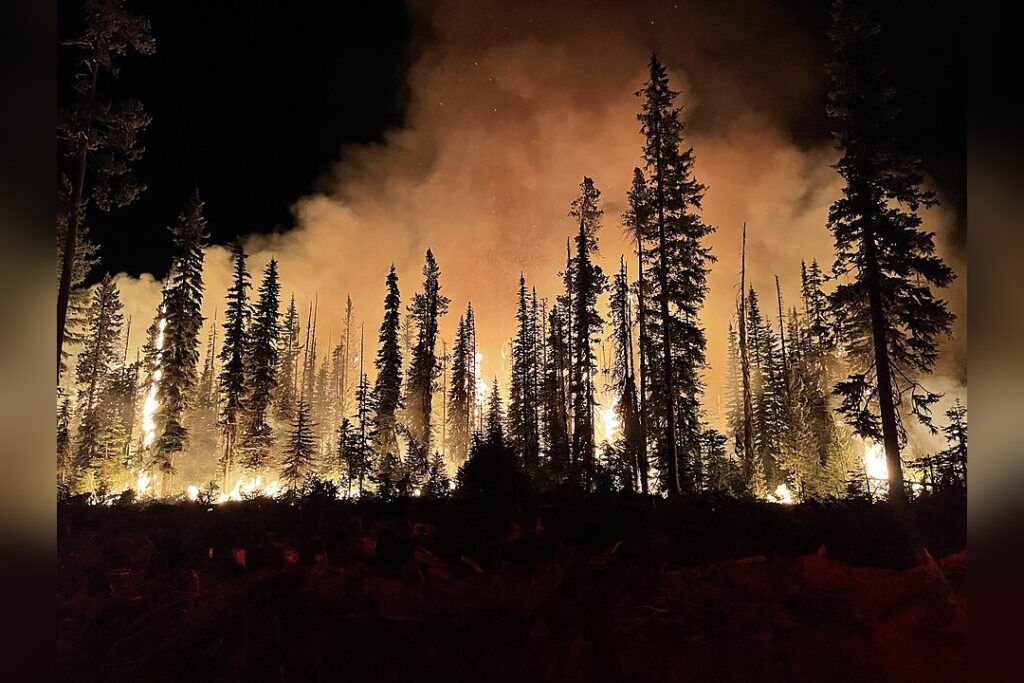
WINNIPEG, Manitoba, July 19 — The Canadian Interagency Forest Fire Centre operates as the country’s strategic hub for wildfire resource coordination, a role that places it at the center of cross-border fire management with the United States and a growing list of international partners. Founded on June 2, 1982, the not-for-profit organization emerged from the severe fire seasons of 1979 through 1981, when Canadian wildfire agencies faced critical resource shortages and recognized they needed a coordinated government response.
CIFFC is owned and operated by its member agencies and functions as the Canadian analog to the U.S. National Interagency Fire Center. Its Fire Coordination Centre, headquartered in Winnipeg, Manitoba, receives and processes mutual aid requests through duty officers who review and prioritize them daily based on national resource availability.
A Coordination Hub
When the national preparedness level reaches 3 or above, resource allocation shifts to the Canadian Multi Agency Coordination Group, which triages and assigns available assets on a consensus basis. The centre hosts regular coordination calls during fire season and publishes daily situation reports summarizing the wildfire picture across the country. CIFFC’s authority is strictly limited to coordination.
The centre is funded by its members and the federal government but holds no command power over them. Its coordination role is formalized through mutual aid agreements.
International Reach
Strategically, the calculus of cross-border wildfire cooperation has expanded significantly. CIFFC maintains mutual aid agreements with the United States—via the formal arrangement between the U.S. Departments of Agriculture and the Interior and Natural Resources Canada—as well as with Mexico, Australia, New Zealand, South Africa, Costa Rica, Portugal, and Chile. Notable international deployments underscore the reciprocity of these relationships.
In December 2019, Canada dispatched fire management personnel to Australia—its first such deployment, reciprocating Australian assistance to Canada during previous fire seasons. More recently, in January 2026, additional Canadian personnel were sent to Australia.
What this signals is a deepening interdependence in wildfire response that extends well beyond the North American continent. For the United States, the arrangement with CIFFC represents a direct line for requesting Canadian resources during domestic fire emergencies, mirroring the mechanisms that the U.S. National Interagency Fire Center uses with state and federal agencies. The broader stakes of this coordination network become apparent during severe fire seasons when resource pools are stretched thin.
CIFFC’s role as a clearinghouse—setting interagency exchange standards to ensure seamless integration of resources while maintaining safety and efficiency—gives Canada and its partners a strategic advantage in mobilizing firefighting capacity across political boundaries. Looking ahead, the center’s growing list of international agreements suggests that wildfire management is increasingly a matter of diplomatic logistics as much as fire science.
The ability to move personnel and equipment across borders under pre-negotiated pacts will remain a key factor in how both Canada and the United States cope with severe fire years.




