
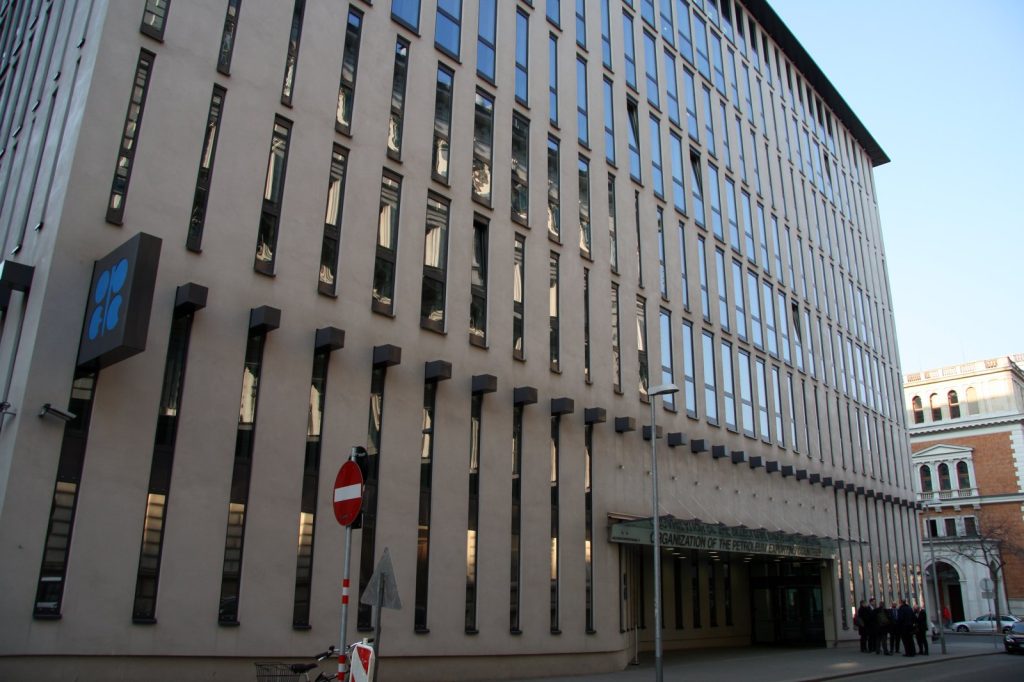
VIENNA, July 19 — The International Energy Agency forecast global oil demand at 102 million barrels per day for 2023, up from 99.9 million in 2022. That headline number, however, masks the mechanics that have kept the market tight. OPEC+ — led by Saudi Arabia and Russia — implemented a series of production cuts starting in October 2022 with a 2 million barrel-per-day reduction, followed by additional voluntary cuts totalling over 1.6 million bpd in April and September 2023.
On closer reading, these cuts were less a sign of strength than a recognition of limited room to manoeuvre. Follow the money: spare production capacity remains the key strategic variable.
Saudi Arabia holds an estimated 1.5 to 2 million bpd of spare capacity; the United Arab Emirates has roughly 1 million bpd. The catch is that spare capacity elsewhere is limited, concentrating the market’s safety valve in two Gulf states. Any disruption to those countries’ output — or to Iran’s supply, which remains off the market due to sanctions — leaves the system vulnerable to price spikes.
Without Iranian barrels, the buffer thins further.
Non-OPEC supply: the American counterweight
Non-OPEC producers have stepped in. The United States produced a record 12.8 million bpd in 2023. Growth also came from Brazil, Guyana and Norway.
The mechanics here: US shale output has been the dominant source of flexible supply outside OPEC+, but the pace is slowing. Drilling activity has declined, and the industry’s ability to ramp up quickly is fading.
That gives OPEC+ more leverage than the headline numbers suggest. The geopolitical overlay remains messy. The Russia-Ukraine war continues to reshape trade flows.
Instability in Iraq and Libya periodically knocks barrels offline. These risks mean that even with record US output, the cushion is thinner than it appears.
Price signals: a market in two years
Brent crude averaged $99 per barrel in 2022. In 2023 it fluctuated between $70 and $95 per barrel. The wide range tells the story: supply constraints and geopolitical risk pull prices up; non-OPEC growth and recession fears push them down.
The balance is fragile, and the spare capacity concentration means OPEC+ — particularly Riyadh — holds the real cards. Non-OPEC supply growth, especially from the US, has provided some relief.
But the catch is that shale’s best years may be behind it. Drilling activity is declining, and the inventory of high-quality drilling locations is shrinking. Brazil, Guyana and Norway add barrels but not enough to offset the dominance of the core OPEC+ players.
What to watch next: the level of spare capacity in Saudi Arabia and the UAE, and whether Washington pushes for Iran sanctions relief. Any move to bring Iranian supply back into the market would alter the calculus.
Until then, the market remains tight, vulnerable to shocks, and effectively in the hands of the few producers who can still ramp up output quickly.




