
For a country already ranked among the world’s most vulnerable to climate shocks, the arithmetic is brutal. At least 54 dead. Thousands displaced.
Homes, roads, and fields swallowed by water. The floods that have swept through Chad in recent days are not a sudden surprise — they are the latest chapter in a long, punishing pattern.
Chad is the fifth-largest country in Africa, covering roughly 1,300,000 square kilometers. Its population of 19 million is spread across a landscape that shifts from Saharan desert in the north to semi-arid savannah in the south. The capital, N’Djamena, holds 1.6 million people.
It sits near the confluence of the Chari and Logone rivers — prime ground for flooding when the rains come hard. And the rains came hard.
Days of heavy rainfall turned rivers into weapons. Water moved across low-lying neighborhoods and farmland with little warning. The official death count stands at 54, but with many people still missing, that number is almost certainly incomplete.
The country has no coast. Landlocked, bordered by Libya to the north, Sudan to the east, and several other nations to the south and west, it depends entirely on its own infrastructure and the goodwill of neighbors when disaster hits. That infrastructure is thin.
Roads wash out. Rescue operations crawl.
Aid moves slowly, if at all. Officials have not released a full estimate of the displaced, but the word “thousands” appears in every official statement. That means families sleeping on high ground, in schoolyards, in makeshift camps.
It means children without clean water. It means crops rotting in submerged fields — a direct blow to food supplies in a country where hunger is already a chronic crisis.
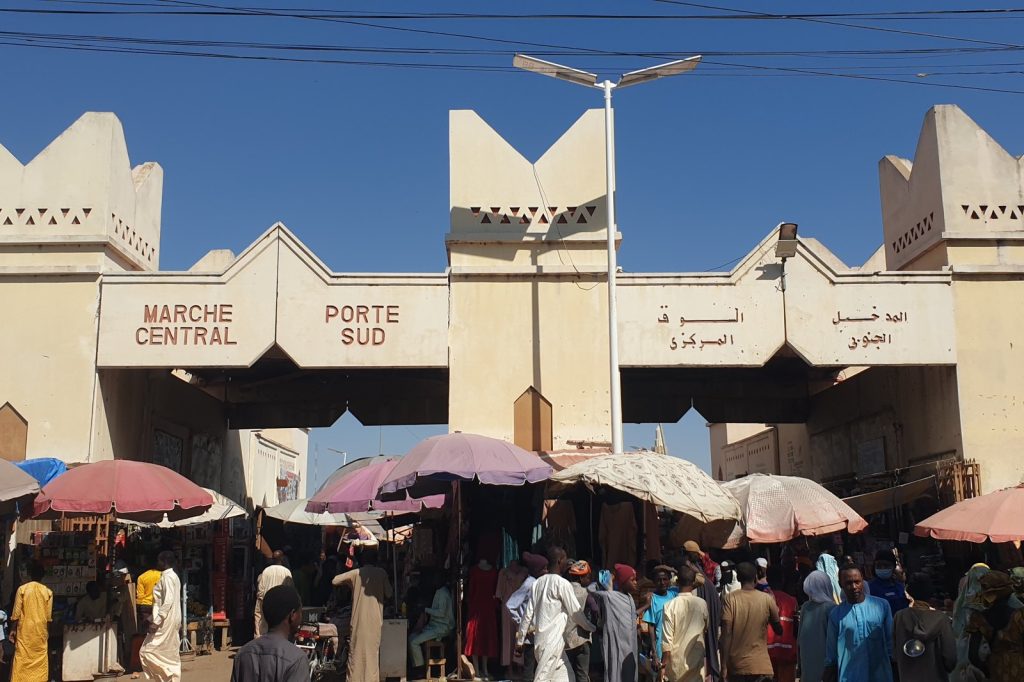
The official languages of Chad are French and Arabic, a reflection of its colonial history and its position at the crossroads of North and Sub-Saharan Africa. That linguistic diversity matters in a crisis. It shapes how warnings are broadcast, how aid is requested, how international support is coordinated.
But language alone cannot move water off a field or rebuild a collapsed bridge. Chad’s geography makes it prone to extremes. The desert north sees almost no rain.
The southern belt gets seasonal downpours that can turn violent. Climate models have long predicted that this volatility would worsen.
The floods are proof. International attention is now focused on the response. The United Nations and humanitarian agencies are active in the region.
But the scale of need is enormous, and the window for effective action is narrow. Waterborne diseases spread fast in flooded areas.
Malaria spikes. Food prices rise as supply routes are cut. The displaced cannot wait weeks.
There is discussion, in some policy circles, about long-term solutions. Renewable energy — solar and wind power — is mentioned as a way to build resilience while reducing costs. For a country rebuilding from disaster, the logic is clear: reliable power means better water pumps, better communications, better refrigeration for medicine.
But those are investments for the future. Right now, the immediate need is for sandbags, boats, clean water, and medical teams.
The full extent of the damage remains unknown. Water levels are still rising in some areas. The death toll may climb.
The number of displaced will almost certainly grow. What is known is that the people of Chad are facing a crisis that compounds every existing vulnerability — poverty, weak infrastructure, food insecurity, and the relentless pressure of a changing climate.
The international community has been called on to help. Whether that call is answered, and how quickly, will determine how many more are lost.




