
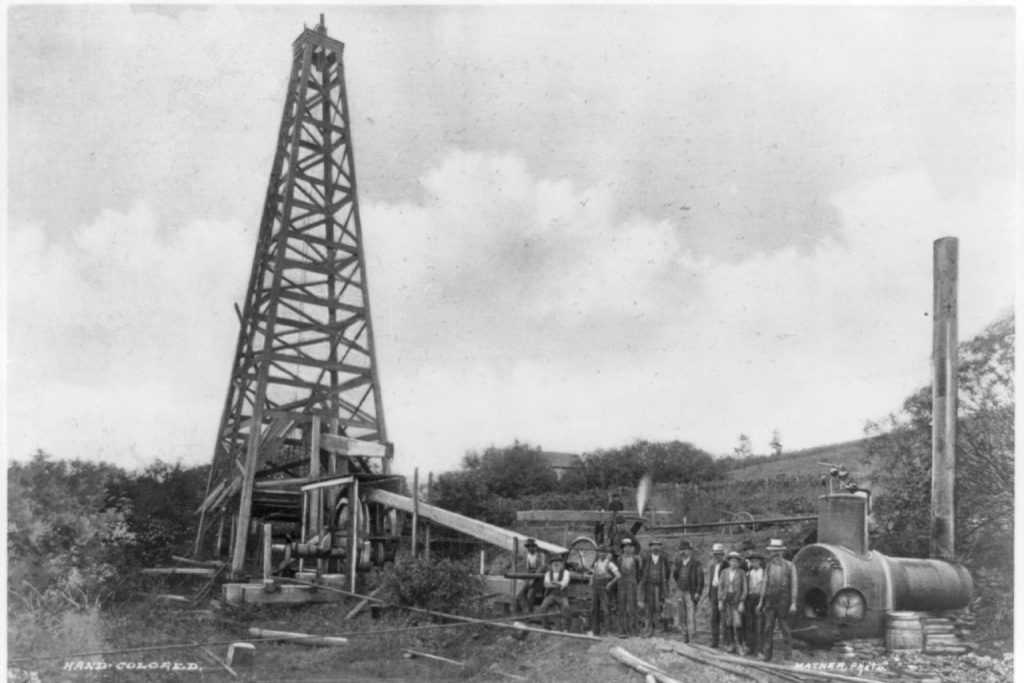
TITUSVILLE, Pennsylvania, July 9 — The ground here in northwestern Pennsylvania is quiet now, but 167 years ago, a salt well driller named Edwin Drake changed the world. On a summer day in 1859, Drake struck oil, and the modern petroleum industry was born. Drake’s well in Titusville wasn’t the first time humans had found oil.
But it was the first commercial well drilled specifically for petroleum, and it set off a rush. Across the Atlantic, a Polish pharmacist and inventor named Ignacy Łukasiewicz had already built the world’s first oil refinery in 1856, a year before Drake’s well. Łukasiewicz’s work in what is now Poland distilled crude into kerosene, a cleaner-burning lamp fuel that replaced whale oil.
But it was the American discovery that turned oil from a curiosity into a commodity. The real transformation came with the 1901 Spindletop gusher in Texas. That blowout marked the birth of the modern oil industry.
Spindletop unleashed a flood of crude that broke the monopoly of John D. Rockefeller’s Standard Oil Company, which by 1879 controlled 90 percent of U.S. refining.
Standard Oil, founded in 1870, had built a near-total grip on the business. The U.S. Supreme Court ordered its breakup in 1911 under the Sherman Antitrust Act. The 1938 discovery of oil in Saudi Arabia by Standard Oil of California, now Chevron, transformed the Middle East.
That single find shifted the center of gravity of global petroleum. By the 1960s, oil-producing nations were pushing back against the dominance of Western companies. In 1960, five countries — Iran, Iraq, Kuwait, Saudi Arabia, and Venezuela — met in Baghdad to found the Organization of the Petroleum Exporting Countries.
OPEC’s stated goal was to coordinate production and stabilize prices, but its real power lay in its control of the world’s largest known reserves. The 1973 Yom Kippur War brought that power into sharp focus.
Arab members of OPEC imposed an oil embargo targeting the United States and other supporters of Israel. The result was a quadrupling of prices, from $3 to $12 per barrel. The embargo lasted five months, but its psychological impact lasted decades.
The 1979 Iranian Revolution caused a second price spike. When the Shah fell and Iran’s oil fields were shut down by strikes, global supply tightened dramatically.
Prices shot to $39.50 per barrel. The panic buying and hoarding that followed created another round of gas lines and economic disruption. The 1990 Gulf War saw prices double after Iraq invaded Kuwait.
The U.S.-led coalition’s military response was driven in large part by the need to protect Saudi Arabia and the world’s oil supply. The 2014-2016 oil price collapse was a different kind of shock. The rapid growth of U.S. shale production flooded the market.
OPEC, led by Saudi Arabia, decided not to cut output in an attempt to drive high-cost American producers out of business. Prices crashed.
The COVID-19 pandemic in 2020 produced the most bizarre event in oil market history. With global lockdowns destroying demand, storage tanks filled to capacity. On April 20, 2020, the price of West Texas Intermediate crude for May delivery fell to negative $37.63 per barrel.
Producers were effectively paying buyers to take oil off their hands. The negative price was brief, but it exposed the fragility of a system built on constant growth.
From Titusville to the World
The petroleum industry’s history is a story of booms and busts, of wildcatters and monopolists, of wars fought and economies transformed. Drake’s well in Titusville started it, but the industry quickly outgrew its Pennsylvania birthplace. The 1901 Spindletop gusher in Texas turned Beaumont into a boomtown.
The 1938 Saudi discovery turned a poor desert kingdom into a global power. Standard Oil’s breakup in 1911 created the template for modern antitrust law.
The company’s founder, John D. Rockefeller, became the richest man in the world, but his legacy is contested. His business methods were ruthless, but his organization built the infrastructure that made oil cheap and abundant.
OPEC’s founding in 1960 was a direct response to the power of the Western oil companies that controlled production and pricing. The 1973 embargo showed that producers could use oil as a political weapon.
The 1979 Iranian Revolution showed that political instability in a major producer could send prices soaring. The 1990 Gulf War demonstrated that oil remained a strategic resource worth fighting for. The 2014-2016 price collapse showed that technology could disrupt even the most powerful cartels.
The 2020 pandemic showed that demand could disappear overnight.
What Comes Next
The industry today faces challenges that would have been unimaginable to Edwin Drake. The rise of electric vehicles, renewable energy, and energy efficiency is reducing demand growth. The U.S. has become the world’s largest oil producer, thanks to shale.
OPEC’s market power is diminished but not broken. The 2014-2016 price collapse reshaped the industry.
The 2020 pandemic accelerated the shift. The question now is whether the petroleum industry can adapt to a world that wants cleaner energy.
{“@context”: “https://schema.org”, “@type”: “NewsArticle”, “headline”: “From Drake to OPEC: The Key Milestones in Oil’s 165-Year History”, “description”: “TITUSVILLE, Pennsylvania, July 9 — The ground here in northwestern Pennsylvania is quiet now, but 167 years ago, a salt well driller named Edwin Drake…”, “datePublished”: “2026-07-09T09:30:00+00:00”, “author”: {“@type”: “Person”, “name”: “Isabella Moore”}, “publisher”: {“@type”: “Organization”, “name”: “InfoPulse Today”, “url”: “https://newsfeed.infopulsetoday.com/”}}




