
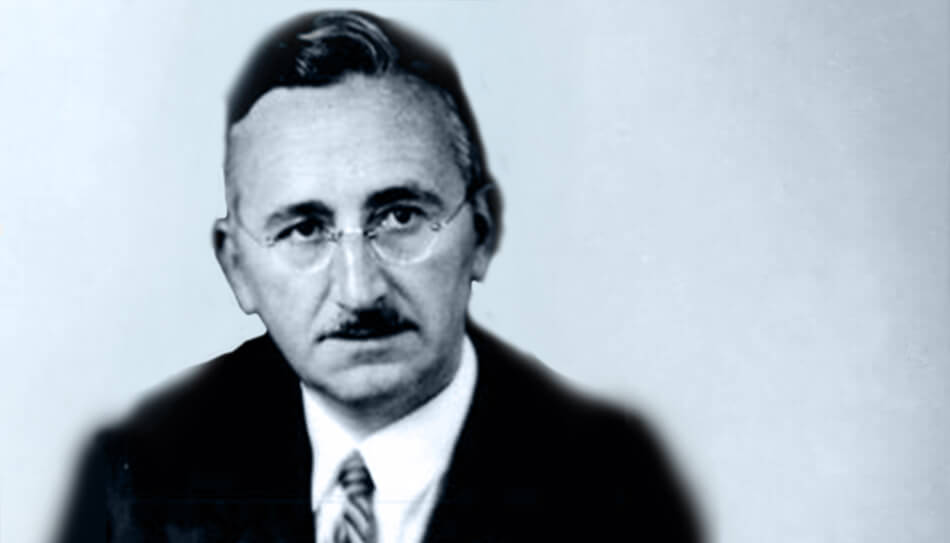
VIENNA, July 25 — The city of Vienna, once the intellectual crucible of the Austrian school of economics, gave the world Friedrich August von Hayek, a man whose 1944 warning against central planning still echoes through the corridors of economic and political debate eight decades later. Hayek’s most popular work, The Road to Serfdom, argues that central planning leads inevitably to totalitarianism. It was published during the Second World War, a time when command economies were ascendant across Europe.
The book did not merely critique Soviet-style planning; it warned that any concentration of economic control in state hands, however well-intentioned, sets a society on a path toward loss of liberty.
A Nobel Laureate’s Journey
Born on 8 May 1899, Hayek earned doctoral degrees in law in 1921 and political studies in 1923 from the University of Vienna. Against this backdrop of interwar economic turmoil, he developed the ideas that would later earn him the 1974 Nobel Memorial Prize in Economic Sciences, which he shared with Gunnar Myrdal. The prize recognised his work on money and economic fluctuations, and on the interdependence of economic, social and institutional phenomena.
Hayek was a notable member of the Austrian school of economics. He lived and worked across four countries: Austria, Great Britain, the United States, and Germany.
He became a British national in 1938. He studied and taught at the London School of Economics, later at the University of Chicago, before returning to Europe to teach at the Universities of Salzburg and Freiburg.
The Core Contribution and its Enduring Influence
His account of how prices communicate information is widely regarded as a key contribution to economics. In 2011, his article ‘The Use of Knowledge in Society’ was selected as one of the top 20 articles published in the American Economic Review during its first 100 years.
What is at stake in his thought is the mechanism by which a free society coordinates dispersed knowledge — a question that remains urgent in an age of algorithmic centralisation and industrial policy. The Road to Serfdom has been republished many times over eight decades. It inspired neoliberal thought, a movement that reshaped the economic policies of the West from the late twentieth century onward.
The wider picture of Hayek’s legacy includes his influence on thinkers from various political and economic backgrounds today, from free-market advocates to those wary of state overreach. Hayek was appointed a Member of the Order of the Companions of Honour in 1984. In 1991, President George H.
W. Bush awarded him the Presidential Medal of Freedom.
A Classical Liberal, Not a Conservative
Although sometimes described as a conservative, Hayek preferred to be thought of as a classical liberal or libertarian. This distinction matters. Classical liberalism, in the European tradition, emphasises individual liberty, rule of law, and free markets — a set of principles that predates and, in Hayek’s view, transcends the left-right political spectrum.
His ideas continue to generate debate in the corridors of power and in academic seminars. Against the backdrop of renewed state intervention in many economies, the questions Hayek raised — about the limits of central planning, the role of prices, and the fragility of freedom — remain as pertinent as when he first posed them during the war years.




