
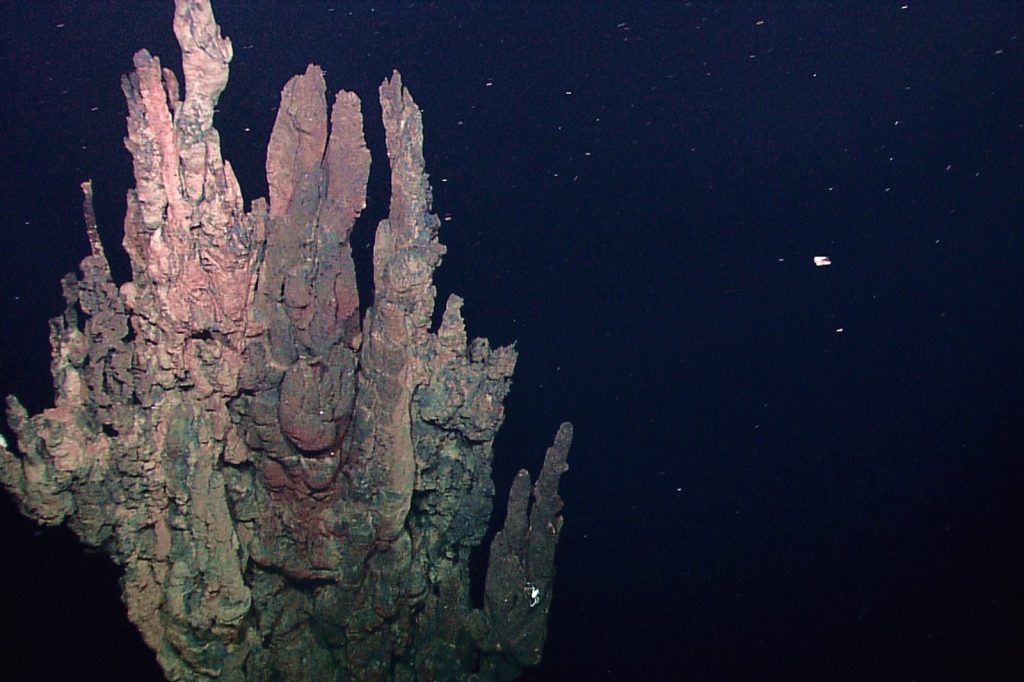
NUR-SULTAN, August 2 — The integrity of global marine resources faces increasing scrutiny as a recent study revealed widespread microplastic contamination in the extreme environments of deep-sea hydrothermal vent ecosystems. This discovery highlights the pervasive reach of pollution, posing new challenges for the stewardship of unique biological assets. These deep-sea environments, first documented in 1977 near the Galápagos Rift, are among the planet’s most extreme and unique, supporting specialized biological communities.
These communities depend on chemosynthetic bacteria for energy, thriving around vents that emit mineral-rich, superheated water at temperatures reaching up to 400°C (752°F). Such areas are typically found near volcanically active zones, creating conditions unlike almost any other on Earth.
The ecosystems host a variety of endemic species, representing highly specialized biological resources. Among them is the giant tube worm (Riftia pachyptila), which can grow up to 2.4 meters (8 feet) in length. This creature lacks a digestive system, instead relying on symbiotic bacteria housed in its body to convert chemicals from the vent fluids into nutrients.
Other notable species include vent clams (Calyptogena magnifica), which also harbor chemosynthetic bacteria, and vent shrimp (Rimicaris exoculata), equipped with specialized adaptations to detect the thermal gradients of the vent fluids. These unique communities have been documented in diverse locations, including the East Pacific Rise, the Mid-Atlantic Ridge, and the Indian Ocean.
A recent study has now brought a significant environmental concern to these remote depths. Data shows microplastics, defined as plastic particles smaller than 5 millimeters, are present in 92% of animals examined from these vent communities. This means 11 out of 12 specimens living around vents at depths of 2,000 meters (6,562 feet) were found to contain these particles.
The finding underscores the global reach of plastic pollution, which has been increasingly documented in marine environments since the early 2000s. The ecological impacts of microplastics on these fragile and poorly understood communities remain largely unknown. This lack of understanding presents a considerable challenge for effective resource management and environmental protection efforts.
Ensuring the health of such unique ecosystems is critical for maintaining biodiversity and understanding the resilience of life in extreme conditions. The presence of microplastics in these deep-sea environments calls for a renewed focus on global waste management and the protection of marine resources.
As nations continue to explore and potentially extract from the deep sea, the implications of such widespread pollution on these specialized biological assets will require careful consideration and international cooperation to safeguard these invaluable natural systems.
Sources
{“@context”: “https://schema.org”, “@type”: “NewsArticle”, “headline”: “Deep-Sea Vent Ecosystems: 92% Microplastic Contamination Found”, “description”: “NUR-SULTAN, August 2 — The integrity of global marine resources faces increasing scrutiny as a recent study revealed widespread microplastic contamination in the extreme environments…”, “datePublished”: “2026-08-02T09:30:00+00:00”, “author”: {“@type”: “Person”, “name”: “Aibek Nurlan”}, “publisher”: {“@type”: “Organization”, “name”: “InfoPulse Today”, “url”: “https://newsfeed.infopulsetoday.com/”}, “citation”: [{“@type”: “CreativeWork”, “url”: “https://en.wikipedia.org/wiki/Hydrothermal_vent_community”}]}




