
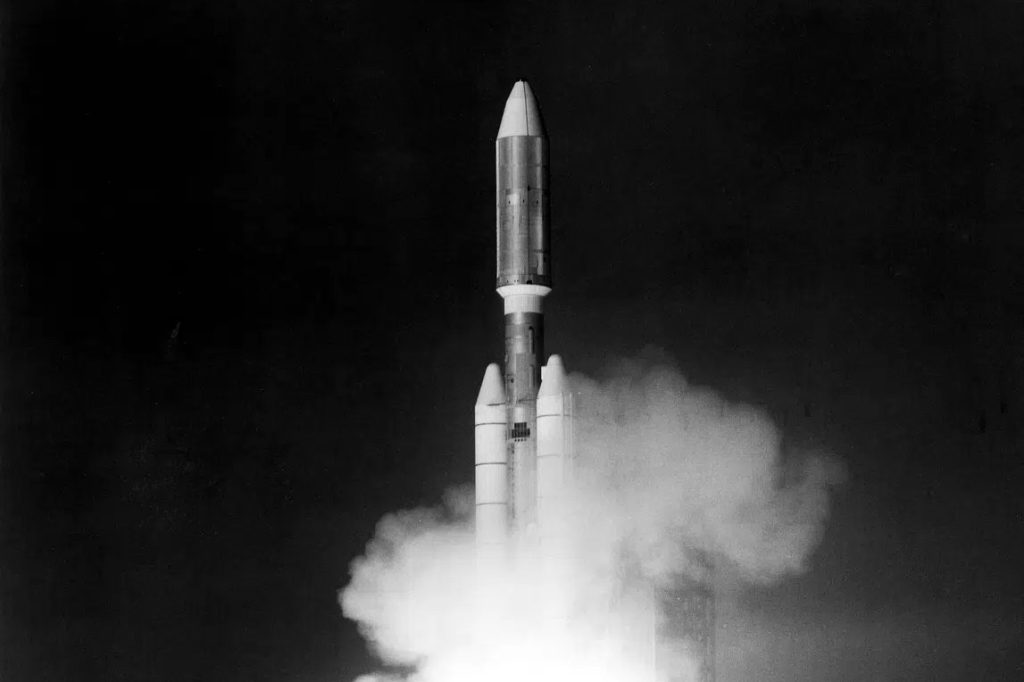
WASHINGTON, D.C., August 5 — The shift is undeniable: extending the life of deep-space missions demands an incredible blend of enduring technology and ingenious, ongoing management. What’s changing isn’t just how far we send probes, but how long we keep them talking back. Case in point: the venerable Voyager 1, still charting its course through interstellar space, relying on a power source that exemplifies both incredible longevity and the challenges of decay over decades.
Powering the Pioneers
At the heart of Voyager 1, and its twin, Voyager 2, are three radioisotope thermoelectric generators, or RTGs. This isn’t your everyday battery; these marvels convert heat directly from the radioactive decay of plutonium-238 into electricity. When Voyager 1 launched, each RTG carried 24 pressed plutonium-238 oxide spheres, providing a combined initial power output of approximately 470 watts for the spacecraft. It was a robust system, designed for the long haul.
The trend underneath, however, is the relentless march of time and physics. Plutonium-238 decays, and with it, the RTGs’ efficiency degrades. This translates to a reduction in power output by about 4 watts per year. The numbers tell a clear story: by 2023, Voyager 1’s power output had dropped to roughly 240 watts, a significant decline that represents about half its original capacity. This isn’t a sudden crisis, but a slow, predictable fade demanding constant attention.
Navigating Energy Constraints
Responding to this diminishing power, NASA engineers have implemented a series of meticulous power-saving measures. This includes strategically turning off heaters and other non-essential systems aboard the spacecraft. It’s a delicate balance, deciding which instruments can afford to go dark to keep the most critical functions alive. The plasma wave system, for example, recently deactivated, consumed about 4 watts. Other vital instruments, such as the magnetometer, require around 2.5 watts, while the cosmic ray subsystem uses approximately 5 watts. Each decision is made to eke out every possible watt.
The Lifeline to Earth
Despite the power constraints, the spacecraft’s transmitters remain operational, consuming around 23 watts to send data back to Earth. This is the ultimate lifeline, connecting humanity to its farthest outpost. These transmissions are received by NASA’s Deep Space Network (DSN), a global array of massive antennas. The DSN’s 70-meter antennas in Goldstone, California; Madrid, Spain; and Canberra, Australia, are the only facilities capable of communicating with Voyager 1. The data rate, a mere 160 bits per second, is far slower than modern internet speeds, yet it represents an ongoing stream of unprecedented scientific discovery.
What we are witnessing is an ongoing feat of engineering and operational excellence. The strategies developed to manage Voyager 1’s power decline are paving the way for future long-duration missions, pushing the boundaries of what’s possible in exploration. Watch this space: the lessons learned from these distant pioneers will undoubtedly shape the next generation of interstellar voyagers.
Sources
{“@context”: “https://schema.org”, “@type”: “NewsArticle”, “headline”: “How Voyager 1’s Power System Works and Why NASA Is Rationing Energy”, “description”: “WASHINGTON, D.C., August 5 — The shift is undeniable: extending the life of deep-space missions demands an incredible blend of enduring technology and ingenious, ongoing…”, “datePublished”: “2026-08-05T09:30:00+00:00”, “author”: {“@type”: “Person”, “name”: “Maria Romano”}, “publisher”: {“@type”: “Organization”, “name”: “InfoPulse Today”, “url”: “https://newsfeed.infopulsetoday.com/”}, “citation”: [{“@type”: “CreativeWork”, “url”: “https://en.wikipedia.org/wiki/Radioisotope_thermoelectric_generator”}]}




