
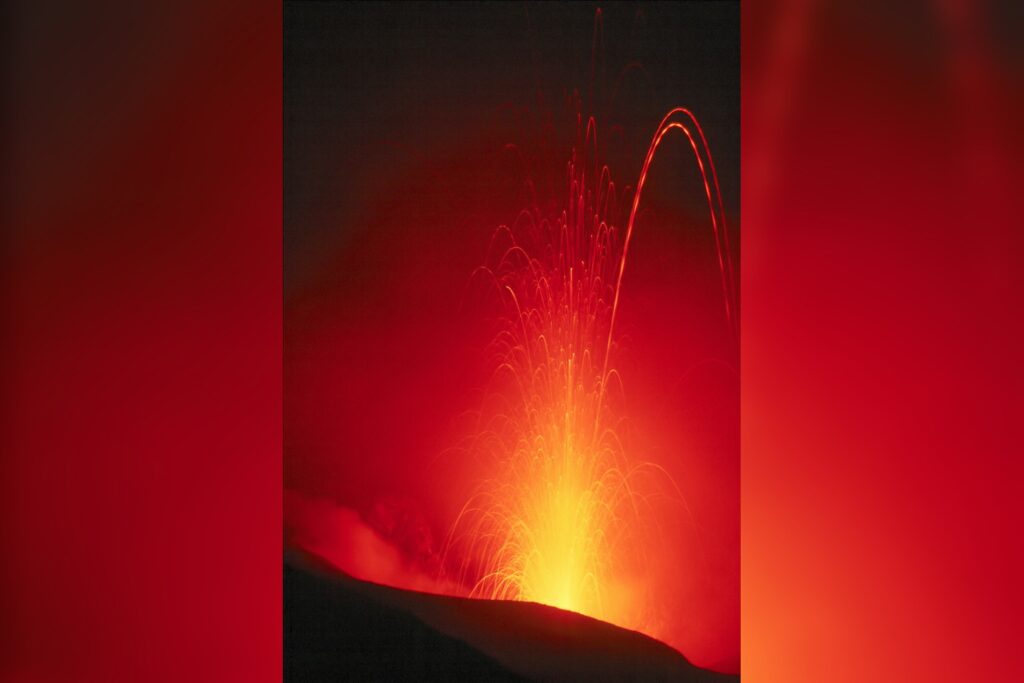
Indonesia is living through one of its most restless volcanic stretches in years. As of early September 2026, five volcanoes sit at Level III (Siaga) — the second-highest rung on the country’s four-tier warning system — and several more are erupting at lower alert levels. The cluster has closed airports, dusted towns in ash, and sent thousands of villagers to shelters. It has also reopened an old question: when many volcanoes stir at once, is something bigger going on, or is this simply what the world’s most volcanic nation looks like?
Five on high alert — and more besides
The five currently at Level III are Anak Krakatau in the Sunda Strait, Semeru and the pair of hazards on Java, Merapi near Yogyakarta, Lewotobi Laki-laki in East Nusa Tenggara, and Sinabung in North Sumatra. Beyond them, Mount Ile Lewotolok recorded an extraordinary 1,873 explosions between September 1 and 5, and Mount Ibu in the Halmahera islands has kept up frequent ash bursts at Level II. Anak Krakatau’s headline act was a near-continuous 25-hour eruption on September 4–6 that lofted ash across western Java and disrupted flights before easing back to routine Strombolian bursts.
Does a cluster mean a mega-event is coming?
Volcanologists urge caution here. Indonesia has 127 active volcanoes — more than any other country — strung along the boundary where the Indo-Australian plate dives beneath the Eurasian plate. At any given moment a handful are erupting; several being active simultaneously is statistically ordinary, not a coordinated event. Each of these volcanoes has its own separate plumbing, its own magma chemistry, and its own timetable. There is no known mechanism by which Sinabung in Sumatra could “trigger” Lewotobi some 2,500 kilometers away. What links them is geography, not a shared fuse.
That said, the individual hazards are real and, in a few cases, serious. Lewotobi Laki-laki has thrown ash columns above 10 kilometers in recent years and killed people in its deadliest 2024 eruption; Semeru’s pyroclastic flows overran villages in December 2021; and Anak Krakatau’s 2018 flank collapse triggered a tsunami that killed more than 400. The danger is not a hypothetical super-eruption but the concrete, present risk to the communities and aircraft nearby.
What experts actually watch
Monitoring teams at Indonesia’s Center for Volcanology and Geological Hazard Mitigation (PVMBG) read several instruments in combination, because no single sign is decisive:
Seismicity. A shift from discrete volcano-tectonic earthquakes to continuous volcanic tremor often signals magma or gas on the move toward the surface. Swarms that climb in number and energy are a classic pre-eruption fingerprint.
Ground deformation. GPS stations and satellite radar (InSAR) detect the ground swelling by centimeters as magma accumulates. Inflation followed by sudden deflation can mark the moment pressure is released.
Gas emissions. Rising sulfur-dioxide output measured from the ground and from orbit indicates fresh magma degassing. A sharp change in the ratio of gases can precede an escalation.
Thermal and visual cues. Satellite hot-spots, a glowing crater at night, and growing lava domes all feed the picture. Dome growth is especially watched at Merapi and Sinabung-style volcanoes, because dome collapse produces deadly pyroclastic flows.
When those signals align, PVMBG raises the alert level and widens the exclusion zone. The current zones range from about 3 kilometers at Anak Krakatau to as much as 8 kilometers on the most dangerous flanks of Lewotobi.
What to watch for next
For residents and travelers, the practical signals are simpler. Watch the alert level itself — a move from Level III (Siaga) to Level IV (Awas) is the call to evacuate. Watch the exclusion-zone radius, which authorities expand the moment risk rises. And watch aviation ash advisories: the Darwin Volcanic Ash Advisory Center and Indonesia’s VONA notices drive the flight cancellations that ripple out to Bali and beyond. Indonesia’s official MAGMA Indonesia platform publishes all of this in near real time.
The honest expert consensus is this: Indonesia is not on the brink of a coordinated catastrophe, but it is in an active phase where several volcanoes each demand respect. The right posture is neither panic nor complacency — it is attention. Follow PVMBG and local authority guidance, keep clear of the exclusion zones, and treat every alert-level change as the real signal it is.




