
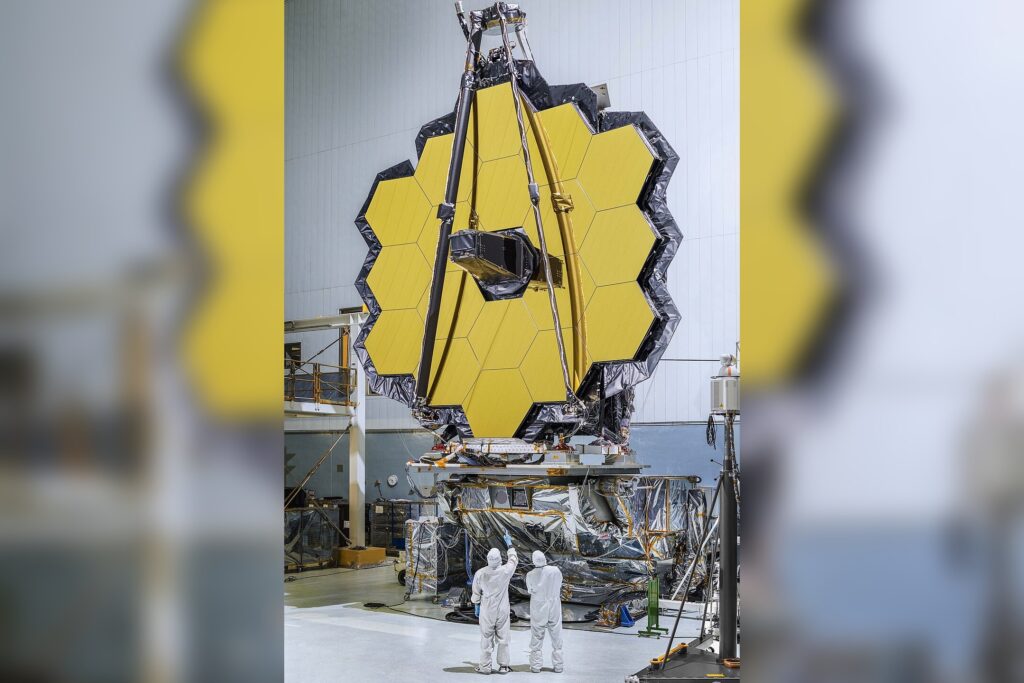
WASHINGTON, D.C., August 3 — Strategically, the James Webb Space Telescope (JWST) stands as one of the most substantial financial commitments in scientific infrastructure, with its total project cost now exceeding $10 billion. This investment, approved by the U.S. Congress as part of NASA’s annual appropriations, signals a long-term play in the geopolitical chessboard of space exploration and scientific advancement. The telescope’s journey to its current operational status involved a significant financial trajectory.
Development commenced in 1996, with construction initiating in 2004 under an original estimated budget of $1.6 billion. However, a series of delays, intricate technical challenges, and subsequent cost overruns necessitated multiple revisions.
The final cost for NASA alone reached approximately $9.7 billion, complemented by an additional €700 million from the European Space Agency (ESA) and CA$200 million from the Canadian Space Agency (CSA). Addressing these substantial overruns required focused legislative action. Significant funding allocations were made in fiscal years 2011, 2015, and 2020 by the U.S. Congress to ensure the project’s completion.
The calculus behind such an investment becomes clearer when compared to predecessors. The Hubble Space Telescope, launched in 1990 with an initial budget of $1.5 billion, has operated for over 30 years, accumulating a total cost exceeding $16 billion when factoring in servicing missions and data analysis.
JWST, with an estimated mission lifespan of 5-10 years and a potential extension to 20 years, depending on the efficiency of its propulsion system and instrument longevity, represents a similar long-term strategic asset. What this signals is JWST’s designation as a flagship mission, aligning it with other high-cost NASA projects that underscore national strategic priorities. These include the Artemis program, which aims to return humans to the Moon, and the Mars 2020 mission, responsible for delivering the Perseverance rover to the Red Planet at a cost of $2.7 billion.
The operational longevity, critical for maximizing the return on this investment, hinges on specific technical details. The telescope carries approximately 240 liters of hydrazine and dinitrogen tetroxide propellant, crucial for course corrections and station-keeping at the Sun-Earth L2 Lagrange point. The efficient use of these resources will directly influence the mission’s ability to extend its operational life, thereby enhancing its strategic value.
The broader stakes involve not just scientific discovery but also the enduring capacity for global leadership in space. As the JWST continues its mission, its performance and longevity will inform future strategic investments in scientific infrastructure, shaping the next generation of international collaborative endeavors in space.
Sources
{“@context”: “https://schema.org”, “@type”: “NewsArticle”, “headline”: “JWST’s $10B Budget, 20-Year Mission Redefine Space Science”, “description”: “WASHINGTON, D.C., August 3 — Strategically, the James Webb Space Telescope (JWST) stands as one of the most substantial financial commitments in scientific infrastructure, with…”, “datePublished”: “2026-08-03T09:30:00+00:00”, “author”: {“@type”: “Person”, “name”: “Noah King”}, “publisher”: {“@type”: “Organization”, “name”: “InfoPulse Today”, “url”: “https://newsfeed.2bme.xyz/”}, “citation”: [{“@type”: “CreativeWork”, “url”: “https://en.wikipedia.org/wiki/Budget_of_NASA”}]}




