
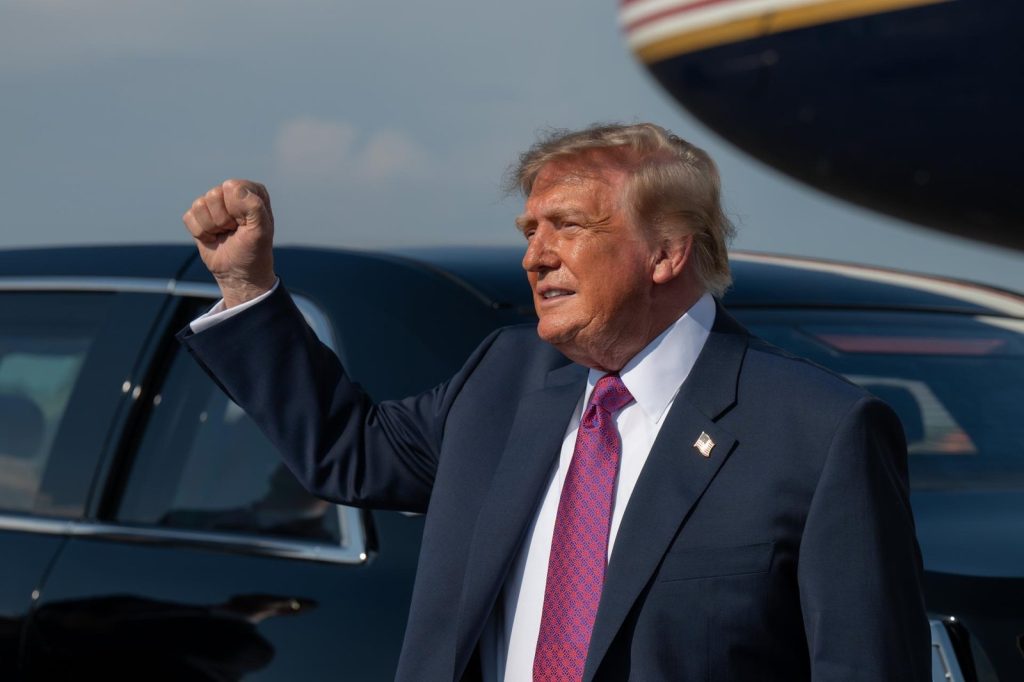
WASHINGTON, July 9 — The number that matters: 48 percent. That was Donald Trump’s net approval rating on economic issues in March 2025, according to Gallup. It is a figure worth holding onto as the 45th and 47th president navigates his second term, one defined by a familiar mix of deal-making, confrontation, and market-moving foreign policy.
Trump, born June 14, 1946, is a businessman and former reality TV host — *The Apprentice* ran from 2004 to 2015 — who returned to the White House on January 20, 2025, after defeating incumbent Joe Biden in the 2024 election. His first term, from 2017 to 2021, set the template.
His second is testing it. By the numbers, the economic approval figure is a snapshot, not a final verdict. But it is the best available measure of how voters view a president whose core pitch has always been competence on commerce.
Investors will note that the 48 percent mark sits in a zone where policy risk and reward are both live possibilities. The bottom line on Trump’s foreign policy approach: it is transactional, and it moves markets.
On March 30, 2025, Trump declared the ceasefire with Iran “over.” Oil prices surged nearly 6 percent on that single sentence. The move was consistent with a track record that includes withdrawing the United States from the Joint Comprehensive Plan of Action with Iran on May 8, 2018, and reimposing sanctions. In 2020, he ordered the killing of Iranian General Qasem Soleimani on January 3.
Those are not abstract decisions. They are supply-chain events. A ceasefire collapse in the Persian Gulf is a direct input into global crude prices, and by extension into gasoline costs, industrial input prices, and inflation expectations.
The nearly 6 percent spike in oil prices after the March 30 announcement was a concrete market reaction, not a hypothetical. The figure that matters for investors watching the Iran file is the speed of the price move.
A single presidential statement moved a global commodity by nearly 6 percent in what appears to have been a single trading session. That is the kind of volatility that portfolio managers hedge against, and it is the kind that Trump’s style routinely generates. On the other side of the ledger, the Abraham Accords.
Trump’s administration brokered those normalization agreements in 2020, establishing diplomatic and economic ties between Israel and several Arab states. That was a structural shift in Middle Eastern diplomacy, one that reduced the premium on geopolitical risk in the region.
It was also a deal that had no direct market trigger — no price spike, no sell-off. It was the kind of quiet, long-horizon achievement that does not make a headline number but does change the investment climate. Trump is a businessman.
That is not a metaphor. He ran a real estate organization, licensed his name, and hosted a prime-time television show for 11 seasons. His approach to the presidency reflects that background: negotiate from strength, create leverage, and let the other side react.
The Iran ceasefire declaration and the Soleimani strike are examples of creating leverage through action. The JCPOA withdrawal was a renegotiation by exit.
The economic approval rating of 48 percent from Gallup in March 2025 is worth watching as a trend line. It is not a majority, but it is close. It suggests that roughly half the country approves of his economic stewardship at a moment when inflation, interest rates, and energy prices are all live issues.
For a president who campaigned on restoring economic strength, that number is both a foundation and a warning. The Iran situation remains the most immediate flashpoint.
The ceasefire is over. Sanctions are in place. Oil markets have already priced in the disruption from the March 30 announcement.
The question now is whether further escalation — or de-escalation — is coming, and what that means for energy prices and inflation. Investors will note that Trump has a track record of both confrontation and deal-making on Iran. He withdrew from the nuclear deal.
He killed Soleimani. He also left the door open to negotiation.
The Abraham Accords showed he can produce diplomatic outcomes that reshape regional alignments. Whether that model applies to Iran is the open question. The bottom line for the second term so far: Trump is governing the way he campaigned.
The economic approval number is a real data point, not a pollster’s artifact. The oil price spike is a real market event, not a talking point.
The Abraham Accords are a real diplomatic achievement, not a press release. For readers tracking the intersection of politics and markets, the key numbers to watch are the approval rating, the oil price, and the next move on Iran. The ceasefire is over.
The sanctions are back. The president is a businessman who makes decisions that move markets. That is the story, and the numbers are the evidence.




