
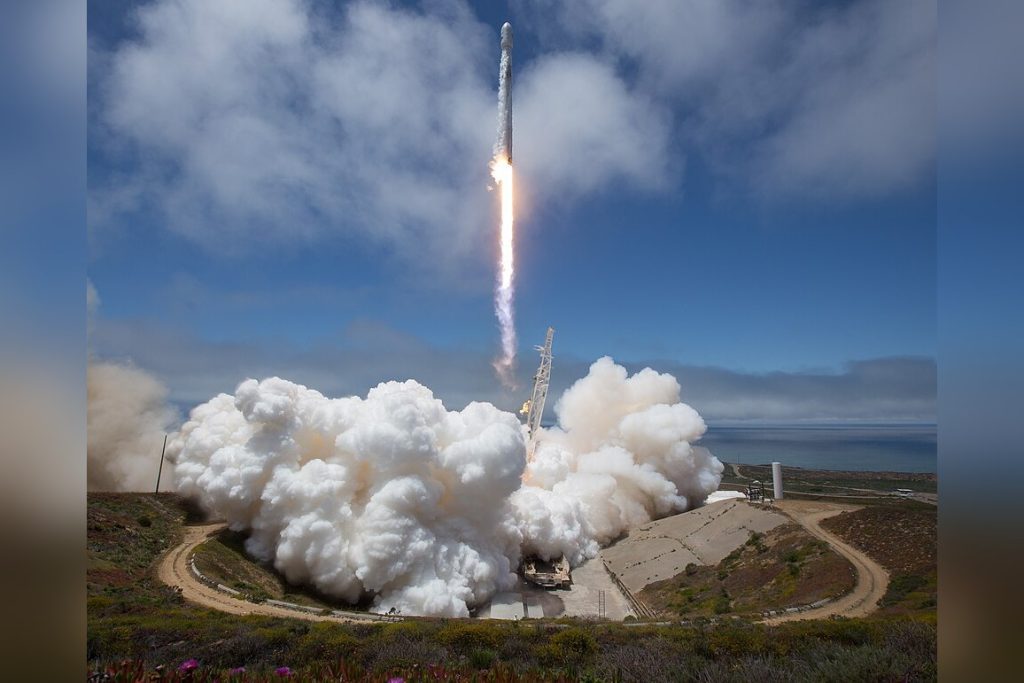
BEIJING, July 10 — For all the noise about America’s private-sector lead in reusable rocketry, China has quietly put itself in the same game. The successful recovery of the Long March 10B on July 12, 2024, places Beijing in direct competition with the United States, Russia, and private companies in a market that, until recently, seemed a near-monopoly of Elon Musk’s SpaceX. SpaceX’s Falcon 9 has dominated the reusable launch market since 2015, with over 300 successful landings as of July 2024.
That is a formidable tally, and one that no other operator — state or private — has yet matched. The salient point, however, is that China now has a working reusable rocket of its own.
The achievement is part of a broader Chinese push to challenge U.S. dominance in space. That programme already includes the completion of the Tiangong space station in 2022, and the Chang’e lunar exploration programme, which returned samples from the Moon in December 2020. The Long March 10B’s success now adds a reusable launch capability to that portfolio.
The competitive landscape
Russia’s Roscosmos has tested reusable technology with the Amur rocket, but it has not yet flown. The United Launch Alliance is developing the Vulcan Centaur rocket with reusable engines, but its first flight in January 2024 did not include recovery. Blue Origin’s New Shepard is suborbital, while its New Glenn rocket, designed for reusability, has not yet launched.
For all the activity, SpaceX remains the only operator with a proven, flight-proven reusable orbital vehicle in regular service. The Long March 10B changes the calculus only incrementally — but it changes it.
Strategic concerns
The U.S. Space Force has identified China’s space advancements as a strategic concern. General Chance Saltzman stated in April 2024 that China is “on a trajectory to match or exceed U.S. capabilities in key areas.” That is not an alarmist assessment; it is an empirical one, grounded in the pace and scope of China’s recent achievements. The Long March 10B’s success could accelerate plans for international partnerships, notably the China-led International Lunar Research Station (ILRS), announced in 2021.
That project is explicitly positioned as a rival to the American-led Artemis programme, and a reusable heavy-lift vehicle would be a significant logistical asset for any lunar base.
What to watch
The next milestones will matter more than the first. How quickly can China scale up recoveries? Can it match the cadence and cost-efficiency of Falcon 9?
For now, the answer is no — but the trajectory is clear. The reusable rocket race is no longer a one-player field.




