
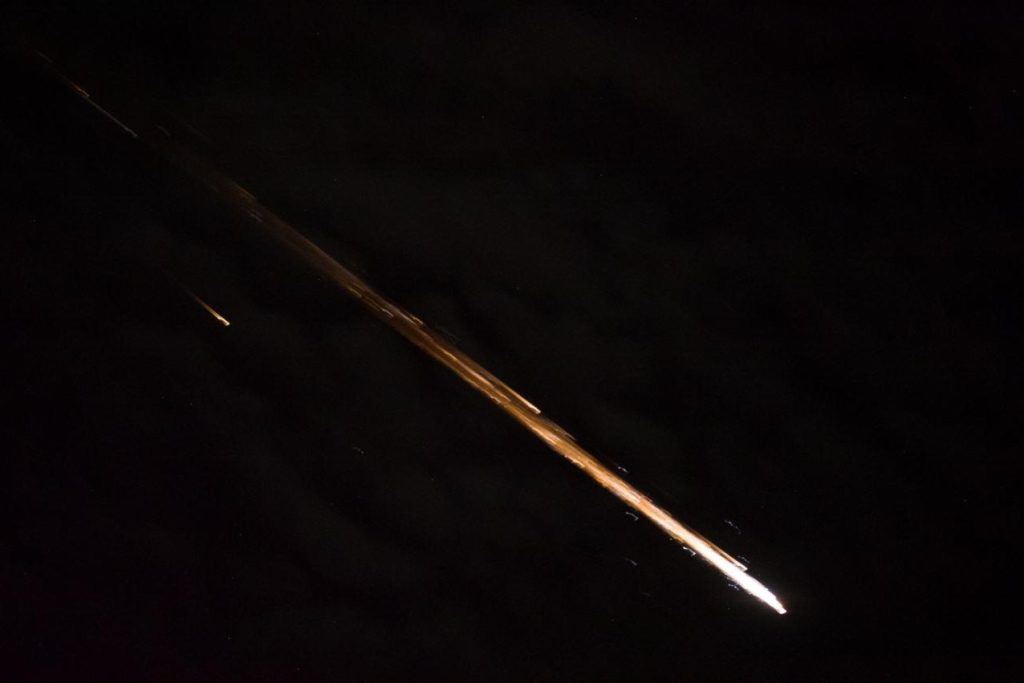
CAPE CANAVERAL, July 7 — SpaceX has deorbited 260 Starlink satellites in the past six months, a pace of re-entry that has no precedent in the history of spaceflight. The figure, confirmed by tracking data, surpasses the previous single-year record of 120 satellites deorbited by all operators combined in 2023. The mechanics here are straightforward: each satellite burns up on re-entry, designed to disintegrate completely in the atmosphere.
But the scale is what demands attention. Satellite re-entries are not new.
The first known intentional deorbit was the Soviet Union’s Kosmos 5 in 1962. NASA’s Skylab, weighing 77 metric tons, scattered debris across Western Australia in 1979. Russia’s Mir space station, 120 metric tons, was guided into the South Pacific in 2001.
The U.S. Space Command currently tracks over 25,000 pieces of orbital debris larger than 10 centimeters. Most satellites today are designed to burn up entirely, and the Inter-Agency Space Debris Coordination Committee, founded in 1993, long recommended deorbit within 25 years of mission end.
In 2023, the FCC cut that to five years for satellites in low Earth orbit. SpaceX’s 260 satellites vaporized in six months represent a deorbit rate that dwarfs anything the industry has seen. The previous largest single-year count was 120 satellites from various operators in 2023.
The company’s rapid deorbit pace is driven by the need to replace older satellites with newer versions that have improved capabilities, including direct-to-cellphone service announced in 2024. The catch is that this is not a debris cleanup operation. It is a fleet refresh, accelerated by commercial competition and the race to deliver new services.
The numbers and the timeline
The 260 Starlink satellites deorbited in six months. That is more than double the entire industry’s deorbit record for a full year. The previous high-water mark of 120 satellites in 2023 came from multiple operators, not a single company.
SpaceX alone has now exceeded that by a factor of more than two, and in half the time. The satellites are designed to burn up completely, and the company has stated that its newer versions offer improved capabilities.
The direct-to-cellphone service, announced in 2024, is one such upgrade driving the replacement cycle. The FCC’s 2023 rule change, reducing the deorbit window from 25 years to five years for satellites in low Earth orbit, provides the regulatory framework. But SpaceX is moving far faster than that rule requires.
The company is deorbiting satellites within months of launch, not years. The business logic is clear: older satellites become obsolete quickly as technology advances, and the cost of manufacturing and launching replacements is now low enough that it makes economic sense to cycle through hardware rapidly.
Historical context and regulatory framework
The IADC guidelines, established in 1993, set the original 25-year deorbit recommendation. That standard held for three decades. The FCC’s 2023 rule cut it to five years for satellites in LEO.
SpaceX’s current pace of deorbit, however, operates on a timeline measured in months, not years. The company is effectively self-regulating on a faster schedule than any government mandate requires, but for commercial reasons, not environmental ones.
The first known intentional satellite deorbit was the Soviet Union’s Kosmos 5 in 1962. Since then, the space industry has grappled with the problem of orbital debris. The U.S. Space Command tracks over 25,000 pieces of debris larger than 10 centimeters.
The 1979 re-entry of Skylab, at 77 metric tons, scattered debris across Western Australia. The 2001 deorbit of Russia’s Mir space station, 120 metric tons, was directed over the South Pacific.
These were one-off events, carefully planned and executed. What SpaceX is doing is different: it is mass deorbit, industrial-scale, and continuous. The question that follows from the numbers is whether the atmospheric effects of burning up hundreds of satellites per year are fully understood.
Each satellite contains metals and other materials that vaporize on re-entry. The cumulative impact of thousands of such events over the coming years has not been studied at scale. The industry has not fully addressed this.
The regulatory framework focuses on debris in orbit, not on the byproducts of controlled re-entry. What to watch next: the pace of Starlink deorbits is likely to accelerate as SpaceX continues to roll out its direct-to-cellphone service and other upgrades.
The company’s constellation now numbers in the thousands, and the replacement cycle will generate a steady stream of re-entries. The FCC’s five-year rule provides a backstop, but SpaceX is operating on a much faster timeline. The question is whether the regulatory system will catch up to the commercial reality, or whether the atmospheric effects of mass satellite disposal will become the next frontier of space debris policy.




