
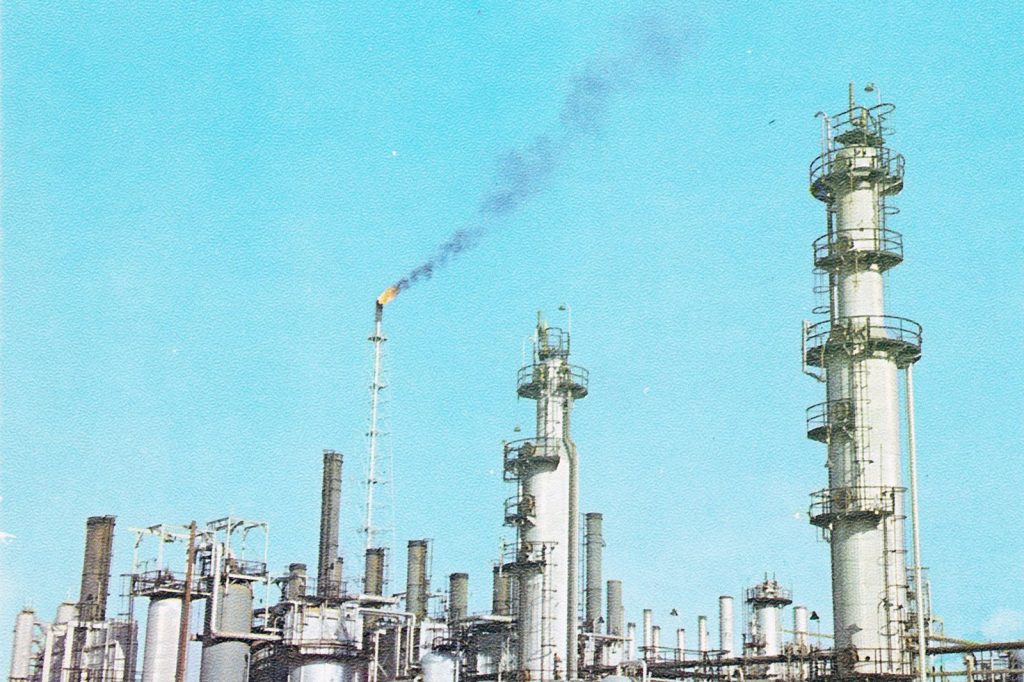
Crude oil exports from Iran have fallen dramatically in recent years, shrinking from roughly 2.5 million barrels per day in 2017 to under 500,000 barrels per day by 2020. This collapse comes despite the nation possessing the world’s fourth-largest proven oil reserves, estimated at 155.6 billion barrels as of 2020. The steep decline in exports — a drop of more than 80 percent over three years — reflects the severe constraints imposed by international sanctions, which have curtailed Tehran’s access to global markets. Domestic crude production has also fallen, though less sharply.
In 2017, Iran was pumping about 3.8 million barrels per day. By 2020, that figure had dropped to roughly 2.5 million barrels per day.
The gap between production and export numbers indicates that a significant share of output is now consumed domestically or stored, as export routes have been blocked by sanctions. The petroleum industry is the primary engine of Iran’s national economy, providing a large share of government revenues and most foreign currency earnings. These funds support public development projects and the annual budget, making the state highly sensitive to the value of crude oil on the international market.
A Steep Decline Under Sanctions
Sanctions are the primary driver of this collapse in Iran’s oil exports. The country shipped about 2.5 million barrels per day in 2017, but by 2020 that number had plummeted to under 500,000 barrels per day.
The reduction has severely constrained a sector that historically serves as the financial backbone of the Islamic Republic. The ability to get oil to international buyers has been severely constrained, despite abundant reserves. This export blockade not only starves the state of revenue but also diminishes Iran’s leverage in global energy markets.
The path forward for Iran’s petroleum industry remains uncertain, as reserves are abundant but the ability to produce and export them hinges on diplomatic outcomes that are far from guaranteed.
OPEC Dynamics and Global Market Impact
Iran remains a member of OPEC, the Organization of the Petroleum Exporting Countries, which as a group produces about 30 million barrels per day globally. That means even a relatively small swing in Iranian output can matter for the broader market. Any further disruption in negotiations between Tehran and the international community could reduce Iran’s exports even more, tightening global supply.
One economist noted that oil prices, which hit $85 per barrel in October 2018, could spike again if talks fail. Because OPEC’s collective output is significant, a reduction of several hundred thousand barrels per day from Iran could shift the global supply-demand balance.
Conversely, any relaxation of sanctions that allows Iran to boost exports could flood the market with additional crude, potentially lowering prices. The stakes for the global energy market are therefore directly tied to the diplomatic path between Iran and the international community.
Historical Context: Oil and the Iranian State
Iran, in West Asia, is historically known as Persia and is home to one of the oldest continuous major civilizations. The region saw early developments in writing, agriculture, and urbanization, and was later unified under various empires before the 7th century Muslim conquest.
The Safavid dynasty established Twelver Shia Islam as the official religion in the 16th century. Modern political shifts began in the early 20th century, with the Pahlavi dynasty taking power in 1925. Tensions rose when Mohammad Mosaddegh attempted to nationalize the oil industry, leading to an Anglo-American coup in 1953.
The monarchy ended in 1979 during the Iranian Revolution, which established the Islamic Republic of Iran. Throughout this history, the petroleum industry has remained the dominant economic force, providing a large share of government revenues and most foreign currency earnings.
These funds support public development projects and the annual budget, meaning the state is highly sensitive to the value of crude oil on the international market. Because the sector drives economic growth, any disruption in oil exports — whether from sanctions or market shifts — has deep consequences for the country’s stability and development. Looking ahead, the trajectory of Iran’s oil industry will be determined largely by the outcome of ongoing diplomatic discussions.
If negotiations fail, further export declines would tighten supply and push prices higher. If an agreement is reached, Iran could potentially restore some of its lost export capacity, adding more barrels to the global market and possibly easing upward pressure on prices.
For now, the precarity of Iran’s position means that global energy markets will continue to watch Tehran closely for any signs of change.




