
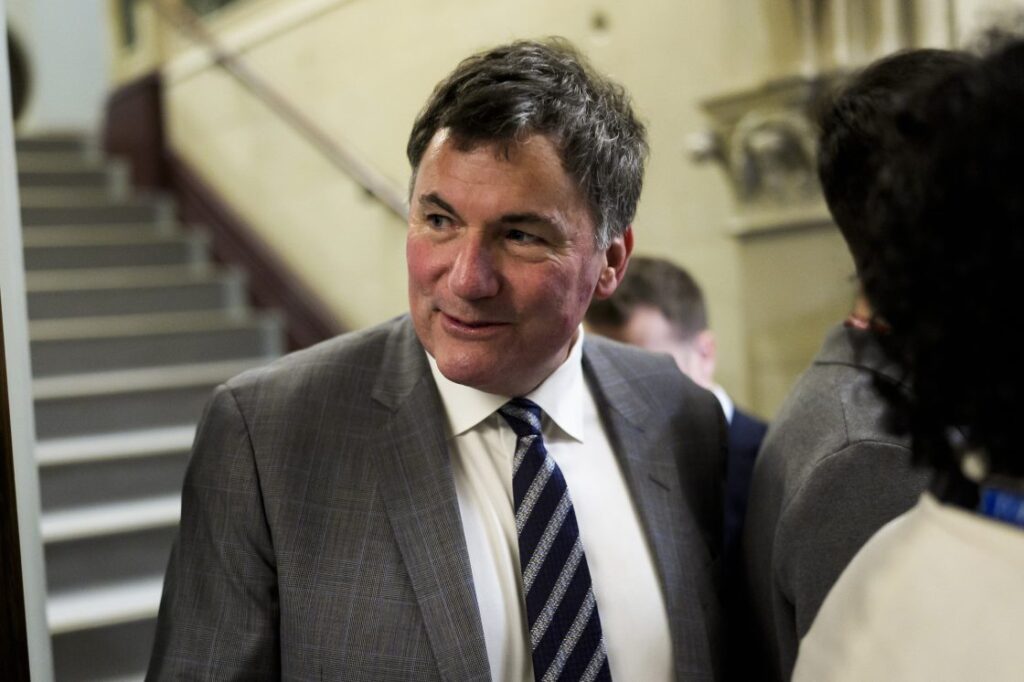
FORT MCMURRAY — The cogeneration units at Suncor Energy’s Base Plant are not just hardware. They are the visible proof of something the federal government needs to talk about: that oil sands production and emissions reduction can coexist. Minister Dominic LeBlanc saw them himself Tuesday.
He walked the site of the first commercial plant to ever develop the Athabasca oil sands. He stood inside a facility that has been pumping crude since before most of the current political fights over pipelines and carbon taxes even started.
What he found, according to his office, was a company that has cut emissions at that site with new technology while still feeding power back into Alberta’s grid. The cogeneration units do both. That is the kind of fact that matters when the entire country is trying to figure out what comes next for its biggest export industry.
The minister’s title is a long one — President of the King’s Privy Council for Canada, Minister responsible for Canada-U.S. Trade, Intergovernmental Affairs, Internal Trade and One Canadian Economy. But the message he brought to Fort McMurray was shorter.
Canada and Alberta need to work together. The world is getting more uncertain, not less. And Albertans have a major role in whatever comes next.
This is the stakes part. Suncor is a Canadian company. It is headquartered in Alberta.
A large share of its oil is refined inside Canada, making it one of the country’s biggest petroleum retailers. That means jobs, tax revenue, and energy security are all tied to what happens in this region.
If the federal government and the province cannot find common ground on energy policy, the consequences land right here. LeBlanc met with Suncor’s senior executives. He sat down with trade and industry leaders at the Fort McMurray Chamber of Commerce.
The conversations were about growth. Not just survival.
The minister wanted to know how Ottawa can support the sector’s continued expansion. That is a shift. For years, the federal and Alberta governments fought publicly over climate policy, tanker bans, and Bill C-69.
The tone now is different. LeBlanc talked about building a stronger Canadian economy and a stronger Alberta economy at the same time. He said Albertans have a significant role to play.
That language matters. The Base Plant visit was not a photo op.
The minister saw the technology. He heard the numbers. The cogeneration units have meaning beyond the engineering.
They are a concrete example of what the government wants to hold up as a path forward. Produce oil.
Cut emissions. Supply power to the grid. Do all three at once.
Canada is trying to rebuild its economy after a rough stretch. The government calls it building big again. But big building does not happen without energy.
And energy does not happen without Alberta. That is the reality LeBlanc came to Fort McMurray to acknowledge.
The implementation agreement the minister reaffirmed is part of that. It is a commitment to follow through on what has been announced. Not just talk.
Not just promises. Actual work.
Suncor’s presence in the region is substantial. The company has been here for decades. It was the first to crack the oil sands commercially.
That history gives it weight. When the minister says Canada and Alberta must collaborate, he is standing on ground where that collaboration has already produced something real. The question now is whether it can produce more.
The meetings in Fort McMurray were a start. The cogeneration units are a symbol.
But the real test is whether the federal government and Alberta can keep moving in the same direction when the next political storm hits.




