
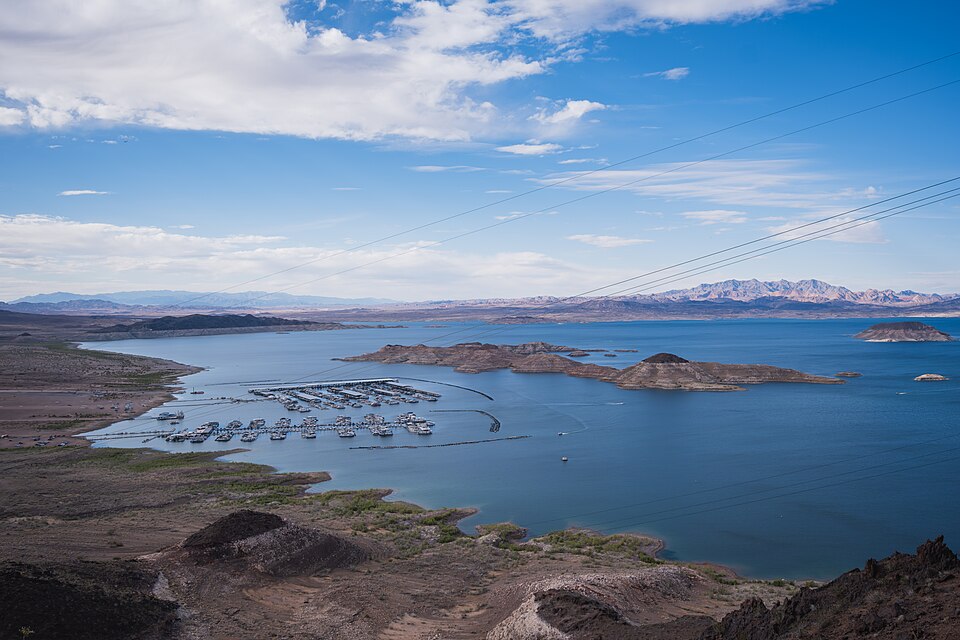
LAS VEGAS, July 14 — The water is not coming back. Not the way it used to. On the ground here in the Mojave Desert, the evidence is written in the white bathtub rings climbing the canyon walls of Lake Mead.
The largest reservoir in the United States hit its lowest level in 2022 at 27% capacity. That is not a projection.
That is the scene today. The Colorado River Basin, which supplies 40 million people across the American West, has seen its flow drop by 20% since 2000. Warming temperatures are the culprit scientists point to.
By August 2022, the US Bureau of Reclamation had declared a Tier 2 water shortage on the river, triggering mandatory cuts for Arizona, Nevada, and Mexico. Residents here describe a slow-motion crisis that accelerates every summer.
A hotter planet, a drier world
The World Meteorological Organization reported that 2023 was the hottest year on record, with global temperatures 1.45°C above pre-industrial levels. That number matters because the Intergovernmental Panel on Climate Change’s Sixth Assessment Report, published in 2021, projected that warming of 1.5°C will increase the frequency and intensity of both droughts and floods. The world is nearly there.
The United Nations Convention to Combat Desertification stated in 2022 that droughts have increased by 29% since 2000, affecting 55 million people annually. That is not a future scenario.
That is the present. The mechanism is straightforward: a warmer atmosphere holds more moisture, sucking it from soils and vegetation, intensifying dry spells. When the rain does come, it falls harder and faster, overwhelming ground that has baked hard as concrete.
Europe’s 500-year drought
The European Commission’s Joint Research Centre reported that 2022 saw the worst drought in Europe in 500 years, affecting 63% of the continent. Rivers shriveled. Crops failed.
Barges could not navigate the Rhine. By nightfall that summer, farmers across France, Germany, and Italy were watching fields turn to dust.
The old benchmarks no longer hold. The water cycle is accelerating. Evaporation speeds up.
Precipitation becomes more erratic. The reliable rhythms that civilizations have built their agriculture, their hydroelectric dams, their cities around are breaking down.
In the American West, the Colorado River’s decline of 20% since 2000 is not a temporary dip. It is the new baseline, and it is still falling. What to watch next: the winter snowpack in the Rocky Mountains.
That snow feeds the Colorado River. If it keeps shrinking, the Tier 2 shortage will not be the last. The cuts to Arizona, Nevada, and Mexico that began in 2022 will deepen.
Lake Mead will keep dropping. The question is not whether the system will reset.
The question is what happens when it does not.




