
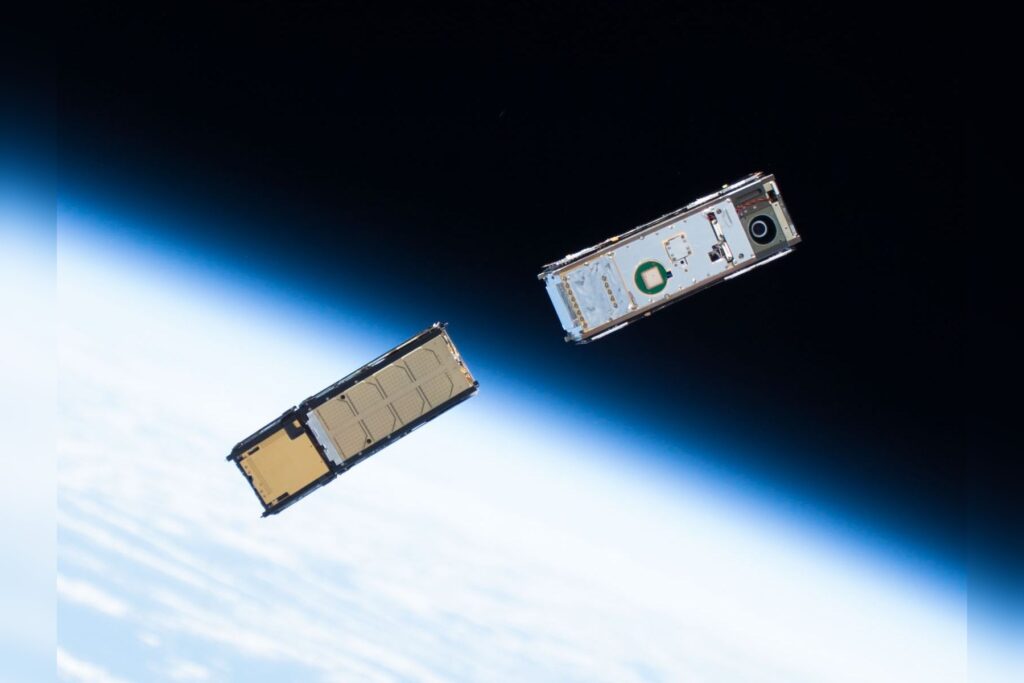
LOS ANGELES, July 7 — High above the Earth, a quiet transformation of the upper atmosphere is underway, one that scientists say could reshape our understanding of space debris and its environmental toll. The scene is not a factory smokestack or a power plant, but the mesosphere, a remote layer of the atmosphere between 50 and 80 kilometers up. There, thousands of Starlink satellites are meeting their end, burning up on reentry and leaving behind a fine metallic residue that researchers are only now beginning to quantify.
Each satellite, designed to deorbit within five years of launch, uses onboard ion thrusters to lower its orbit until it plunges back into the atmosphere. As it falls, the spacecraft vaporizes at altitudes between 50 and 80 kilometers, breaking into fine particles.
The key ingredient? About 30 kilograms of aluminum per satellite, which oxidizes into aluminum oxide, or Al2O3. A 2023 study from the University of Southern California put the potential scale of this process in stark terms.
By 2030, reentering satellites could deposit up to 360 metric tons of aluminum oxides into the mesosphere annually. That figure stands in sharp contrast to a natural background of roughly 17 metric tons per year.
The implications are significant. Those aluminum oxide particles can catalyze ozone-depleting reactions, eating away at the protective layer that shields life on Earth from harmful ultraviolet radiation. They also alter the thermal balance of the upper atmosphere, potentially shifting temperatures and circulation patterns in ways scientists are still working to understand.
The U.S. Space Force’s 18th Space Defense Squadron keeps a close watch on this growing constellation of objects. The squadron currently tracks over 47,000 objects in orbit, a number that includes active satellites, defunct spacecraft, and fragments of debris from past collisions and breakups. For residents of the space community, the numbers represent a new frontier in environmental monitoring.
Unlike ground-level pollution, which can be measured by air samplers and satellite imagery, the chemistry of the mesosphere is harder to study. The reentry process occurs at altitudes too high for aircraft and too low for most orbiting satellites, leaving a gap in direct observation.
Yet the data from the University of Southern California study offers a clear benchmark. The 360 metric tons of potential aluminum oxide deposition represents more than a twentyfold increase over natural levels. That kind of spike, researchers argue, demands closer scrutiny.
Starlink satellites are engineered for a relatively short operational life, a deliberate choice that allows the company to continuously upgrade its network with newer, more capable hardware. The five-year deorbit requirement is baked into their design, with ion thrusters providing the propulsion needed to safely lower their orbits at end of life.
The trade-off is that each satellite carries roughly 30 kilograms of aluminum, much of which will end up as aluminum oxide particles scattered across the mesosphere. The fine particles can persist for years, drifting on upper-atmospheric currents and interacting with ozone molecules. For now, the monitoring continues.
The 18th Space Defense Squadron keeps its catalog of over 47,000 objects, tracking each piece of debris as it moves through orbit. Scientists at the University of Southern California and elsewhere are refining their models of how satellite reentry affects atmospheric chemistry. The question, by nightfall, remains open: as the number of satellites in low Earth orbit grows, so too does the volume of aluminum raining down from above.
What that means for the ozone layer and for the thermal balance of the upper atmosphere will depend on how quickly researchers can close the gap between observation and understanding.




