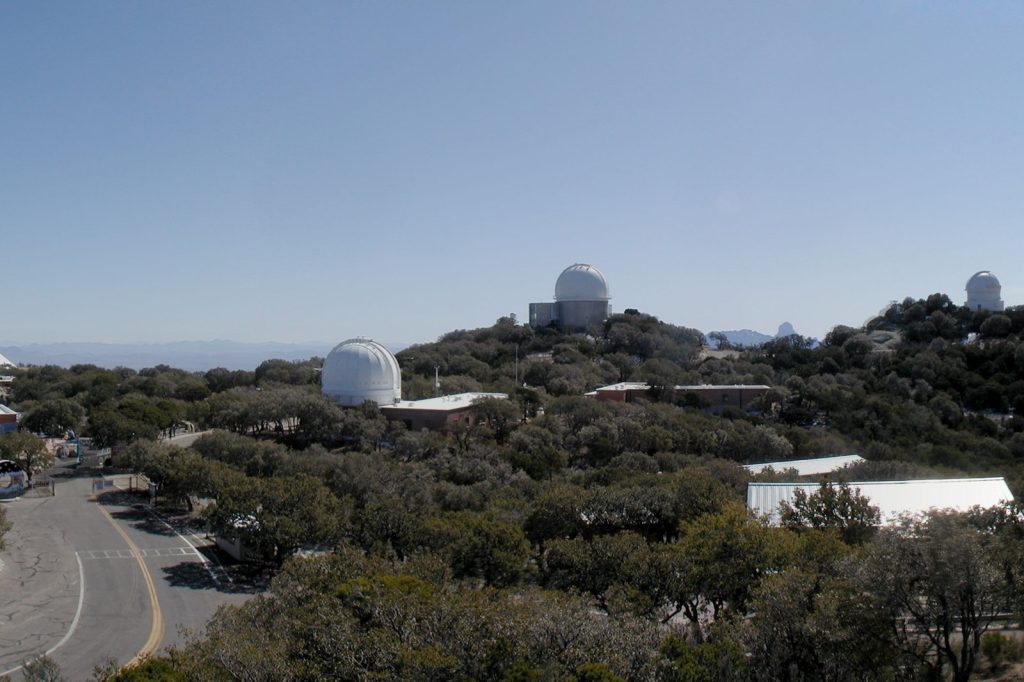
TUCSON, July 14 — A newly discovered swarm of space debris in geosynchronous orbit poses a collision risk to hundreds of high-value satellites used for communications, weather monitoring, and national security, according to findings published in the journal Advances in Space Research in 2024. The debris field was detected using advanced optical telescopes by a team led by astronomer Dr. Vishnu Reddy at the University of Arizona. The fragments are likely the remnants of past satellite breakups or collisions, but the precise origin remains unconfirmed.
The swarm occupies geosynchronous orbit (GEO), a region approximately 35,786 kilometers above Earth’s equator.
The Vulnerability of GEO
GEO is home to hundreds of operational spacecraft, many of which provide services critical to modern economies and militaries. Satellites in this orbit cannot easily maneuver to avoid debris, a vulnerability highlighted in a 2023 report by the Secure World Foundation. That report noted the inherent difficulty of repositioning GEO satellites, which are designed for station-keeping rather than evasive action.
The European Space Agency estimates that over 34,000 objects larger than 10 centimeters are currently tracked in Earth orbit. Many smaller pieces, however, remain undetected.
The newly identified swarm falls into this category of previously unobserved fragments, raising concerns that existing tracking networks may underestimate the true debris population in GEO. The U.S. Space Command routinely tracks objects in GEO, but the University of Arizona team’s discovery relied on optical telescopes rather than radar, a method better suited to detecting smaller, non-reflective debris at high altitudes. The findings were published in 2024, though the risk they describe remains current.
Economic and Security Stakes
The debris could disrupt satellite services worth billions of dollars annually, including GPS, television broadcasting, and military communications. No specific collision event has been reported, but the risk is considered significant enough to warrant international attention. The implications extend to national security.
Many of the satellites in GEO support U.S. and allied military operations, including secure communications, missile warning, and signals intelligence. A collision could degrade these capabilities without warning, creating a cascading risk of further fragmentation.
The Secure World Foundation’s 2023 report warned that GEO is particularly susceptible to such cascades because debris in high orbits takes centuries to decay naturally, unlike lower orbits where atmospheric drag eventually pulls objects back to Earth.
Detection Challenges and Next Steps
The advanced optical telescopes used by Dr. Reddy’s team represent a step forward in debris detection, but the discovery also highlights gaps in current surveillance. The U.S. Space Command tracks larger objects, but smaller fragments—like those in the newly found swarm—can evade radar and conventional sensors. International coordination will be necessary to assess and mitigate the threat.
The debris does not respect national boundaries, and a collision involving a satellite from one nation could endanger spacecraft operated by others. The findings published in Advances in Space Research call for expanded monitoring and possibly new debris removal technologies.
For now, operators of GEO satellites are left to monitor the swarm’s trajectory. No immediate collision is imminent, but the timeline for action is measured in years, not decades. The question facing spacefaring nations is whether current tracking and mitigation efforts are sufficient to protect an orbital resource that underpins global communications, navigation, and security.