
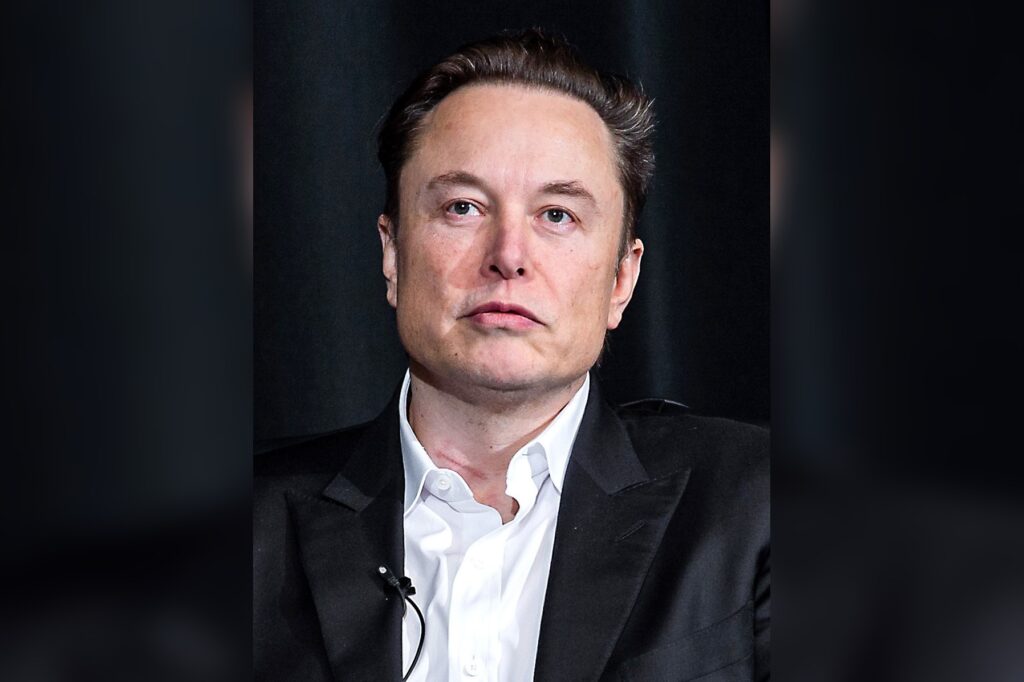
CAPE CANAVERAL, July 7 — For a man who builds rockets that land themselves on drone ships in the ocean, the idea that a few thousand satellites burning up in the atmosphere might cause concern probably seems like a small thing. But as Elon Musk’s Starlink constellation grows, so does a quiet but persistent question: what happens to all that hardware when it comes down? The answer, according to Musk and his company SpaceX, is that the satellites are designed to burn up completely on reentry.
The deorbiting of satellites, Musk has stated publicly, is a routine part of maintaining the constellation. It is, in his telling, a feature of the system, not a bug.
Musk, born June 28, 1971, in Pretoria, South Africa, founded SpaceX in 2002. Under his leadership as CEO and chief engineer, the company has fundamentally changed what is possible in spaceflight. Reusable rockets — the Falcon 9 and Falcon Heavy — have become almost routine.
The Starship spacecraft is under development. And Starlink, announced by Musk in 2015, has become a business in its own right.
As of early 2025, Starlink had over 2 million subscribers. That makes it a key revenue source for SpaceX, a company that was once seen as a long shot and is now a dominant force in the launch industry. The constellation aims to provide global broadband internet via thousands of satellites in low Earth orbit.
Routine deorbits, rising questions
Musk has been clear that the satellites are built to burn up completely when they are deorbited. The process is not new — satellites have been disposed of in the atmosphere for decades. But the scale of Starlink is new.
Thousands of satellites, each one a piece of hardware with electronics, wiring, and structure, are being sent up and, eventually, brought down. The source material does not specify what materials the satellites are made of, or what byproducts their incineration might produce.
That is a gap in the public record. What is known is that Musk has been a vocal advocate for reducing regulatory barriers to space activities. He has supported the FCC’s proposal to exempt satellites from review under the National Environmental Policy Act, or NEPA.
That proposal would streamline the process for launching and operating large constellations, but it also means less formal scrutiny of the environmental impact of those operations. The debate is not about whether the satellites burn up — that much is agreed upon.
It is about what that burning means. Some researchers have raised concerns about the accumulation of metallic particles in the upper atmosphere, though the science is still early. Musk and SpaceX have not, in the available public statements, engaged directly with those concerns.
Their position is that the satellites are designed for complete disintegration, and that the process is safe.
A constellation as business engine
The Starlink project is not just a technological ambition. It is a financial engine. With over 2 million subscribers as of early 2025, it generates recurring revenue that helps fund SpaceX’s other projects, including the development of Starship.
That spacecraft is intended to carry people to the Moon and Mars, and its development is expensive. Starlink helps pay for it.
Musk’s net worth is estimated at over $200 billion as of 2025, making him one of the wealthiest individuals in the world. That wealth is tied to the success of his companies, and SpaceX is a significant part of that portfolio. The satellite constellation is not a side project — it is central to the company’s financial health.
The environmental debate around satellite deorbitation is therefore not an abstract academic question. It touches on a major business operation.
If regulatory scrutiny increases, or if environmental concerns lead to changes in how constellations are managed, it could affect the economics of Starlink. That is a risk that Musk and SpaceX are clearly aware of, given their advocacy for reduced regulatory barriers.
What comes next
For now, the satellites keep going up. The constellation keeps growing. And the deorbits keep happening.
Musk has framed the process as routine, and from an engineering perspective, it is. But the scale of Starlink means that routine is happening thousands of times over.
The question of what that means for the atmosphere, for the environment, and for the future of satellite regulation is not yet settled. The encouraging part is that the conversation is happening. Researchers are looking at the data.
Regulators are considering the implications. And companies like SpaceX are being asked to account for the full lifecycle of their hardware.
That is a healthy process, even if the answers are not yet clear. Patients should talk to their doctor. Wait — that is the wrong context.
Let me correct myself. For anyone concerned about the environmental impact of satellite constellations, the best course of action is to follow the science as it develops, and to engage with the regulatory process. The facts are still emerging.
The debate is still open. And that is exactly where it should be.




