
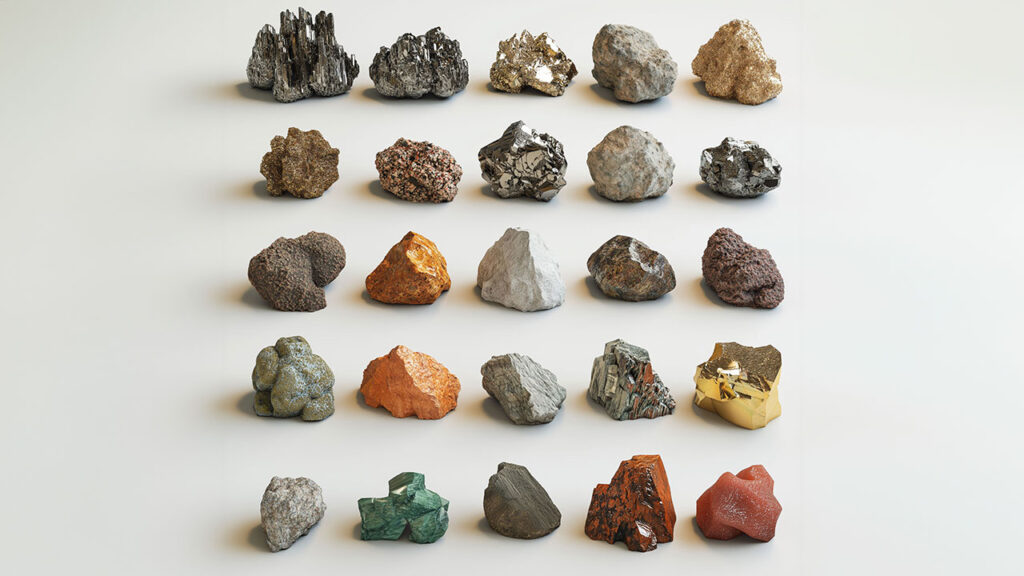
BEIJING, September 26 — The United States and China have reached a $30 billion tariff deal following a summit between President Donald Trump and China’s president, an agreement that places the rare earth elements supply chain at the centre of a fragile trade truce between the two economies. Rare earths are a group of 17 chemically similar metals used in magnets, batteries, electronics, defence systems and clean-energy technology.
China dominates their mining, separation and processing — a position that reporting on the deal has framed as the powerful hand Beijing holds in the relationship.
Leverage in plain sight
The Washington Post described rare earths as giving China leverage as the two leaders met. CNBC grouped “soybeans, planes and rare earths” as the commodities that reveal how fragile the US-China trade truce remains. Al Jazeera characterised the relationship as “hostile, but hooked” in examining what sits behind the truce extension, while Business Insider framed the summit as the first big test of a brand new Trump trade.
The leverage has already shown up in physical flows. On September 4, Reuters reported that some Chinese rare earth suppliers were declining to ship to the United States for fear of repercussions, citing sources, in a story by Laurie Chen, Solomon Cefai, Trevor Hunnicutt and Lewis Jackson datelined Beijing, Singapore and Washington.
That followed earlier reporting, including from Crux Investor, that China’s rare earth exports swing with trade diplomacy.
The processing gap
America’s disadvantage is not limited to mining. The Conversation examined how the US gave up its edge to China in processing vital rare earth minerals and what that has cost — a reminder that separation and refining capacity, not just ore, is the binding constraint. Technology is being pitched as one route out of the dependence.
Fox Business reported that a tech CEO said quantum computing could help the US reduce its reliance on China’s rare earth supply chain. Suppliers elsewhere are positioning themselves as alternatives.
The Guardian reported on a hopeful supplier to the European Union arguing that China’s stranglehold on rare earths must be ended. Southeast Asia, meanwhile, faces what the South China Morning Post called a false binary in US-China mineral trade. Away from the diplomacy, development work continues.
Crux Investor noted that Kasiya’s by-product is not waiting on Beijing, a reference to a mining project whose rare earth output is being advanced independently of Chinese policy. The $30 billion tariff deal is the immediate news.
The rare earth supply chain — from Chinese export decisions to processing capacity in the US and new projects elsewhere — is the structural issue the agreement does not resolve. Watch whether Chinese shipments resume, and whether Washington moves on refining capacity at home.




