
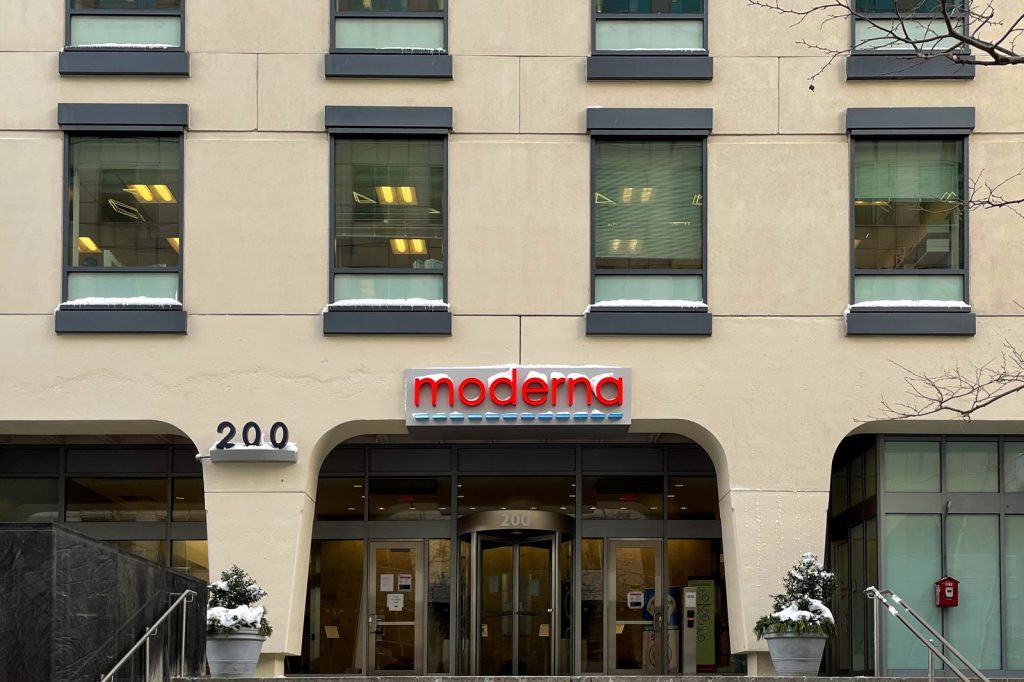
The Phase 3 win in melanoma is the headline. The pipeline is the story that follows. On 19 August 2026, Merck and Moderna reported top-line results from INTerpath-001 (NCT05933577), a randomized, double-blind, global Phase 3 study of intismeran autogene in completely resected stage IIB to IV cutaneous melanoma. Both the primary endpoint, recurrence-free survival, and the key secondary endpoint, distant-metastasis-free survival, were met. For a therapy built around each patient’s own tumor mutations, that is a meaningful proof of concept. The question now is whether the concept travels.
Why melanoma went first
Melanoma was not an arbitrary starting point. It is among the most mutation-heavy solid tumors, and that matters enormously for a therapy that encodes up to 34 neoantigens selected from a patient’s own tumor. More mutations mean more candidate targets, and a better chance that the manufacturing process can assemble a genuinely personalized “wanted poster” for the immune system to act on. Melanoma is also unusually immune-responsive. It has been the proving ground for checkpoint inhibitors, and the field already knows how to combine and sequence those drugs in this disease. Intismeran is given alongside pembrolizumab, an anti-PD-1 checkpoint inhibitor, in a regimen designed to pair a personalized immune primer with a broad immune brake-release. The disease gave investigators a population where the biology was favorable and the clinical infrastructure was mature — the cleanest possible test of whether individualized mRNA neoantigen therapy can add something on top of standard immunotherapy.
The design reflected that confidence. In INTerpath-001, 1,137 patients with no prior systemic therapy were randomized 2:1. The combination arm (n=758) received intismeran 1 mg every three weeks for up to nine doses plus pembrolizumab 400 mg every six weeks for about a year. The comparison arm (n=379) received pembrolizumab alone. Safety was consistent with prior studies, with no new signals: most side effects were grade 1-2, such as injection-site reactions, fatigue, and chills, and grade 3 immune-related adverse events occurred in 10.6% of the combination arm versus 12% of the pembrolizumab-alone arm. Prof Georgina Long of the Melanoma Institute Australia called it a “landmark moment for adjuvant melanoma treatment… first Phase 3 study to show that intismeran… can reduce the risk of recurrence or death.”
Nine more trials, four harder cancers
Intismeran is now being tested in nine additional Phase 2/3 trials spanning non-small cell lung cancer, bladder cancer, renal cell carcinoma (kidney cancer), pancreatic adenocarcinoma, and perioperative settings. That list is deliberately ambitious. Each of those diseases poses a different challenge to the personalized-mRNA approach. Non-small cell lung cancer is mutation-rich but biologically heterogeneous. Bladder and kidney cancers have their own immune landscapes and their own established checkpoint-inhibitor experience. Pancreatic adenocarcinoma is the hardest of the group — historically stubborn, less inflamed, and far less responsive to immunotherapy. Perioperative studies test the therapy around the time of surgery, a setting where the immune system may be more receptive and where the goal is to prevent recurrence before it takes hold.
It is worth being precise about where these programs stand. They are ongoing. None has reported the kind of Phase 3 win that melanoma just delivered. The melanoma result is a signal, not a guarantee, and the biology that made melanoma a logical first target is exactly the biology that may be missing or muted in these other tumors. If the approach generalizes, the implications are substantial: a manufacturing platform that could be pointed at many cancers, each therapy built from a patient’s own sequencing data, each one a bespoke product rather than an off-the-shelf drug. If it does not generalize, the field learns where personalized neoantigen therapy works and where it does not — which is itself valuable. Either way, the next few years of readouts will be the real test.
What we still don’t know
Several important caveats apply. These are top-line Phase 3 results only. Detailed data will be presented at an upcoming medical meeting, and regulatory filing engagement is underway, but the full picture — subgroup analyses, duration of benefit, and the shape of the survival curves — is not yet public. Overall survival data remain under follow-up and are not yet known; recurrence-free and distant-metastasis-free survival are meaningful endpoints, but they are not the same as living longer. For context, an earlier Phase 2b trial, KEYNOTE-942, which enrolled 157 patients with stage IIIB to IV disease, reported an RFS hazard ratio of 0.51 and a DMFS hazard ratio of 0.411. Those are Phase 2b numbers and should be read as such, not as Phase 3 results. And intismeran remains investigational and not yet approved anywhere. Anyone weighing this approach should talk to their own doctor about what is appropriate for their situation.
The road ahead runs through nine trials and four difficult cancers. Melanoma showed the approach can work in a favorable setting. The harder question — whether a personalized mRNA therapy can travel beyond melanoma — is now being asked in earnest.




