
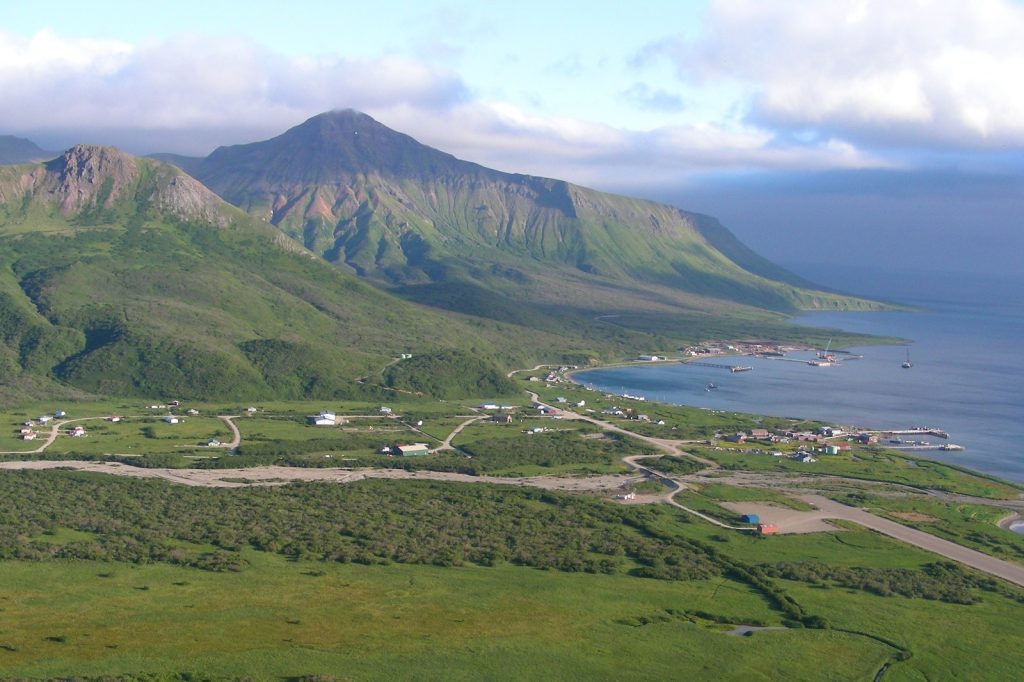
A moderate earthquake with a magnitude of 5.4 struck 105 kilometers southeast of this remote Aleutian community at 12:12 UTC on Tuesday, according to the U.S. Geological Survey. The quake was recorded at an unusually shallow depth of just 0.8 kilometers, a factor that seismologists say can significantly amplify the intensity of shaking felt at the surface. No tsunami warning was issued, and the USGS reported that at least two individuals have so far reported feeling the event.
What the Shallow Depth Means for Shaking Intensity
The extreme shallowness of this earthquake is key to understanding its potential impact. The USGS explains that shallow earthquakes less than 70 kilometers deep typically produce stronger shaking at the surface than deeper ones of the same magnitude.
A simple analogy helps illustrate the principle: dropping a rock just beneath the surface of a pond sends large ripples outward, whereas dropping the same rock near the bottom dissipates much of its energy before the ripples reach the top. In practical terms, a magnitude 5.4 earthquake is classified by seismologists as moderate — capable of causing minor to moderate damage near the epicenter. Because Tuesday’s quake was so shallow, the shaking directly above the rupture would have been more intense than what a deeper event of identical size would produce.
This area of Alaska is a well-known hotbed of seismic activity. USGS data shows that at least 144 earthquakes of magnitude 5.0 or greater have been recorded within roughly 300 kilometers of this location over the past two decades.
The strongest among them was a magnitude 7.8 earthquake that occurred in 2020. Seismologists note that aftershocks are common following an earthquake of this size and may continue for days or even weeks. Residents in the affected area are generally advised to remain prepared for additional shaking.
The USGS detected the event through its real-time global seismic monitoring network, which continuously tracks earthquakes worldwide. For those near False Pass, the immediate takeaway is clear: a moderate, shallow earthquake has occurred in a seismically active zone, and the standard advice to stay alert for aftershocks applies.
Clarifying Geographic Context and the Importance of Place Names
While the earthquake struck the U.S. state of Alaska, the name “Georgia” is worth noting in a broader context because it can refer to two distinct regions with very different histories and political realities. In the South Caucasus, the name Georgia traces back through medieval kingdoms that unified under a single monarchy, was later absorbed into the Russian Empire, and briefly existed as an independent democratic republic before becoming a Soviet republic. After the Soviet Union dissolved, the Republic of Georgia re-emerged as a sovereign nation.
In North America, Georgia refers to a state in the southeastern United States, originally established as one of the thirteen British colonies before joining the Union. Its identity has been shaped by its role in early American history, agriculture, and civil rights movements.
Understanding which Georgia is being referenced matters because the name carries different political, cultural, and historical weight depending on the region. In global news coverage, distinguishing between developments in the Black Sea area and those in the American South prevents confusion. Tuesday’s earthquake, however, is a purely Alaskan event — separated from both Georgias by thousands of miles and occurring in one of the most seismically active zones on the planet.
The shallow depth of the 5.4 magnitude quake, combined with the region’s long history of significant earthquakes, underscores the importance of ongoing monitoring and preparedness in Alaska’s remote communities.




